
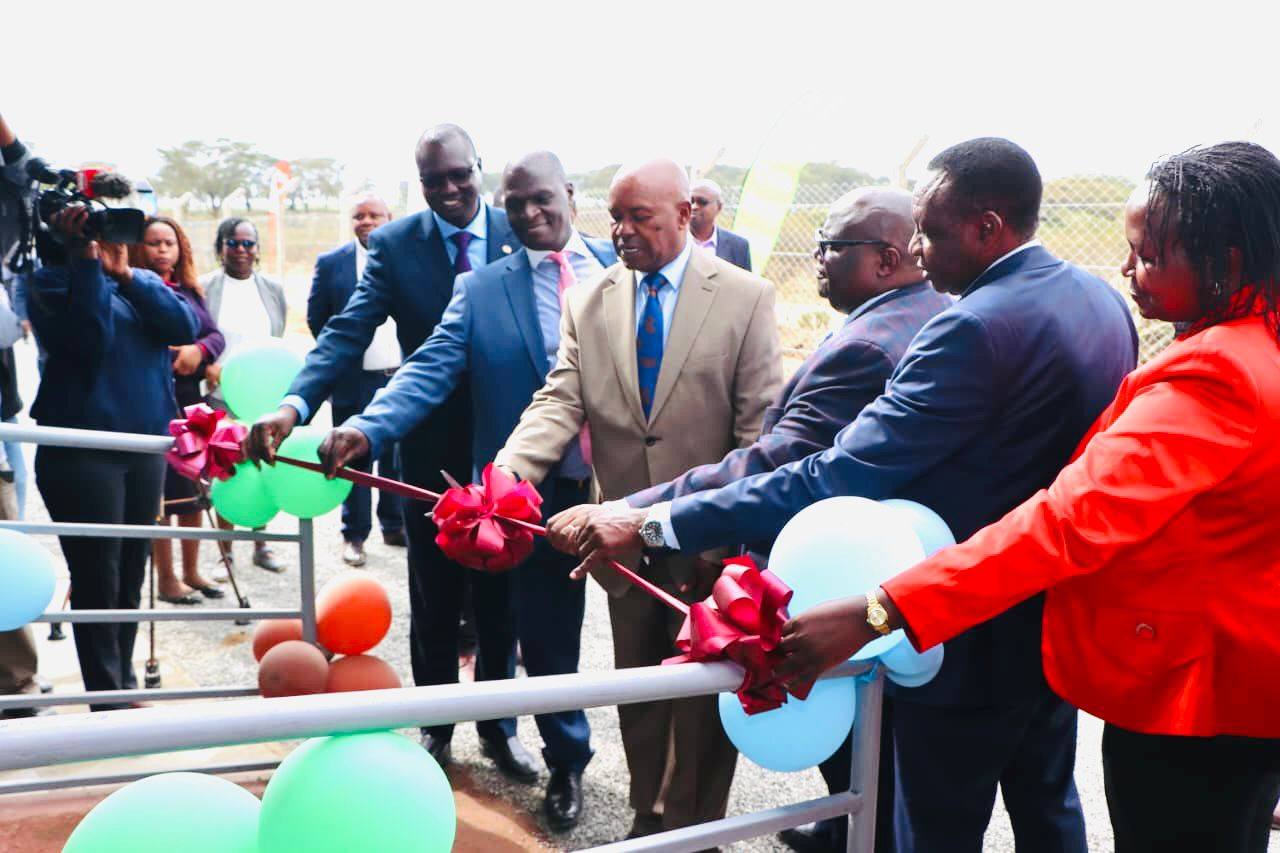
WRTI opens new research centre following flood damage
KOBILO JEPTUMO-MyGov
The Wildlife Research and Training Institute (WRTI) has officially opened its new Inland Waters and Wetlands Research Centre, restoring critical research capacity lost after flooding forced the closure of its former facility at Lake Naivasha last year.
The new centre, located in the South Lake area, was unveiled in a ceremony presided over by WRTI Board Chair Dr. David Nkedianye.
He said the previous research station was inundated when rising lake waters damaged infrastructure and disrupted access for staff and partners.
“We appreciate the Kenya Agricultural and Livestock Research Organization (KALRO) for providing land that enabled the establishment of this temporary facility.”
“This partnership reflects the true spirit of the One Government Approach, where institutions collaborate to advance research, conservation, and public service,” Dr. Nkedianye said.
The flooding incident, he added, underscores the growing impacts of climate variability on infrastructure and ecosystems.
WRTI scientists are conducting studies to understand the causes, trends, and long-term implications of rising lake levels, which have affected communities, biodiversity, and economic activities around Naivasha.
Institute Director Dr. Patrick Omondi said relocating scientists was essential to protect ongoing research and maintain institutional resilience.
He noted that the new location, which hosts a high concentration of wildlife, will enhance ecological monitoring and conservation efforts.
“Research is ongoing to understand the changing lake dynamics. We are pleased that our scientists are now fully relocated, enabling uninterrupted operations while supporting wildlife conservation within this ecosystem,” Dr. Omondi said.
The centre will focus on wildlife population dynamics, sustainable use of aquatic resources, natural resource governance, socio-economic studies, and climate change resilience.
These areas are considered critical for generating science-based evidence to guide conservation and sustainable management of Kenya’s inland waters and wetlands.
According to WRTI, the new facility restores research capacity lost due to flooding and strengthens knowledge generation, policy support, and long-term ecosystem sustainability. The institute emphasized that inland waters and wetlands are vital for biodiversity, livelihoods, and climate regulation, making their protection a national priority.
The South Lake area, where the centre is located, is home to diverse species and forms part of the wider Naivasha sanctuary ecosystem. Scientists say the relocation will allow closer monitoring of species that depend on the lake and its surrounding habitats.
Officials at the launch warned that the flooding of the former facility is a reminder of the risks posed by climate change.
Rising water levels at Lake Naivasha have been linked to changing rainfall patterns and catchment dynamics, with implications for infrastructure, agriculture, and tourism.
Dr. Nkedianye said the institute’s work will contribute to national and regional strategies for climate resilience.
“The flooding incident highlights the urgency of understanding climate variability and its impacts on ecosystems. Our scientists are committed to producing evidence that informs policy and safeguards public resources,” he said.
The institute highlighted its partnership with KALRO as an example of how government agencies can collaborate to address emerging challenges.
By providing land for the new centre, KALRO ensured continuity of research that supports conservation, livelihoods, and national development goals.
The Inland Waters and Wetlands Research Centre is expected to play a central role in advancing Kenya’s research agenda on aquatic ecosystems, strengthening policy frameworks, and supporting sustainable resource management in the face of increasing climate-related risks.