
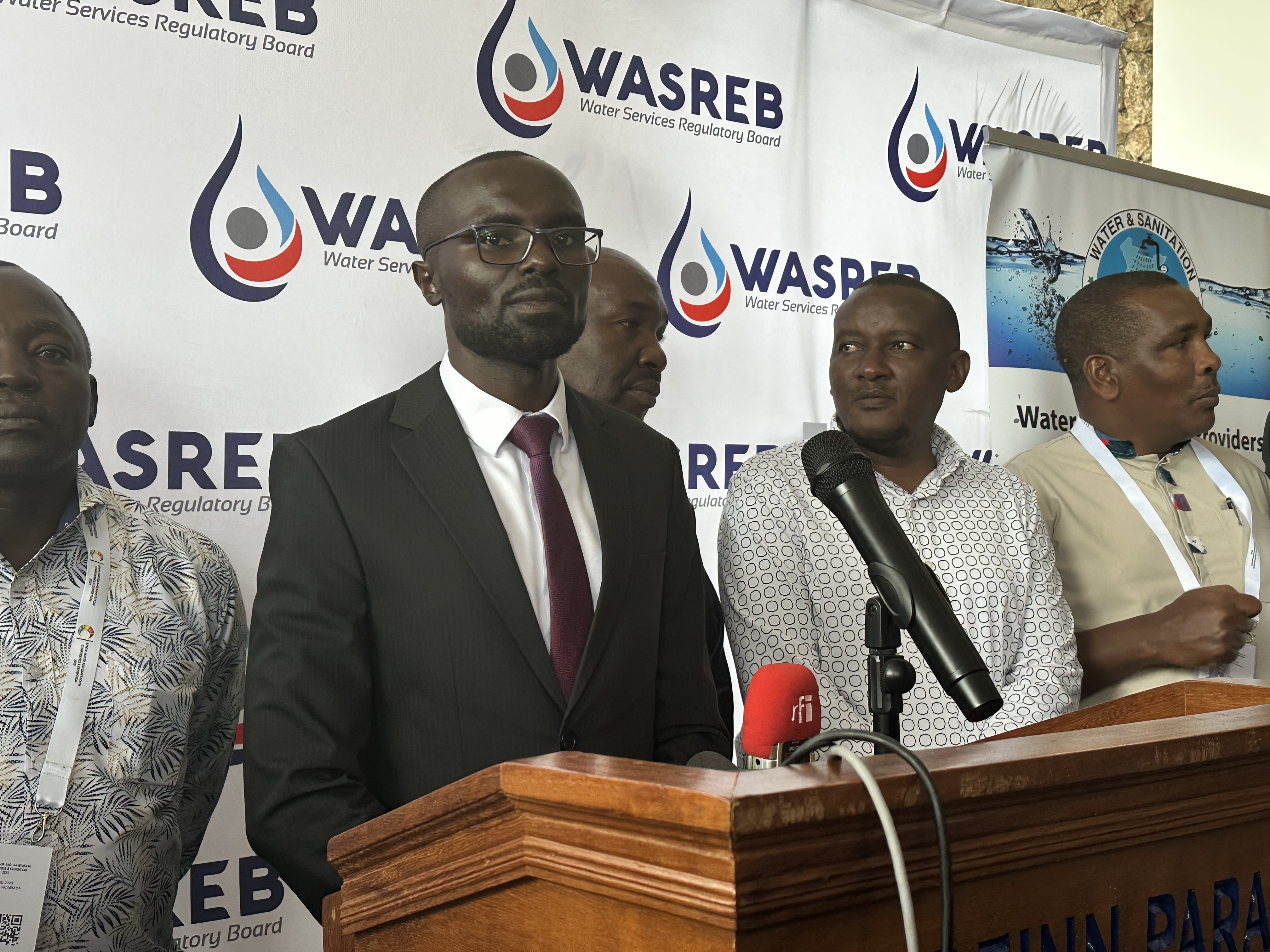
Water service providers record improvement in performance
Chari Suche-KNA
Water Service Providers lose up to Sh11.9 billion in non-revenue water, money which can be used to boost sanitation and sewerage services in counties.
Despite having improved, the Cabinet Secretary for the Ministry of Water, Sanitation and Irrigation, Eng. Eric Murithi, during the launch of the Water Services Regulatory Board (WASREB) 17th Edition of the Impact Report, said if the loss can be prevented, the level of sanitation in the country would be higher.
The CS noted that although 93 per cent basic sanitation is good, it is not good enough, since the seven percent means there are areas with open defecation.
“These are some of the things that we are trying to tackle. You will realize that the safely managed sanitation is quite low compared to the water connectivity, just like we know once you ingest clean water you must use the restroom,” he added.
The CS said water, being a devolved function, means that the national and county governments must work hand in hand.
He underscored the need to invest heavily in water and sanitation and combat non-revenue water.
Eng. Mureithi stated the loss of water to around 44 per cent, which translates to about Sh11.9 billion of water losses.
“This is money that could have come to our counties, help expand the system, be utilized in the operation and maintenance, and ensure that the sector is growing,” he added.
He noted that there is a need for the water service providers, led by county governments, to have the right managers at water services.
Muriithi noted that there is vagueness in service provision in areas where two or three water service providers are under the same county.
“We have overlapping mandates from different companies at the same county and when it comes to tariff review, they are not cost recovery.
"As a Ministry we are using Water Services Regulatory Board (WASREB) Water Sector Regulation Report to have clear earmarked demarcations for us to provide tariff finance,” the CS said.
He added that tariffs are a thing that cannot be evaded forever since it is a necessity for the sector to grow.
Eng. Muriithi noted that the process of tariff review begins at the county level, with a public participation as regulations are clear on the steps to be taken, adding that the Ministry, just validates the tariffs to ensure people are not exploited.
He said most of the tariffs at the county level are not cost recovery, which is why water service providers most of the time, live at the mercy of the county governments.
“The Ministry is trying to get these agents to become self-sufficient, whereby, the amount of money they collect is enough to run their operations and maintenance, expand their systems with the last mile connectivity, pay for salaries and personal emoluments, including the statutory deductions that are required by the government,” he said.
The CS noted that the Ministry has also made amendments to the Water Act, 2016 adding that there is also a 2024 amendment which allows the national government and county governments to have blended financing to attract private investment in the water sector.
“This is yet to bear substantial fruit because when investors come, they look at the balance sheet of the company and if it’s not positive, it is difficult to convince a private investor to invest in the water sector,” the CS said.
He said there is a need to digitize the networks with modern technology and eradicate the institutional memories being used at the routers.
The CS added that modeled networks are easy to manage and monitor water losses, illegal connections and to ensure that the water sector becomes very efficient and lucrative for investors.