
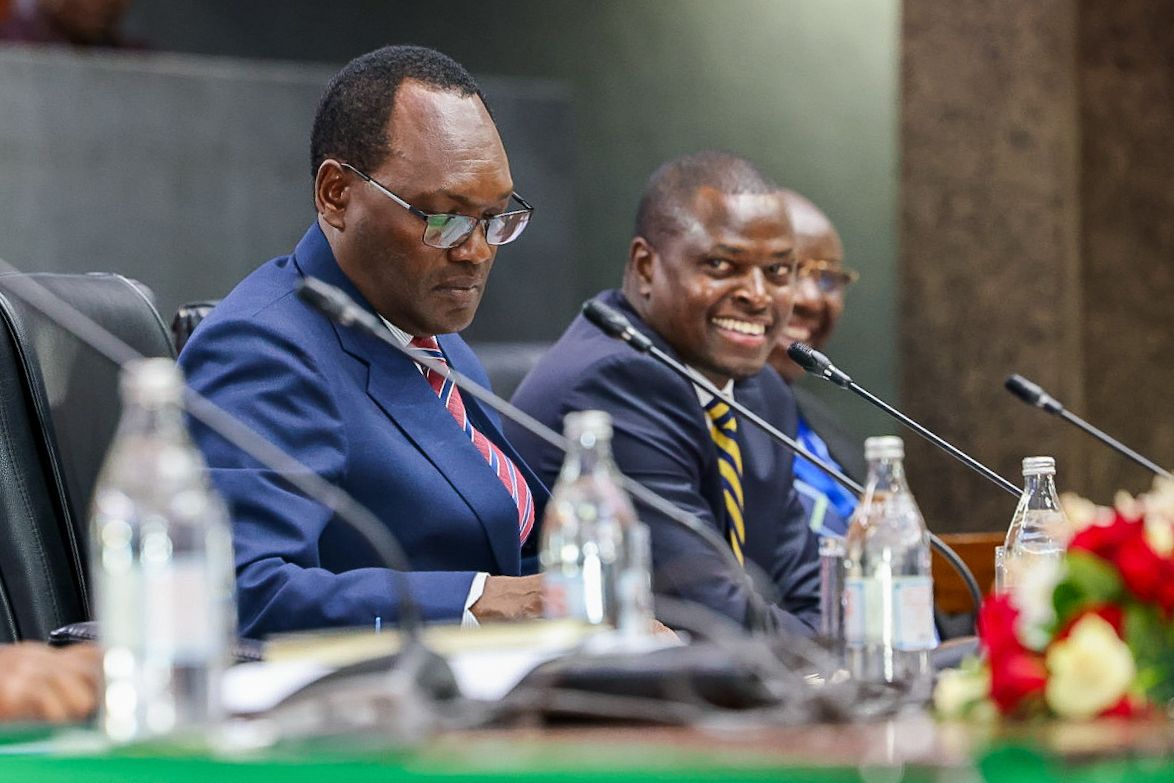
Treasury outlines strategies for growth amid high debt and climate change risk
JOAN OGOLLA-KNA
The National Treasury and Economic Planning has conducted a public-sector hearing for the Financial Year 2025/2026 and the medium-term budget.
The National Treasury and Economic Planning CS John Mbadi noted that the country still faces challenges such as high debt levels and the impact of climate change, which poses significant risks to the region’s agriculture, tourism and other sectors.
“Climate change continues to affect critical sectors like agriculture and tourism, undermining our economic resilience, escalating public debt limits and fiscal flexibility, thus making it harder to invest in priority programs,” he explained.
In a speech read on his behalf by the National Treasury PS Dr. Chris Kiptoo in Nairobi, Mbadi said to mitigate these risks and sustain economic growth, the government will implement sound macroeconomic policies, promote private sector investment and prioritize climate resilience as this will play a key role in the development of the region’s economy.
“Kenya’s economy is projected to grow at a moderate pace in the medium term supported by strong domestic demand and investments in agriculture, manufacturing, and federal water conditions, strong service sector, stable macroeconomic environment, ongoing public investments in infrastructure and sustained business confidence as the economy is expected to grow gradually to 5.5 per cent in the next five years,” he noted.
Despite these hurdles, Kenya’s economy is projected to grow steadily as the Gross Domestic Product (GDP) growth is expected to reach five per cent in 2024 and rise to 5.5 per cent by 2025, driven by robust domestic demand, agricultural development, manufacturing investments, and infrastructure projects, while the inflation rate is anticipated to remain within the target range of 2.5 per cent above or below the five per cent goal, and foreign exchange rates are expected to remain stable.
In order to the address fiscal challenges, the government has committed to a fiscal consolidation policy focusing on three key areas including reducing priority expenditures through non- streamlining spending to prioritize essential programs, tax reforms through expanding the tax base by enhancing tax administration and debt education through lowering the fiscal deficit from 8.6 per cent of GDP in 2021/22 to 4.5 per cent by 2024/25 and reducing public debt from 67.6 per cent to 62.8 per cent of GDP over the same period.
“By reducing public debt and improving our fiscal position, we create room for investments in infrastructure, education, and health,” Mbadi stated.
According to the Chairman, Budget and Appropriations Committee, National Assembly Ndindi Nyoro, the FY 2024/2025 budget is set at Sh3.88 Trillion, highlighting the key revenue streams that are ordinary revenue, Sh2.6 trillion appropriations in aid and Sh438 billion grants.
“The budget faces a Sh767 billion deficit, necessitating borrowing to fill the gap, this borrowing reflects the fiscal challenges we are navigating,” Nyoro noted.
“We need to address the imbalance between recurrent and development expenditures, while innovating revenue collection and aligning spending with national priorities,” Nyoro emphasized.
Ahead of the public hearings, Nyoro urged stakeholders to actively participate in the budget formulation process, noting that this is an ideal platform for voicing their concerns, aspirations and suggestions for the country’s budget allocations, shedding light on the key areas that require improvement in the budget across various departments.