
Taveta University partners with stakeholders to enhance technical skills of small-scale miners
GEORGE KAIGA-KNA
Taita Taveta University (TTU) has embarked on an outreach program aimed at building the capacity of artisanal and small-scale miners across the country.
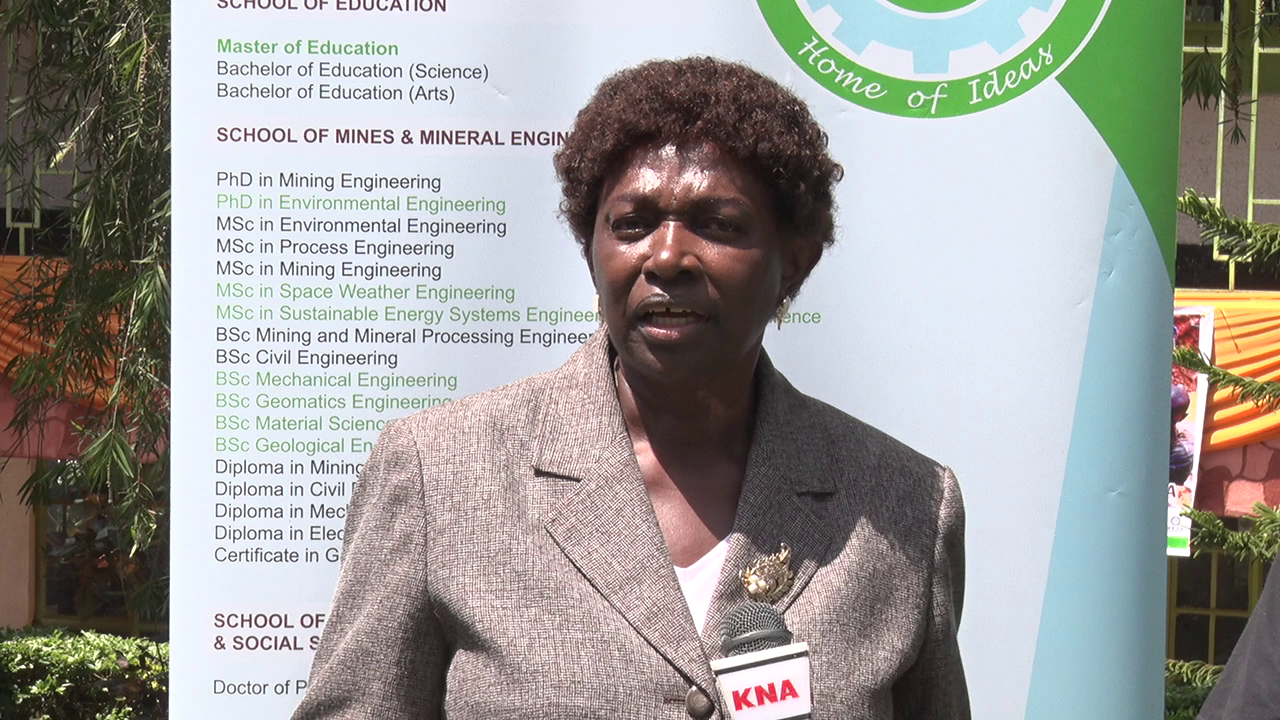
The Deputy Vice-Chancellor in charge of Academics, Research, and Outreach, Prof. Christine Onyango, said the university is focused on building the capacity of artisanal miners to improve both their technical and financial management skills in order to maximize their returns.
Speaking during the first outreach program in Kakamega town, Prof. Onyango noted that the Western region is rich in gold, but many artisanal miners are often exploited by middlemen who purchase their valuable minerals at throwaway prices.
She explained that, in response to this challenge, the university—boasting expertise in mining and process engineering— has partnered with other stakeholders to train artisanal and small-scale miners in both management and financial skills, enabling them to generate better returns from their mining activities through value addition.
“Often artisanal miners sell off their valuable gold to middlemen due to lack of knowledge and do not get value on their returns,” Prof. Onyango said.
“Many of the artisanal miners have no skills in management, have no proper knowledge and use crude tools to do mining, leading to disasters,” she said.
Prof. Onyango noted that the workshop also focused on safety given that gold mining in the country posed potential exposure and health risks that come with the use of mercury. Mercury is used to separate gold from other materials but poses great danger as it can damage kidneys, impair vision and balance.
She said there are also negative environmental impacts from mining including deforestation and climate change. Prof Onyango said the University is consequently focused on helping the communities mitigate negative environmental impacts and climate change arising from mining.
Speaking at the same event, Prof. Maurice Juma Ogada, Professor of Agricultural and Resource Economics at the University said the institution is partnering with sponsors and other stakeholders to equip artisanal and small scale miners with sufficient knowledge on safety and value addition.
With sponsorship from German Academic Service and through the Centre for Excellence for Mining Environmental Engineering and Resources Management (CEMERM), the Coastal-based university has partnered with two Germany universities-Technical University of Mining in Freiberg and University of Applied Sciences in Dresden to up date the skills and knowledge of the miners.
Prof. Ogada, who is also the manager of CEMERM, said TTU is stretching its normal reach to other areas across the country to impart knowledge and awareness to artisanal and small-scale miners following increased cases of accidents.
“We want to make artisanal and small-scale miners aware of risks and dangers posed to the environment and how we can minimize the risks and rehabilitate areas mining has been taking place,” he added.
The three-day technical training workshop whose theme was ‘Towards zero fatalities and zero mercury; advancing safety, health and sustainability in artisanal and small scale mining was organized for artisanal and small-scale miners from Kakamega and Vihiga Counties.
Moses Klay, a representative of artisanal miners and a member of a resilience team formed to self-regulate the mining industry, asked financiers to support the miners with customized credit facilities to enable them to engage in sustainable mining activities.
He, however, called on the national government to fast-track permits to miners, which is one of the requirements needed to secure credit facilities. Nominated Member of the Kakamega County Assembly Victorine Shikutwa said the county has addressed the issue of child labour in gold mining and said the gold mining resilience team was keenly monitoring the situation.
Patrick Makhule, the regional chairman of the gold mining resilience team called on investors in the gold industry to ensure they consult the local community before engaging in gold prospecting.