
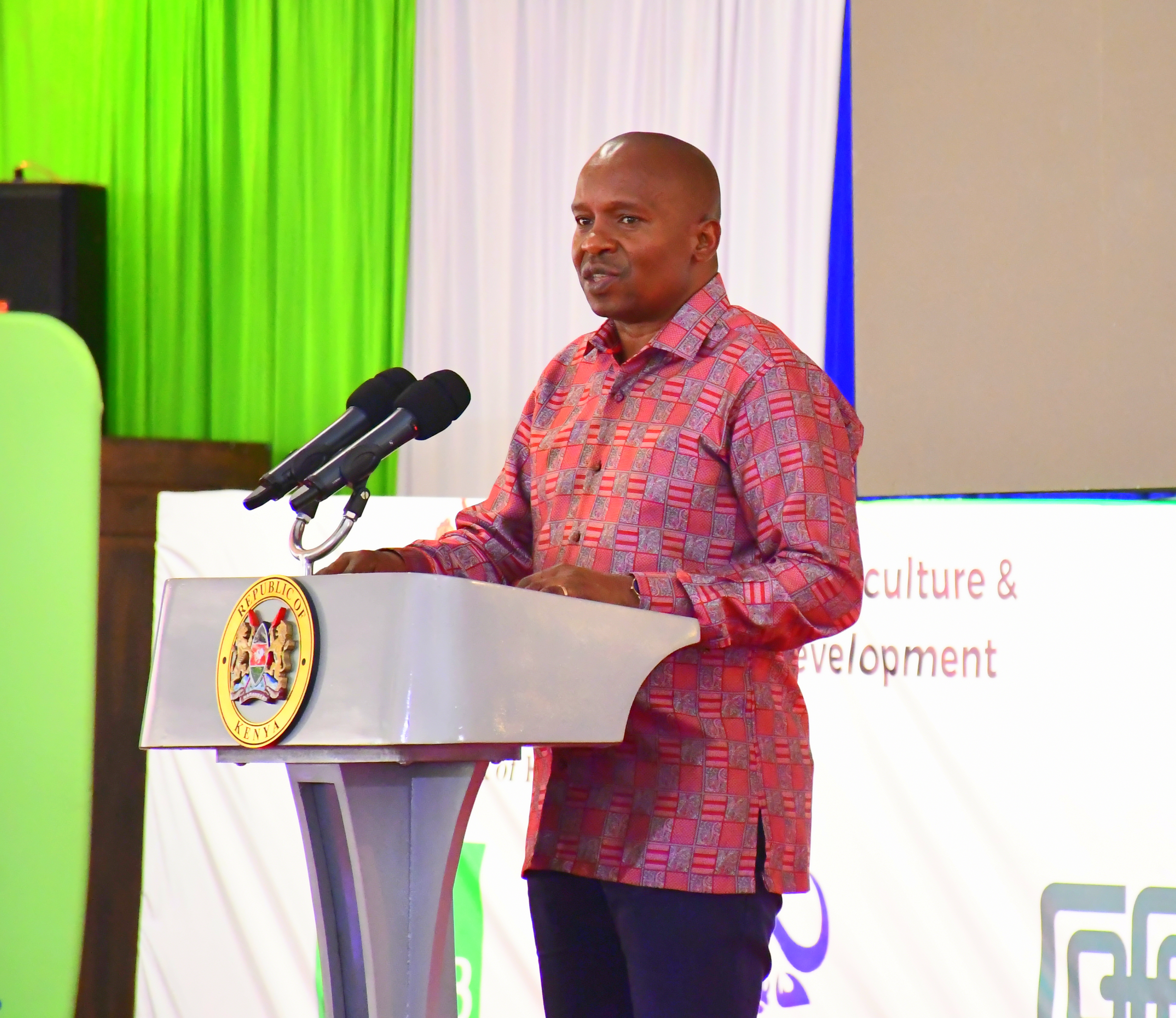
State sets aside Sh2b for subsidized fertilizer to promote tea farmers
FATMA SAID-KNA
The Government has allocated Sh2 billion for the distribution of 97,000 metric tons of subsidized fertilizer to tea farmers.
This is aimed at enhancing their agricultural productivity and reducing the cost burden on farmers, while ensuring steady access to essential inputs needed to improve tea harvests and quality.
Speaking at Sarova Whitesands during the Tea Industry Centenary Summit, as the Tea Board of Kenya celebrated 100 years of tea commercialization in Kenya, Deputy President Kithure Kindiki highlighted that, in the last two years, the government has made over 180,000 metric tons of subsidized fertilizer avail able to farmers at Sh2,500 per 50-kilogram bag.
Addressing other challenges facing the tea sec tor, he noted that the government has made remarkable progress in resolving the governance issues at the Kenya Tea Development Agency (KTDA) by holding recent elections that ushered in fresh leadership.
He added that legal and institutional reforms are ongoing to enhance the sector’s performance and that strict enforcement will be ensured to safe guard the interests of the farmers.
Kindiki added that amendments to the Tea Act 2020 are ongoing, while some of the tea regulations required to operationalize the Act are being developed.
“To safeguard the heritage and reputation of Kenyan Tea and the sector and to ensure sustainability, the government has continued to address the challenges facing the tea value chain, key among them being the high cost of production and processing, market access, lack of value addition, tea quality and perennial governance,” Kindiki said.
He noted that the Agri culture pillar in the Kenya Kwanza government plan is anchored on subsidising the production rather than the consumption.
He added that this broad tar get, is to ensure to improve agricultural production, guarantee food security, create jobs, and increase Kenya’s exports.
The DP noted that Kenyan tea is ranked top globally due to its quality, bold flavor, and consistency, and generates close to 200 billion in foreign exchange earnings annually, which accounts for two per cent of the country’s GDP.
It comes third after Diaspora remittances and Tourism. “The Kenyan Tea is a key anchor of our country’s sustainability and environmental conservation, it has also supported the education sector and the rural economy as a major source of income and employment,” Kindiki said.
Professor Kindiki acknowledged the role played by women in the Tea Industry, noting that they account for over 60 per cent of global tea production, substantially contributing to its sustainability, productivity, and community development, especially because tea is labor-intensive.
“Tea cultivation also promotes sustainable farming practices and environmental conservation, helping to mitigate climate change because one of the threats our Tea Sector is facing is climate change, disrupting weather pat terns and introducing harsh and radically different weather conditions that end up affecting the quality of the tea,” he said.
He added that 600 million kilograms of tea are produced in Kenya every year, as he pledged to further enhance it through strategic policy administrative interventions, including the constant provision of subsidised fertiliser to ensure that all stakeholders, particularly the farmers receive value from their hard work.
The Agriculture Cabinet Secretary, Andrew Karanja, reiterated that the government through the Bottom-Up Economic Transformation Agenda has prioritised Tea as one of the priority value chains.
He emphasised the need to continue addressing the critical challenges facing the tea industry, to ensure its sustainability and competitiveness. Among these is the importance of adding value to tea products, which would enhance their appeal in the global market and generate higher returns for producers.
Additionally, the CS underscored the necessity of improving tea quality, to meet and exceed international standards.