
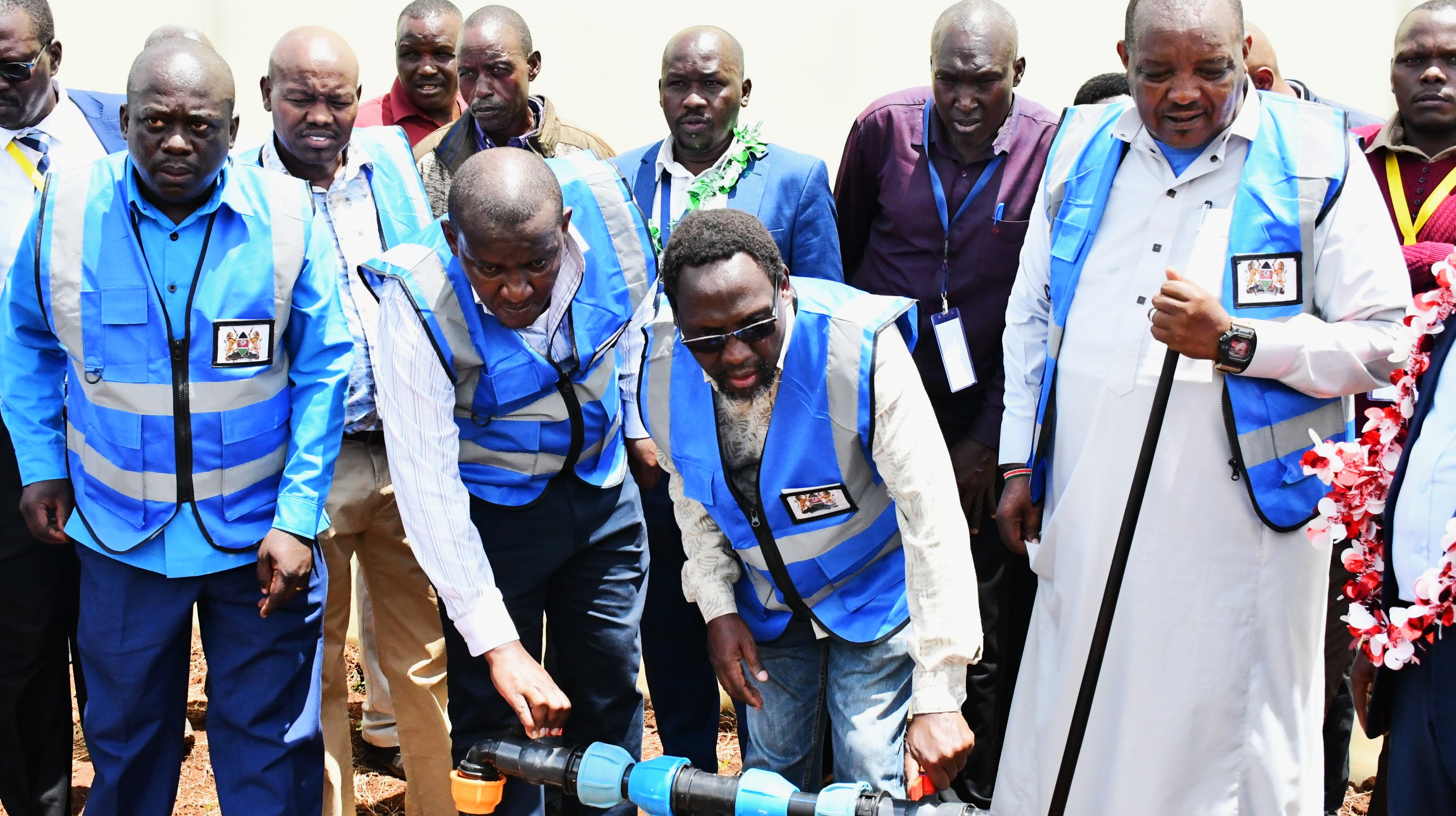
State plans to boost performance of community and public irrigation schemes
PENINAH KIHIKA -PCO
The State Department for Irrigation has mooted plans to enhance the productivity of existing community/ public irrigation schemes across the country in its efforts to ensure optimal utilization of irrigation infrastructure to boost national food security.
Irrigation Principal Secretary, Ephantus Kimotho, noted that colossal sums of money have been spent in developing irrigation infrastructure in the country yet there has never been a corresponding value for money, with majority of the irrigation schemes still performing below par.
The PS noted that some of the community irrigation schemes so far developed are experiencing challenges especially due to the inadequate capacity to maintain and operate the irrigation infrastructure by the Irrigation Water Users’ Associations (IWUAs).
He observed that the use of uncertified seeds, high levels of poverty among the targeted community members, poor marketing skills and strategies, inadequate knowledge on enterprise selection and low payments of operation and maintenance fees leading to poor maintenance of the irrigation infrastructure, have contributed greatly to the reduced productivity of the irrigation schemes.
The State Department has therefore come up with a programme, dubbed Programme for Enhancing Water Productivity, Production and Sustainability of Irrigation Schemes (PEWaPPSIS), to address the attendant challenges and ensure optimal performance of the irrigation schemes across the country.
The program initially seeks to work with twelve (12) selected pilot irrigation schemes for four years to monitor their performance by first conducting a baseline assessment to establish the current status and consequently monitor their performance for the four years.
It will further seek to enhance water use efficiency to minimize water losses and wastages by installing water meters, lining the canals and repairing burst pipes, then build water security and resilience to cushion farmers during drought by ensuring there is always water for irrigation through construction of buffer water pans and boreholes.
The program will also provide support in operations and maintenance by forming and strengthening existing Irrigation Water Users’ Associations (IWUAs) through intensified capacity building.
Enhancing production through provision of certified seeds, fertilizers and chemicals to the farmers and increasing profitability of the produce through superior marketing strategies, constructing cold storage and supporting value addition of the produce, will also form part of the program’s activities.
Other steps will include enhancing sustainability of the schemes through solarization of the water pumps and digitization of the sluice gates in order to reduce the operational and maintenance costs.
The PS pointed out that availing water for irrigation holds the key to the country’s food security needs, and that the country’s agricultural production was mainly dependent on rain-fed agriculture, which is extensively affected by extreme weather variations.
Mr Kimotho thus stressed the need for co ordinated and concerted efforts by all the stake holders in the irrigation sector since irrigated agriculture holds the greatest potential in revitalizing agriculture and thereby driving efforts to achieve the Government’s Bottom Up Transformation Agenda of ensuring national food security.
The twelve (12) Community/Public Irrigation Schemes where the pro gramme will be piloted are: Githuya, Riakomo and Gaicharaigu in Muranga County, Chiaga Chicha and Kaigunji in Nyeri, Rwambura in Kiambu, Mweru Moja in Meru, Kanini in Tharaka Nthi, Njoro Kubwa in Taita Tav etta, Eldume in Baringo, Masune in Kisumu and Wagamachame in Kwale.