
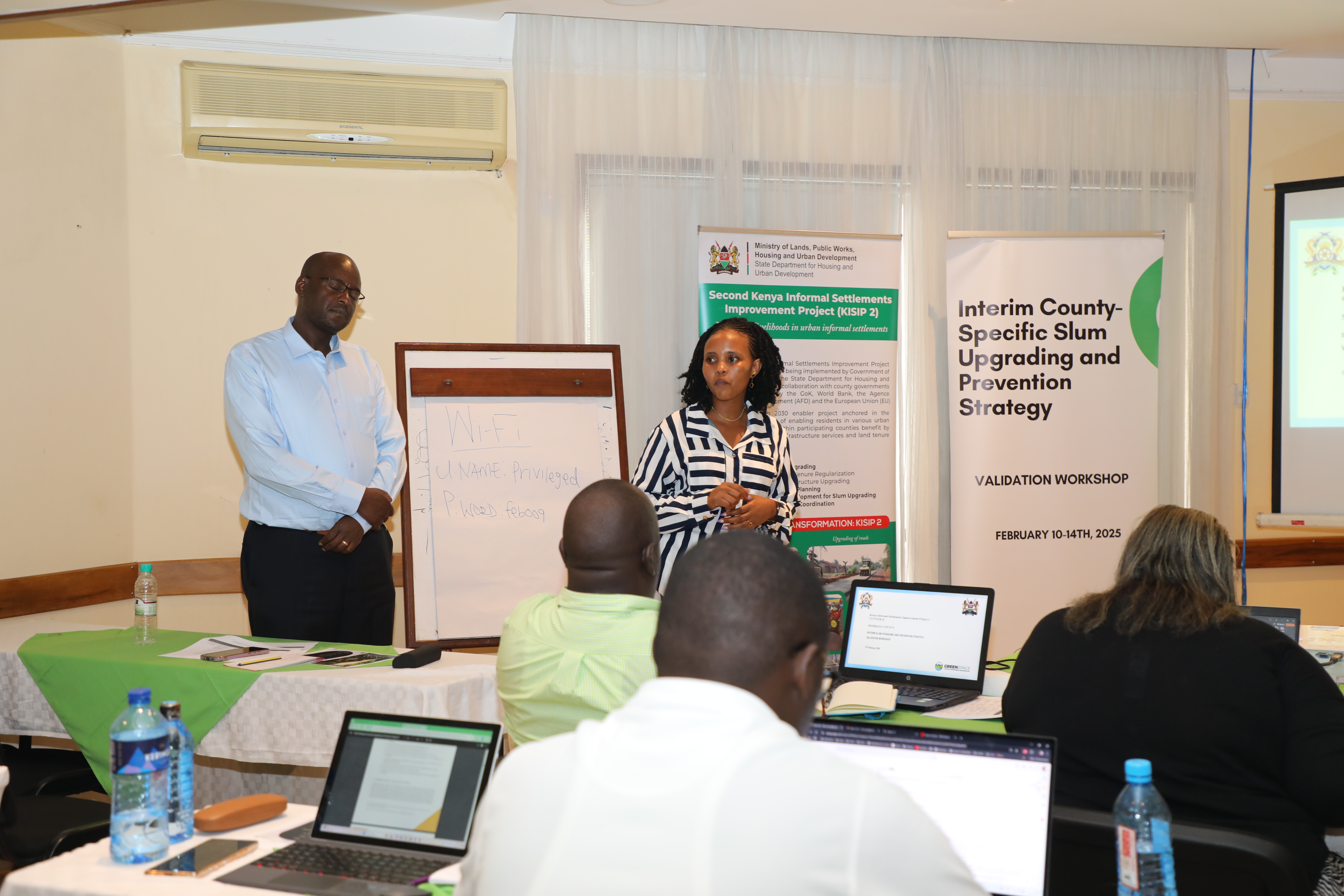
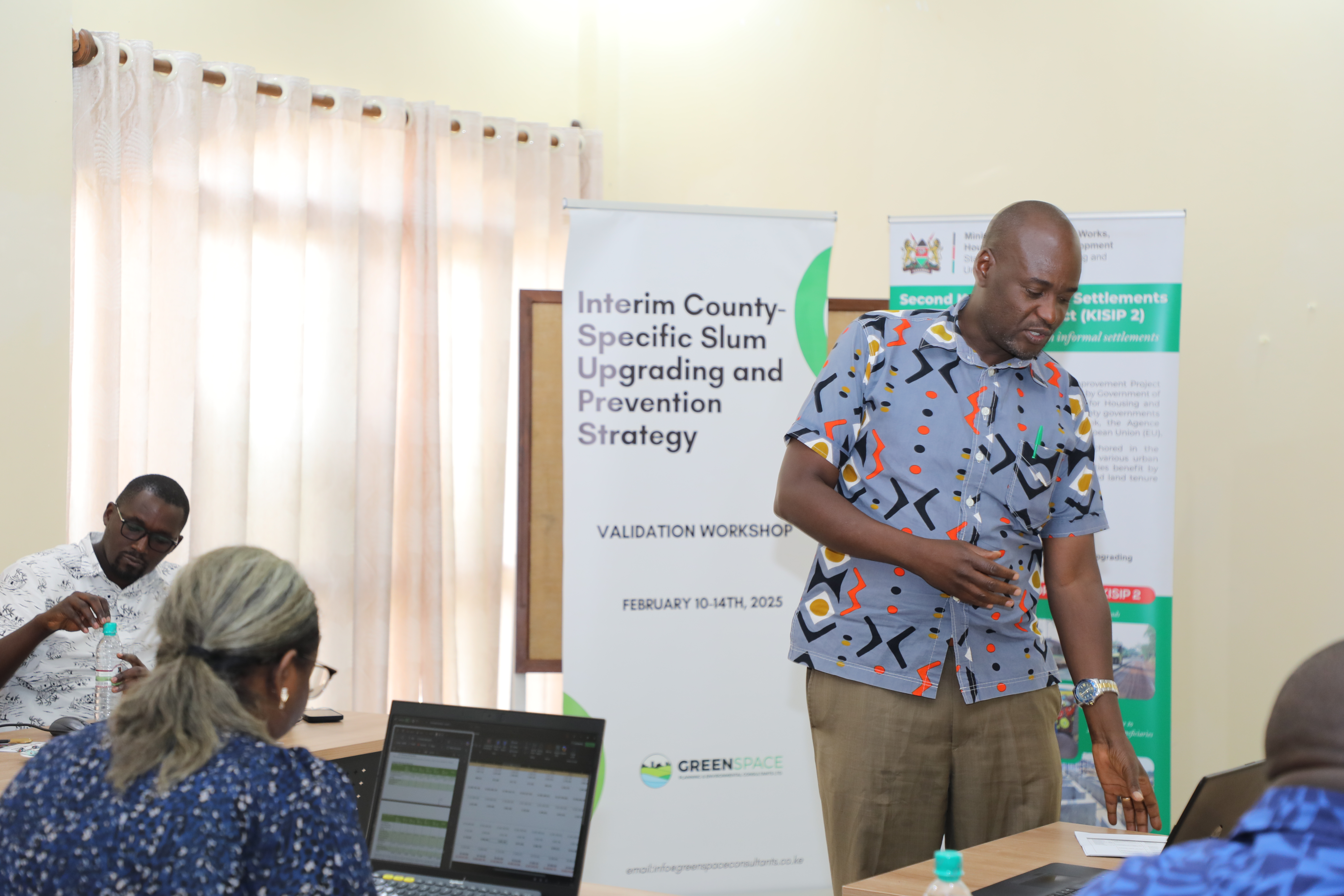
Stakeholders push for slum upgrading through Affordable Housing strategies
EDITH MUPA-PCO
Affordable and social housing issues have emerged as key fac tors in preventing the expansion and proliferation of informal settlements in the country.
According to stakeholders from at least 20 devolved units who recently participated in various validation workshops for county-specific slum upgrading and prevention strategies— spearheaded by the Second Kenya Informal Settlements Improvement Project (KISIP2)—these strategies will drive the achievement of the housing agenda under the Bottom-Up Economic Transformation Agenda (BETA).
“Affordable and social housing is central to improving living conditions in informal settlements.
"These strategies aim to provide safe, decent, and affordable housing options that cater to the diverse needs of low-in come households,” said Dr. Philip Olale.
The urban planning consultant was speaking during a stakeholder meeting with representatives from Kisumu, Kakamega, Bungoma, Homa Bay, and Migori Counties.
By investing in financially accessible housing programs, stakeholders emphasized the need to reduce overcrowding, improve health outcomes, and foster a sense of dignity among residents—positioning housing as a foundation for community well-being.
Similar validation exercises were also conducted in Mombasa, Kilifi, Kwale, Taita Taveta, Kitui, Turkana, and Trans Nzoia. Upcoming workshops will be held in Uasin Gishu, Baringo, and Nakuru.
Participants included county officials, non-governmental organizations, political leaders, persons with disabilities, com munity leaders, religious organizations, and other stakeholders.
KISIP2 is a project jointly funded by the World Bank/ International Development Association (IDA), Agence Française de Développe ment (AFD), the European Union (EU), and the Gov ernment of Kenya (GOK).
It operates under the State Department for Housing and Urban Development. The project’s devel opment objective is “to improve access to basic services and land tenure security for residents in participating urban in formal settlements and to strengthen institutional ca pacity for slum upgrading in Kenya.”
Regarding slum upgrad ing financing, stakeholders highlighted the need for adequate and sustainable funding, which they iden tified as a critical enabler for the success of such ini tiatives.
They emphasized secur ing diverse funding sources, including government al locations, private sector contributions, and interna tional aid.