

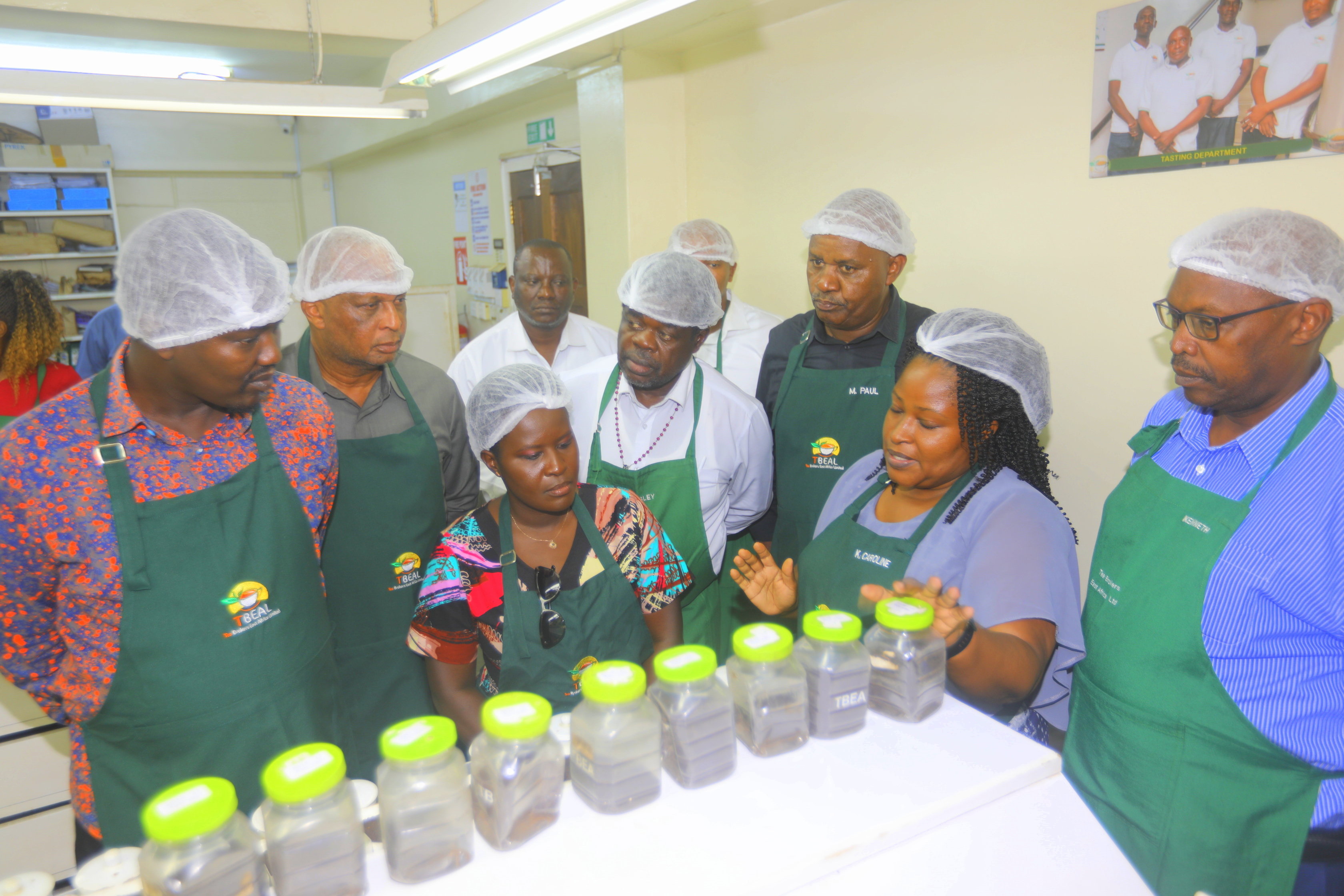
Senate committee urges Government to cut red tape in tea exports
Chari Suche-KNA
The Senate Standing Committee on Trade, Industrialization and Tourism, wants the government to do away with undue paperwork in the exportation of tea.
Speaking to the media at the East Africa Tea Trade Area, Mombasa, the committee chairperson Issa Boy said there is a lot of bureaucracy involved before the export of tea is done, hampering business.
He said it is something tea marketers have always complained about, for causing unnecessary delays.
Boy called for the removal of every setback, involved in the business, as a way of motivating farmers, who have been citing low profits in the sector that were not matching the value of their work.
“We want to sit down with the cabinet secretary for trade and deliberate how we can reduce the many restrictions placed when it comes to exporting tea.
“I believe we can simplify them just like we made the issue of borders into one stop border points and the benefits are eminent,” he said.
The Kwale County Senator added there is a pending concern on tea exports to Sudan following restrictions, promising that the committee will table the issue before the CS to get the way forward.
“Currently, we have issues to do with our Sudan market and the sooner we are able to create and open up markets the better for our farmers,” he said.
His sentiments were echoed by the committee vice chair, Esther Okenyuri, who said the committee is steadfast to ensure that tea farmers in the country get good value for their produce, commensurate with the work put into farming of the major agricultural export in the country.
She said the Tea Board of Kenya highlighted the many challenges facing the marketing of Kenyan tea, while calling upon the committee to sit with the government and discuss how it can address problems facing the sector.
On his part, Senator Jackson Mandago, a member of the committee, said the country should focus on value-added tea to increase earnings, with focus being to attract local buyers and more international buyers.
Mandago said the opening up of a Kenyan value-added tea both locally and internationally will be an added advantage to the country’s tea industry.
“Our tea is only known in a few markets globally as it is used for blending with other tea brands from other countries. It is then packed for distribution to other markets under a different brand not traced back to Kenya,” Mandago said.
He added that value addition will also promote the consumption of tea locally, urging Kenyans to embrace a culture of drinking tea, same with coffee drinking to boost the sectors.
He said the legislators are making policies that will ensure tea farmers get better value for their product to fetch good revenue, adding that they will further offer support to tea farmers, buyers and exporters under the Tea Board of Kenya.
The Uasin Gishu Senator said there are several existing opportunities in the Kenyan tea market.
He urged farmers not to give up as the government will explore all avenues to increase capacity and be able to work with the private investors to ensure great investment comes from the value of their tea.
He asked Kenyan investors and key stakeholders to invest in orthodox tea, saying the demand for value-added tea is very high.