
Scholars push for Kiswahili as East Africa’s official language
ESTHER MWANGI AND ALVIN KAMAU-KNA
Scholars, publishers, and authors have petitioned the East African Community (EAC) Council of Ministers to fast-track the ratification of Kiswahili as the official language of the bloc to deepen regional integration.
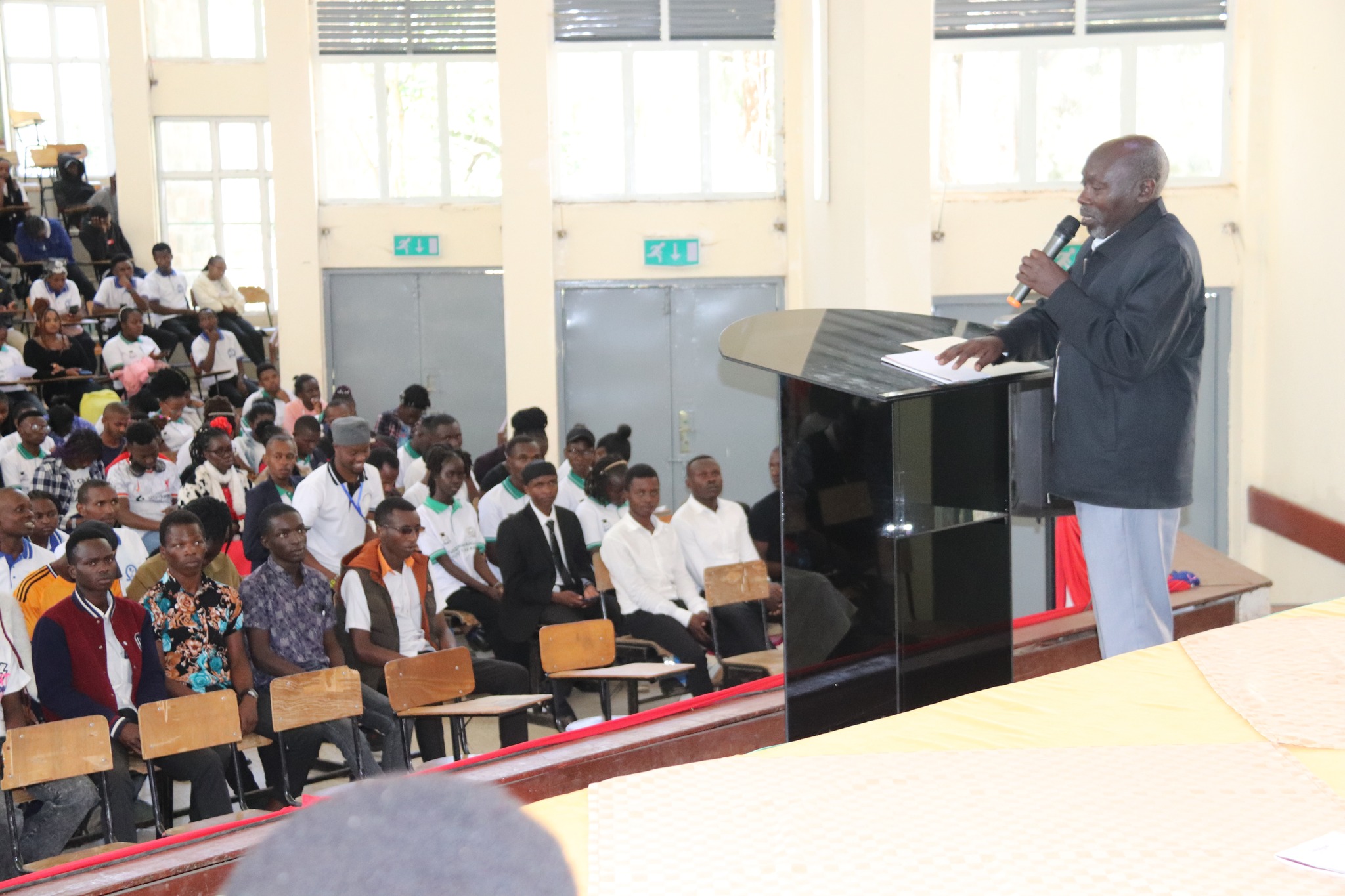
The stakeholders, who attended the official opening of the Chama cha Wanataaluma wa Kiswahili Katika Vyuo Vikuu vya Afrika Mashariki (CHAWAKAMA)–Kenya Chapter’s 21st conference, hosted at Egerton University, unanimously agreed that Kiswahili, as a lingua franca, could enhance economic development in East Africa.
They noted that the language could facilitate trade, promote cultural tourism, and foster a common identity, ultimately leading to increased economic opportunities and deeper regional integration.
In East Africa alone, Kiswahili is spoken by more than 150 million people across Kenya, Uganda, Tanzania, Rwanda, Burundi, and the Democratic Republic of Congo.
It is also the only African language used at the United Nations’ Directorate of Global Communications. Egerton University Deputy Vice-Chancellor for Academics, Research, and Extension, Prof. Bernard Aduda, noted that with over 230 million speakers worldwide, Kiswahili has the potential to serve as a common language for business and economic activities globally, enabling smoother communication and collaboration among traders and businesses across borders.
Addressing more than 200 Kiswahili professionals at the university, Prof. Aduda emphasized that Kiswahili plays a crucial role in Africa and beyond in promoting peace, unity, socio-economic development, and cultural diversity.
He further stated that the conference, themed Kiswahili na Uchumi, aimed to promote the Kiswahili language by enhancing its function in raising awareness and fostering dialogue among millions of people globally.
In a speech delivered on his behalf by Senior Lecturer and Consultant at the Department of Peace Security and Social Studies, Prof. Eric Bor, the Deputy Vice Chancellor, said adoption of Kiswahili by EAC states would bolster, trade, good governance, technology exchange, social integration and tourism among other things.
Out of the eight partner states, only three, the United Republic of Tanzania, the Republic of Kenya, and the Republic of Uganda have adopted Kiswahili as an official language.
The Republic of Burundi, the Democratic Republic of Congo, the Republic of Rwanda, the Federal Republic of Somalia, and the Republic of South Sudan are yet to adopt Kiswahili as an official language.
The United Nations Educational, Scientific, and Cultural Organization (UNESCO), in its 41st general conference, declared July 7th as Kiswahili Day.
According to UNESCO, Kiswahili is one of the most widely spoken languages in the world. The CHAWAKAMA-Kenya Chapter 21st conference also marked its anniversary, since its establishment.
Prof. Aduda indicated that as the African Continental Free Trade Agreement (AfCFTA) expands, Swahili would play a crucial role in business transactions and integration across borders within the region.
“Article 119 of the East African Community treaty says partner states shall promote the development and promotion of indigenous languages especially Kiswahili, as a lingua franca for the region,” he explained.
The Deputy VC said the creative economy in the region was anchored on Kiswahili, which was being driven by East African youth as they speak and compose their music and movies in Kiswahili, adding that there was need to empower the youthful generation to contribute to the development of the region.
“Speaking Kiswahili is not a weakness; its richness shows its importance. If you’re a Kiswahili speaker, be proud; not all people have the knowhow and ability to speak Swahili,” Prof. Aduda said.
The Deputy VC was delighted that there were East African scholars teaching Kiswahili in universities across the globe including the School of Oriental and African Studies, Bayreuth in Germany, St. Lawrence in USA, University of California, Osaka University in Japan with South Africa said to have recently incorporated Kiswahili in its school curriculum.