
Over 229,000 teachers trained as state prepares for Senior School transition
Kibe Mburu and Kelox Mutai-KNA
A total of 229,292 teachers from both public and private learning institutions have been retooled to effectively implement the Competency-Based Education (CBE) framework.
This is as the government prepares for the transition of learners from Junior Secondary to Senior Secondary schools next year.
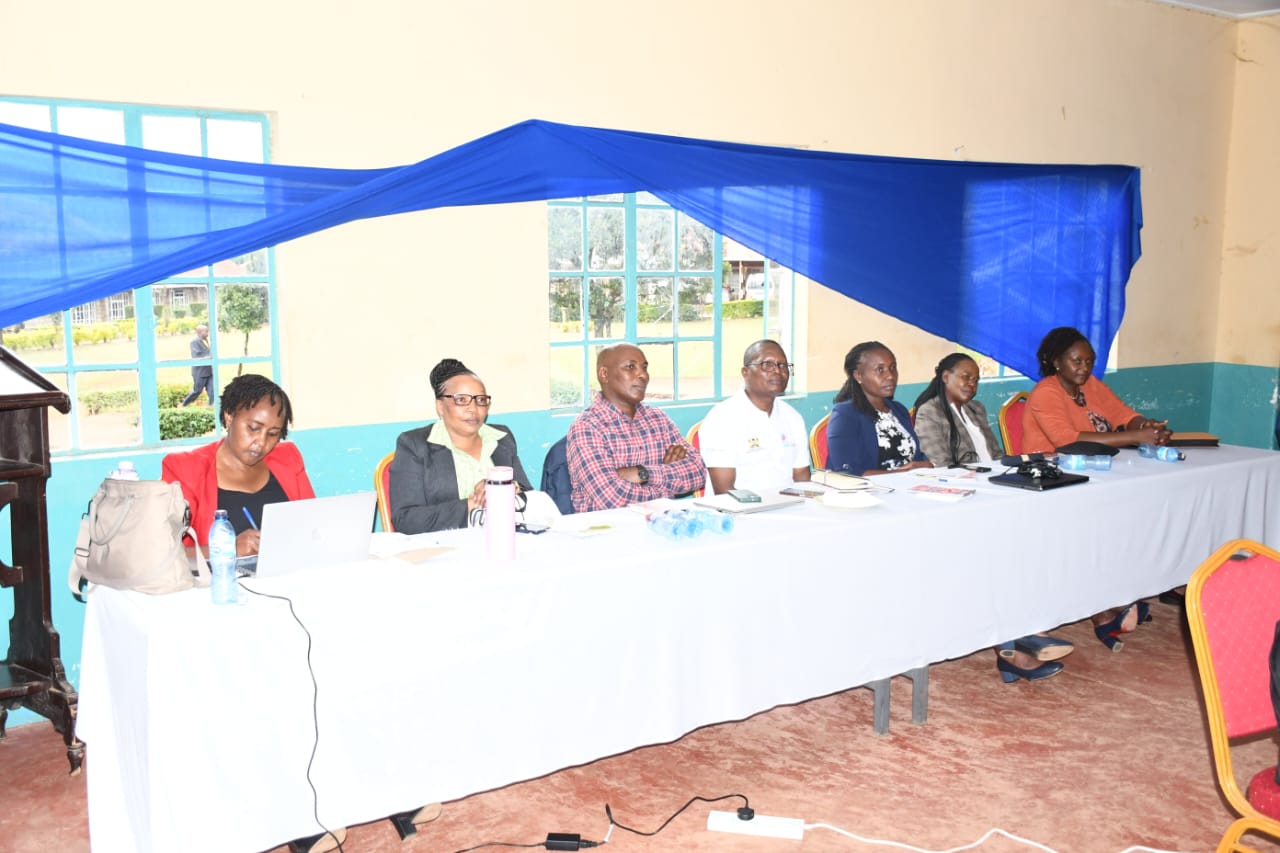
This development was highlighted during the National Dialogue on Education Quality and Learning Outcomes in Kericho, where it was also disclosed that 60,642 Junior schoolteachers and 1,200 teacher training college tutors had completed rigorous training to ensure the successful roll-out of the new approach to education.
Speaking during the forum that brought together various stakeholders, Director of Education, Mr. John Ongosi, emphasized that the new curriculum mandates teachers to be ICT-compliant to effectively carry out tasks such as remote learning and live streaming of lessons, where both teachers and learners will engage using technology.
Additionally, he said the government plans to establish virtual laboratories to support Science, Technology, Engineering, and Mathematics (STEM) education when Junior Secondary School learners join Grade 10 in 2026.
Participants in the forum were enlightened on the new CBE guidelines which include selection, placement and admission of the learners to various categories of senior schools across the country.
Learners in Grade 9 will be categorized according to personalized learning routes designed to accommodate individual student needs, strengths, pacing, and interests, rather than rigidly adhering to fixed age or grade-level standards.
Mr. Ongosi explained that Senior School learners will have to specialize in one of three pathways which include Arts and Sports Science, Social Sciences, and Science, Technology, Engineering, and Mathematics (STEM).
The Director of Education assured that placement of Grade 10 learners will be according to the learners’ choice, merit, psychometric test, equity and school capacity.
“There will be fairness for all learners, they will all have an opportunity to choose a pathway which can be triple pathway Senior Schools which will specialize in STEM, Arts and Sports Science and Social Sciences. Then, there will also be double pathways Senior Schools which will specialize in STEM and Arts and Sports Science,” Ongosi said.
He further explained that Senior School learners’ Grade 10 to 12 shall take seven subjects of which four are core subjects including English, Kiswahili, Community Service Learning and Physical Education and three selected from the pathways and tracks of choice.
The stakeholders were also sensitized on the Competency Based Assessment (CBA), which is a purposeful systematic continuous process of gathering information from multiple sources for making decisions on what learners know, need to learn, have learnt and can do.
Mr. Ongosi said the assessments use a wider variety of tools and give opportunities to learners, peers, teachers and parents to track the progress of the learner through real time feedback mechanisms.
“The assessment methods and tools are varied in order to address the learning needs of different individual learners including tests, observation schedules, questions and answers, checklists, quizzes, rubrics, journals, portfolio, learner profiles, anecdotal records, oral or aural questions, questionnaires, rating scales and project,” Ongosi explained.
Meanwhile, the Kericho County Director of Education, Mr. Julius Ngoneshi, confirmed that a total of 55 new classrooms for Grade 9 learners had been completed and in use while an additional 160 classrooms were almost complete, at 99 per cent.
“Phase III of the construction has been allocated 21 classrooms; procurement has been done; we are waiting for funding from the World Bank. However, in Phase IV, we are constructing seven classrooms, and we are at 50 per cent to completion. In total we will have 323 classrooms new classrooms for junior secondary schools,” Mr. Ngoneshi added.