
Over 1,000 households in Nakuru informal settlements set to receive title deeds
Esther Mwangi-KNA
The Government intends to provide title deeds and lease certificates to over 1,000 households.
Through the Phase II of the Kenya Informal Settlement Improvement Project (KISIP), residents of four informal settlements in Nakuru County will get secure land tenure.
County Lands and Physical Planning Chief Officer Stella Mwaura explained that the KISIP 2 led the tenure regularization process being carried out in the informal settlements of Turi within Molo Sub-County, Kariandusi -Gitare in Gilgil Sub-County, Soweto in Njoro Sub-County, and Lagwenda in Kuresoi North Sub-County.
The process is 50 per cent complete and it is being conducted with full participation of those living in the settlements.
Ms. Stella Mwaura, acknowledged the issue of land ownership, access, and rights in the county’s informal settlements that needed proper attention to help address perennial land conflicts. She noted that the Draft Local Land Use Plan for the four informal settlements had already been developed.
“By formalizing land ownership, we empower our communities and unlock opportunities for growth and development,” Ms. Mwaura stated.
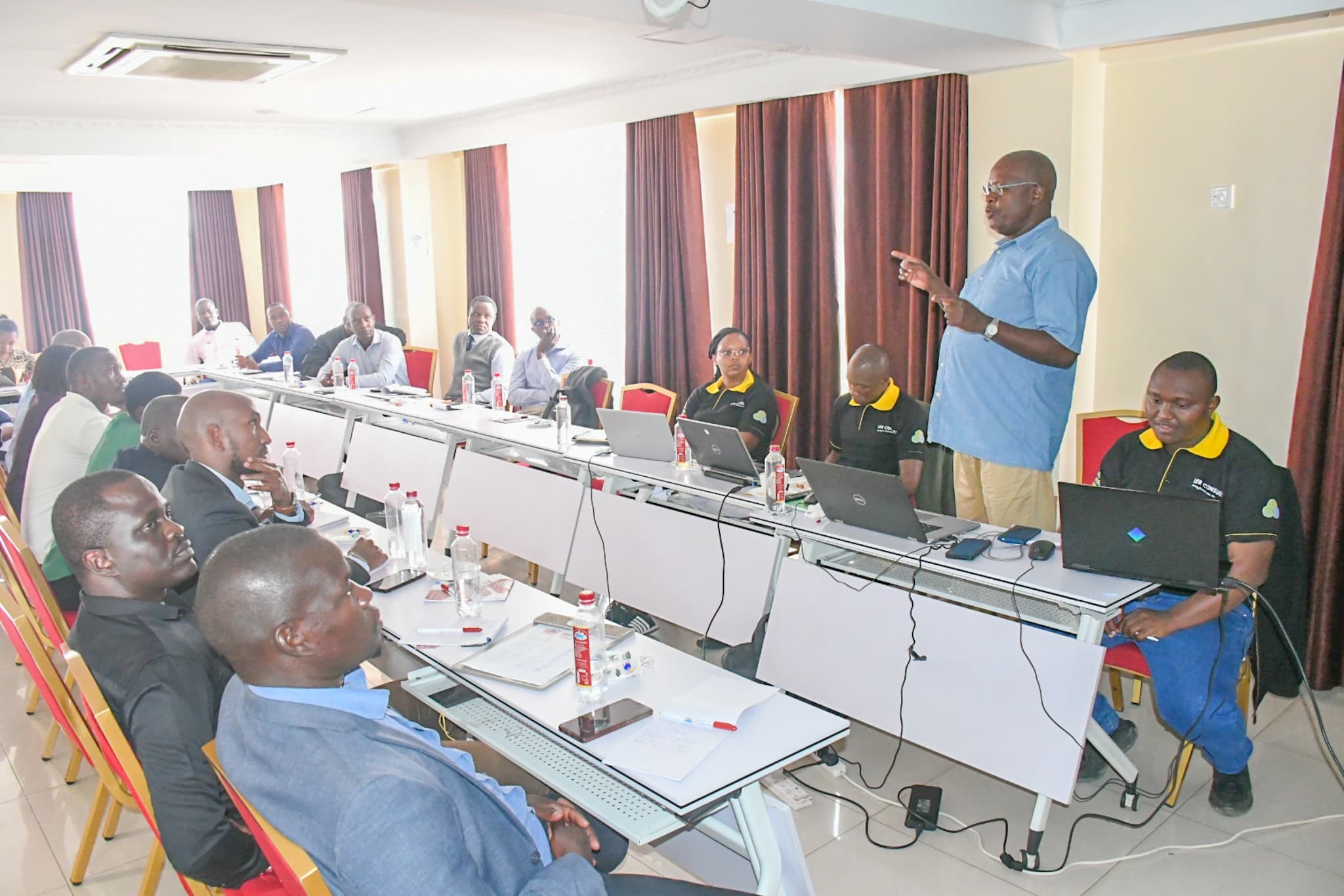
The Chief Officer made the remarks during a workshop for County Planners and members of the County Project Coordinating Team (CPCT).
The event’s objective was to review the draft plans for the four informal settlements and ensure the proposed changes reflect the needs and aspirations of the local communities.
Through the program, Ms. Mwaura indicated that Nakuru seeks to address critical issues faced by informal settlements’ residents, offering them formal land ownership and better opportunities for growth and development.
The program seeks to address critical issues faced by informal settlements’ residents, offering them formal land ownership and better opportunities for growth and development, Ms. Mwaura said.
Acting County Director Physical Planning Justine Mayaka said land tenure regularization could lead to improved living conditions, increased investment in homes and businesses, and greater social stability in informal settlements.
He noted that the National Slum Upgrading and Prevention Strategy 2024-2034 acknowledges the importance of the participation of slum residents in the tenure regularization process.
The Community Land Act of 2016 supports formalizing land rights in informal settlements and provides a foundation for enriching the interpretation of land tenure in conjunction with other legislation.
Funded by the Agence Française de Développement (AFD) and the World Bank, the initiative is a significant step towards land security and economic empowerment in the informal settlements.
KISIP aims at improving living conditions in the country’s informal settlements by focusing on land tenure regularization, urban planning, and infrastructure development.
The program is tasked with determining the boundaries of informal settlements, verifying the presence of residents, creating Local Physical and Land Use Development Plans (LPLUDP) or Part Development Plans (PDP) that consider the settlement's layout and needs.
It supports the development of comprehensive land use plans for residential, commercial, industrial, and public utility purposes.
The process encompasses conducting detailed topographical surveys for engineering designs and surveying individual plots to prepare Registry Index Maps (RIMs), preparing, registering, and issuing letters of allotment, leases, or titles to individuals or groups.