
Nyeri youth’s project slashes fish feed costs
Wangari Mwangi and Christine Mumbi-KNA
It will take you about 23 minutes from Nyeri town to the quiet village of Karurumo in Kiandu, Tetu Constituency.
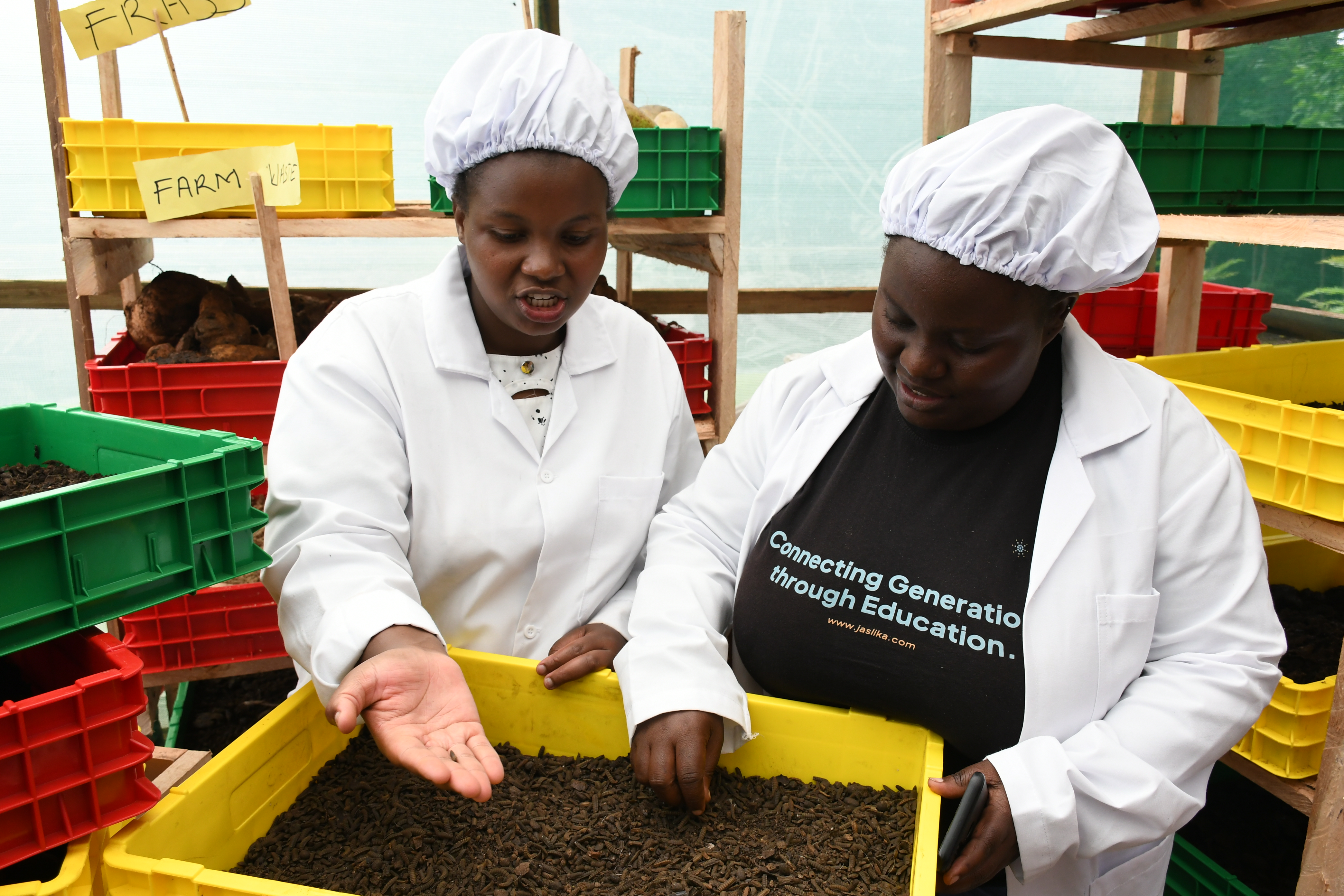
There is nothing fancy about the 12 square metres structure, where five young people have set up black soldier fly farm.
But it is the prospects of a drastic reduction of fish feeds prices for Kiandu fish farmers that makes the project stand out.
Tetu fish farmers are already seeing it as game changer. The project will unravel the puzzle of affordable feeds, which is the biggest challenge for the over 2,300 farmers, who are engaged in the fish farming venture in the county.
Their assertion is not far-fetched as findings from a 2018 comparative study of the aquaculture sector revealed that small-scale fish farmers struggle with increasing cost of feed.
According to the study, fish feed accounts for nearly 60-80 per cent of the total production costs.
The situation hasn’t changed much since 2018 as the current market prices as a 50-kilogram bag of fish feed range from Sh4,000 to Sh5,000. This price goes higher by Sh1,000-Sh2,000 if one is sourcing feed for fingerlings.
“Our idea was born from the quest by fish farmers to get cheaper but high-quality fish feed. Right now, the biggest challenge for fish farmers is accessing high protein feed and since black soldier fly has high protein content, venturing into this farming seems like a natural choice for us,” Charles Mwangi, one of the five members of the Zabibu self-help group said.
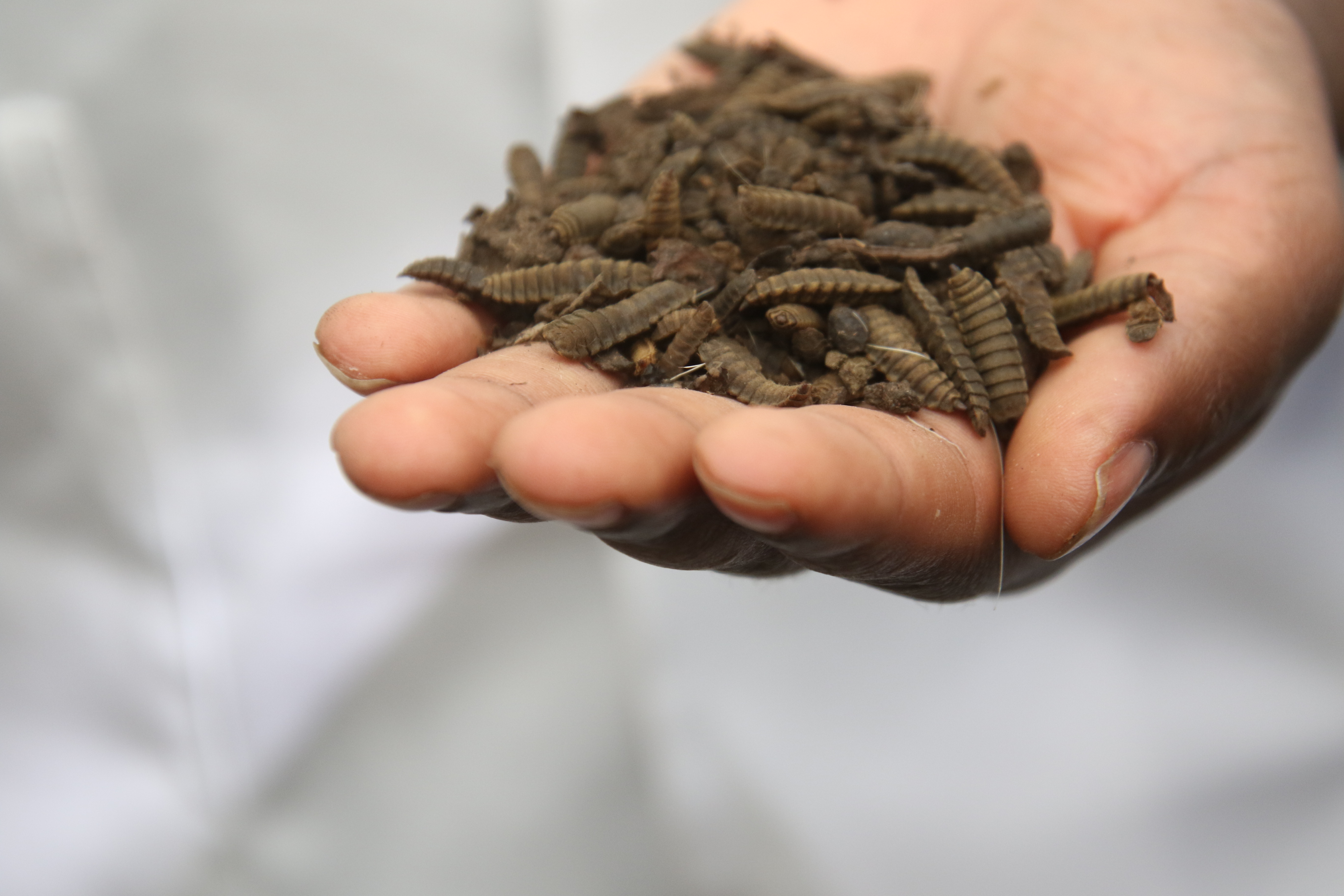
The black soldier fly (BSF) is a highly regarded insect due to its ability to convert organic waste into a nutrient dense fertilizer known as frass at the larva stage.
On the other hand, poultry, pig and fish farmers regard it highly due to its high protein levels, which go to highs of up to 45 per cent, making it an ideal high protein feed.
Zabibu self-help group started their BSF project at the beginning of the year after their alternative fishmeal proposal secured a Sh450,000 funding from the Aquaculture Business Development Programe (ABDP).
The group is one of the 42 aquaculture groups in Nyeri County that benefited from a Sh8.12 million grant extended by ABDP and the International Fund for Agriculture Development (IFAD to Smallholder Aquaculture Groups (SAGs), Aquaculture Support Enterprises (ASEs), and Aquaculture Field Schools (AFSs) to support fish farming in the county.
Mwangi says that with the resources, they were able to put up a structure and they also purchased their starter colony of five kilograms’ live worms.
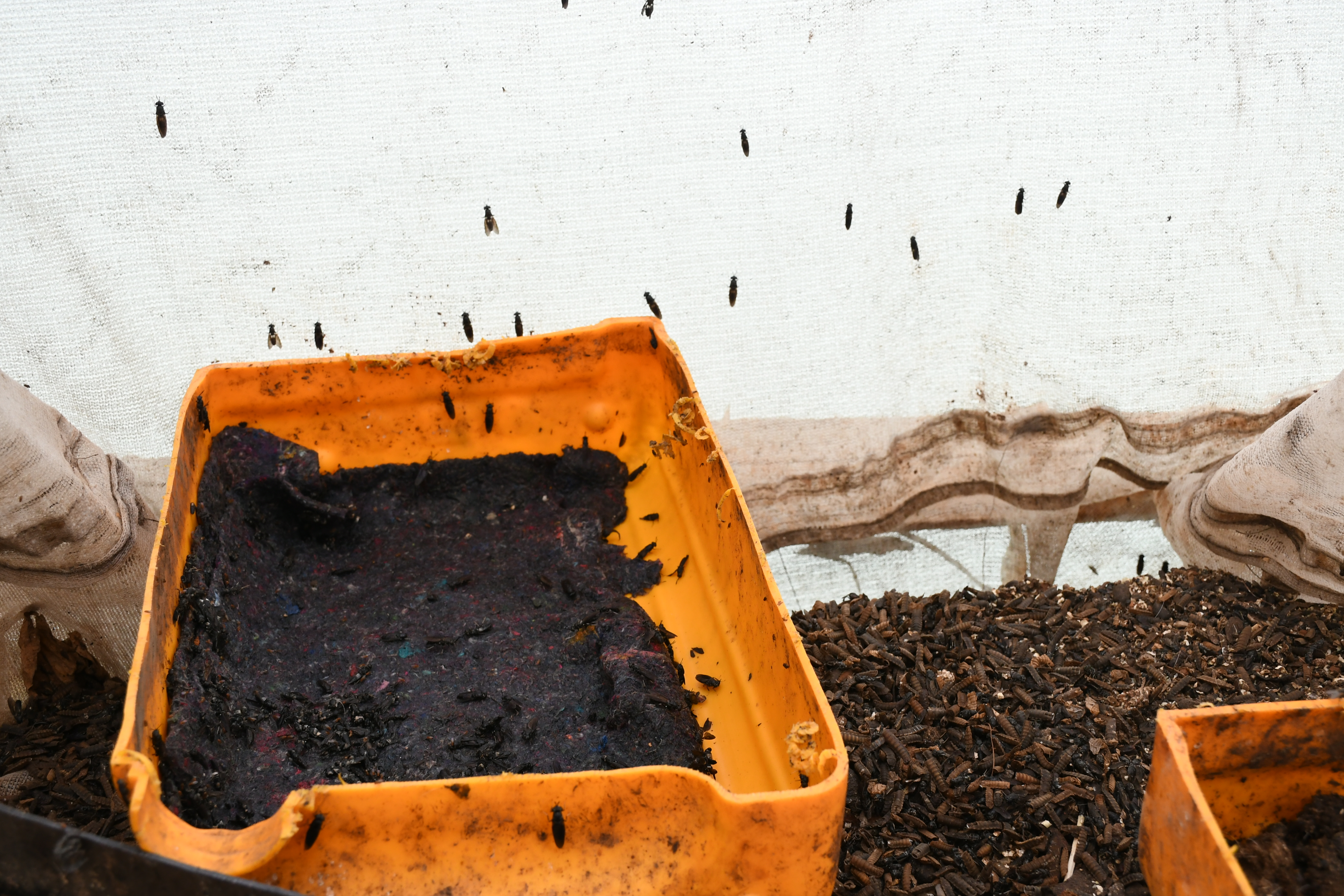
We arrive at the farms to find the insects in all the four stages in the four corners of the wooden structure. The adult flies are housed in a net enclosure where they lay eggs.
At this stage, Mwangi says, they feed the insects on a solution made by mixing molasses and water.
He informs us that an adult fly can lay between 320-620 eggs.
Caroline Makena, another member of the group, says the eggs normally take five days to hatch into larvae. The process of nurturing them to pupae, which is the high protein feed they require, begins with the transfer the larvae to bassinettes containing either farm waste or kitchen waste.
To ease the faster breakdown, Makena says that they normally crush the farm waste to manageable sizes.
She noted that to ensure that a high maturity rates, temperatures at the structure must be maintained at 270 Celsius.
“We can access waste from the farms that surround the project. As for the kitchen waste, we have partnered with locals who supply it to us at a fee,” Makena said.
The young farmers reckon that their venture has the potential to generate about 2,000 kilos of larvae per month.
Before the end of this year, they are expecting to produce at least 36,000 kilos of feed.
Mwangi says that they set the selling price for larvae at Sh300-500 per kilo, which is an affordable price for most farmers.
“Out of all the components that used as raw material in fishmeal production, protein is the most expensive. If you take the dry feed and you mix it with the dried black soldier larvae or with the live worms, you will have solved this problem by far,” Mwangi says.
According to ABDP’s country program coordinator Samuel Macharia, the alternative feed program is among several other initiatives that ABDP is supporting in 16 counties, with the aim of making fish farming more profitable for small holder fish farmers.
Speaking after visiting the project, the program coordinator said the BSF initiative is projected to reduce the cost of fish meals by nearly 50 per cent, therefore encouraging more farmers to stock.
“The black soldier fly is an alternative to commercial fish feed, and it is reducing the cost of fish production by 40 per cent.
“From the 70 per feed cost, you can spend about 30 per cent on feed when you are having this alternative feed for fish through the black solder fly,” he noted.
The IFAD country program coordinator Ronald Ajengo said the organisation is targeting to support 5,500 youth in the aquaculture value chain.