
Northern Corridor to upscale trade, regional integration and unlock global markets
By Godfrey Bihembo (PCO)
The Northern Corridor Council of Ministers resolved to upscale trade and regional integration by facilitating transit of goods between the Port of Mombasa and the landlocked countries within the region.
The Northern Corridor is a crucial transport route in East and Central Africa, linking the Port of Mombasa in Kenya with several landlocked countries, including Burundi, Democratic Republic of Congo, Rwanda, South Sudan, and Uganda.
The resolution was made in Nairobi during the Council’s 37th meeting. It was observed that the Northern Corridor is a critical artery necessary to accelerate East Africa integration.
Cabinet Secretary for Roads and Transport, Davis Chirchir, said regional integration can be achieved through various initiatives, including infrastructure development, policy harmonization and the use of technology to monitor and improve performance.
Specifically, Chirchir pointed out the port expansion in Lamu, Mombasa and Kisumu, the development on the Standard Gauge Railway (SGR) and the upgrades on the road network as key components to revitalize the corridor.
“The corridor serves as a critical artery for East African Integration, acting as a vital trade conduit that links landlocked countries within the region to global markets,” said the CS.
During their deliberations, the Council reviewed reports on key corridor programmes, the proposed budget and workplan for the financial year 2025/2026 and priority activities to enhance corridor efficiency and eliminate barriers to trade among others
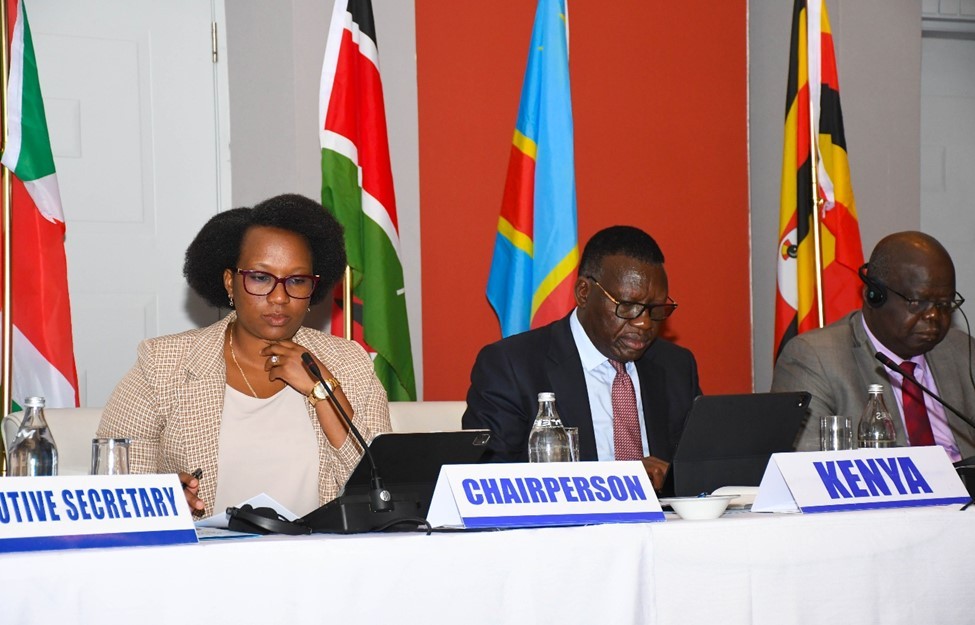
The gathering also witnessed the transition of leadership where Uganda’s Mr. Benon Kajuna, Managing Director, Uganda Railways, representing the Minister, Republic of Uganda handed over the Chairmanship to Ms. Marie Chantal Nijimbere, Minister for Trade, Transport, Industry and Tourism, Republic of Burundi; who will be in charge for the next two years with the Democratic Republic of Congo as second in command.
Chirchir noted that the Northern Corridor Transit and Transport Agreement (NCTTA) provides a regional legal framework for trade facilitation, transport infrastructure, and customs harmonization among member states.
Similarly, the CS pointed out that the Northern Corridor Transport Observatory Portal serves as a platform for real-time data monitoring and reporting on key performance indicators, enabling evidence-based policymaking and continuous improvement.
“Initiatives like the Northern Corridor Green Freight Strategy 2030 (NCGFS 2030) aim to balance economic progress with environmental responsibility by enhancing fuel efficiency, reducing pollutants, and promoting the use of electric vehicles,” Chirchir said.
He noted that by improving road infrastructure and implementing streamlined processes, it should lead to faster and more reliable movement of goods.
Also present were the Principal Secretary State Department for Transport Mohamed Daghar-Kenya, Dr. Lam Akol Ajawin, Minister of Transport, Republic of South Sudan, Mr. Abolia Taba Mopolo Jean Marie, Secretary General, Ministry of Transport and Ways of Communication, representing the Minister, Democratic Republic of Congo, Mr. Fidele Abimana, Permanent Secretary, Ministry of Infrastructure, representing the Minister, Republic of Rwanda and the Chairperson of the Public Private Partnership Stakeholders Committee, Mr. Lino Criel, was also present.