
Private sector optimistic as Kenya projects strong 2027 GDP growth
JOSEPH NG’ANG’A-KNA
The Kenyan economy is projected to grow at a rate of 4.9 to 5.2 percent in 2026, signaling a resilient rebound.
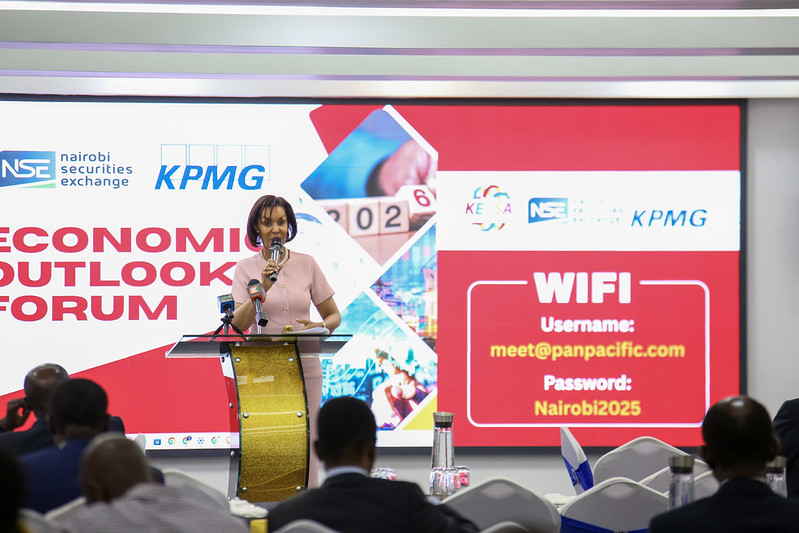
This projection was revealed when the Kenya Private Sector Alliance (KEPSA), in partnership with the Nairobi Securities Exchange (NSE) and KPMG, hosted the 2026 Economic Outlook Forum in Nairobi.
The high-level forum provided business leaders with critical insights to navigate a complex global landscape, forecasting a national GDP recovery of 4.9 to 5.2 percent for the year ahead.
Following a period of slower growth in 2024, the forum highlighted Kenya’s resilience while noting the persistent gap between current projections and the pre-pandemic historical average of six percent.
Leaders emphasized that, while the macroeconomic environment is stabilizing— marked by inflation cooling to 3.0–5.0 percent—businesses must remain agile to counter external shocks and fiscal pressures.
“Businesses are operating in a landscape marked by global uncertainty, shifting trade dynamics, and rapid technological transformation. Yet within these challenges lie significant opportunities.
"The private sector remains central to unlocking inclusive growth through investment, job creation, and productivity,” said Brenda Mbathi, Vice Chair of KEPSA.
During the meeting, analysts argued that the economic landscape for 2026 is defined by a steady recovery and a concerted effort toward fiscal stabilisation.
It emerged that while there is a significant decrease in the rate of inflation to a more manageable range, there remains a lingering vulnerability in the prices of food and fuel, which continue to be susceptible to global market volatility.
Sandeep Main, Tax Partner and Head of Private Enterprise in Africa at KPMG, provided a broader context, noting that global growth is expected to edge up slightly to 2.7 percent.
“In Africa, growth is projected to rise modestly from 3.9 percent in 2025 to 4.1 percent by 2027,” Main stated, emphasising the need for strategic sourcing to combat supply chain fragility caused by US-China tech tensions.
The forum also issued a clarion call for businesses to diversify their funding. Frank Mwiti, CEO of the Nairobi Securities Exchange, expressed concern over the underutilization of capital markets.
“Capital has a memory. It remembers markets that opened when things were hard and those who chose transparency and integrity,” said Mwiti.
“I still don’t understand why businesses are not utilising the massive opportunities of the capital markets to raise capital. We intend to work closely with KEPSA to help businesses access and sustain capital in 2026,” he added.
The 2026 business landscape is defined by geopolitical volatility and economic shifting. Organisations are currently navigating rare-earth export disputes and fluctuating financing costs driven by central bank pivots.