
City residents to benefit from seamless water network upgrade
JOSEPH NG’ANG’A-KNA
The Athi Water Works Development Agency (AWWDA) has unveiled a pioneering trenchless pipeline project aimed at modernizing Nairobi’s ageing water networks without tearing up streets or disrupting residents’ daily lives.
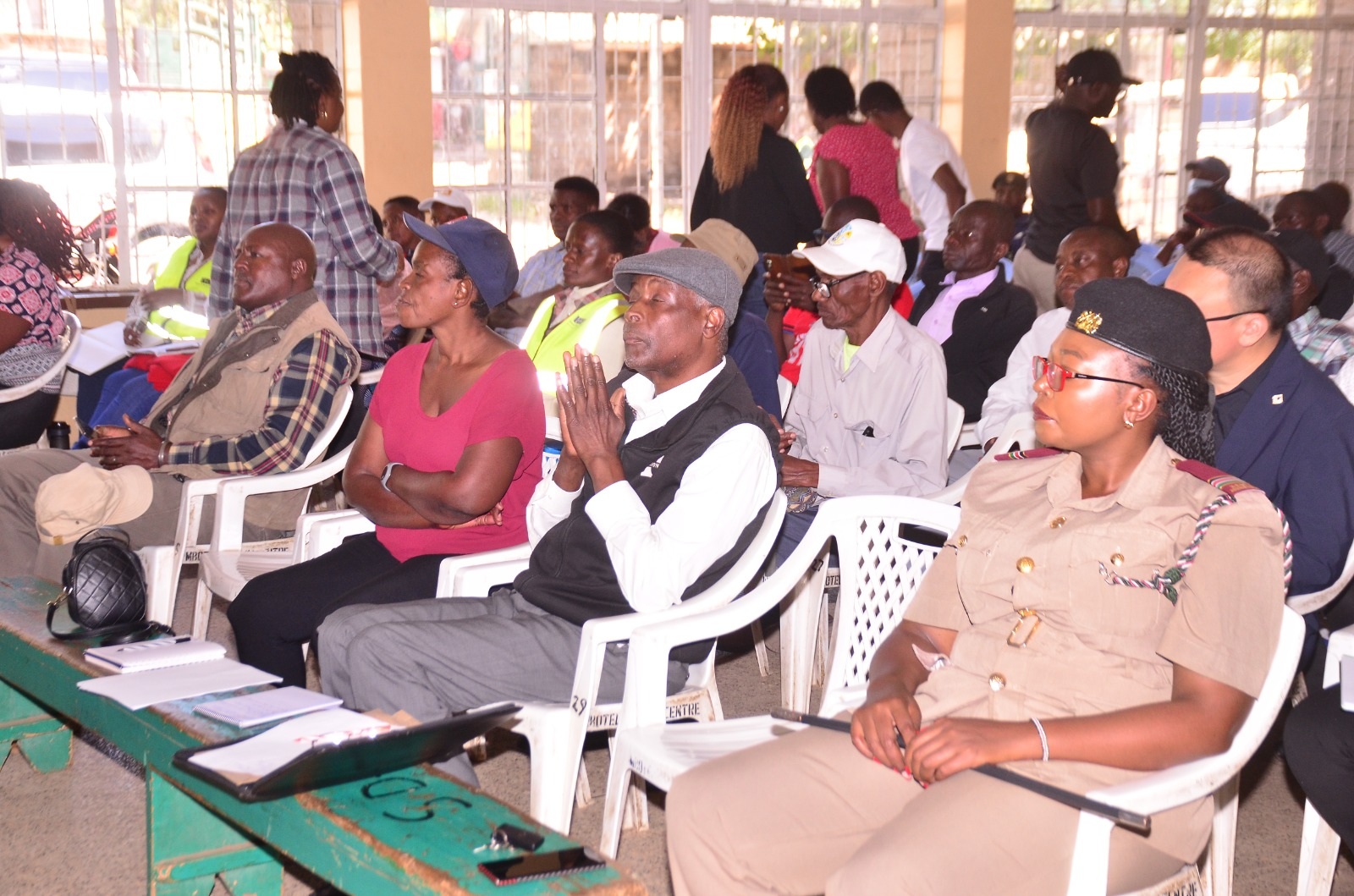
The initiative, presented to residents at Mbotela Social Hall in Makadara Sub-County, marks the soft launch of the Central Nairobi Water Network Rehabilitation Project.
With a budget of Sh1.6 billion and implementation set to begin in February 2026, the project introduces a new model of infrastructure delivery that prioritizes both community continuity and technical innovation.
Unlike conventional methods, the project will employ Horizontal Directional Drilling (HDD)—a m i n i ma l ly i nva s ive technology widely used in Europe and North America—to install new high-density polyethylene pipes underground.
“Think of it as keyhole surgery for the city,” explained AWWDA Sociologist Mohammed Koech. “The diseased arteries are replaced without openheart surgery. The surface stays intact. Life continues, only with greater reliability," Koech further explained.
The technology addresses chronic problems caused by deteriorating asbestos-cement pipes, including frequent bursts, contamination risks, and high levels of non-revenue water.
By eliminating trenches, the project will keep roads open, businesses operational, and households free from dust, noise, and access cuts. Makadara Deputy County Commissioner (DCC) Philip Koima emphasized that public welfare is integral to the project’s execution.
“Safety is non-negotiable. Connectivity is non-negotiable. Livelihood continuity is non-negotiable,” Koima stated.
AWWDA has established a Livelihoods Restoration Plan to support informal traders and small businesses during construction, appointed a dedicated community liaison consultant, and set up a formal grievance mechanism.
These steps reflect a commitment to operational accountability in a city sustained by informal economies.
The project aims not only to replace pipes but to rebalance water pressure across Nairobi, ensuring equitable distribution and reliable supply to underserved neighborhoods.
Funded by the French Development Agency (AFD), the rehabilitation will integrate with the Northern Water Collector Tunnel, which already supplies 140,000 cubic metres of water daily to Nairobi and surrounding counties.