
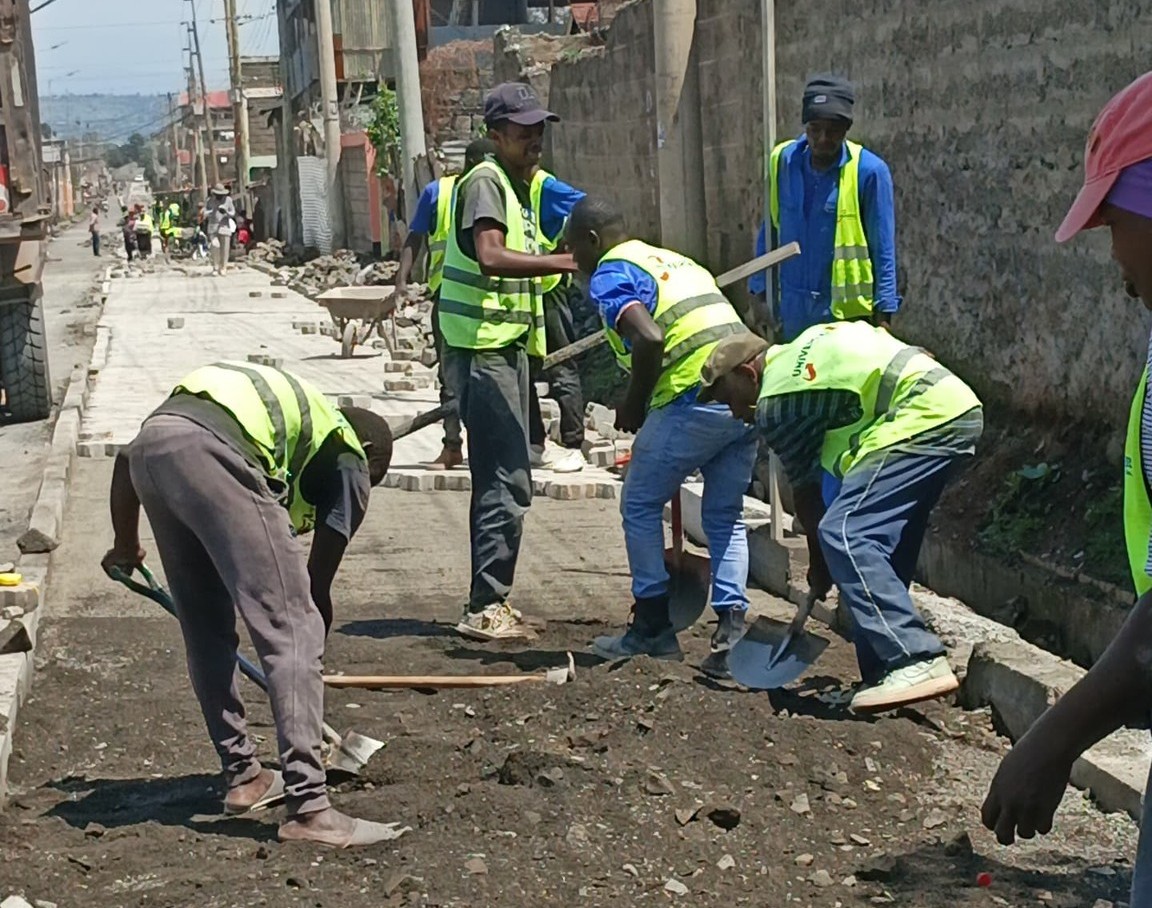
Informal settlements in Nakuru to undergo major infrastructure overhaul
Esther Mwangi and Mary Ochieng-KNA
In the suburbs of Nakuru City, a quiet transformation is unfolding.
Four informal settlements, previously characterized by crime, poor sanitation, clogged drainage systems and dilapidated roads, are slowly but surely changing.
For decades the dwellings were also known as hot spots for waterborne diseases including cholera and typhoid.
However, after many years of living in squalid conditions a new chapter is beckoning for the dwellers of Kwa-Murogi, London-Hilton and Lake View within Nakuru Town and Karagita slums in Naivasha, where narrow pathways and limited services once defined daily life.
The Kenya Informal Settlements Improvement Project (KISIP 2) is reshaping communities, bringing hope, security and opportunity to hundreds of thousands of the residents, particularly in the renown slums in Nakuru County.
The State Department for Housing and Urban Development under the World Bank KISIP 2 has channeled Sh1.5 billion towards the upgrading of the informal settlements, making remarkable strides by improving access to basic services, securing land tenure and strengthening institutional frameworks for slum upgrading in the devolved unit.
Alex Wachiuri, a resident of Kwa-Murogi slums in Nakuru Town East constituency since 1974, described the area’s history as disheartening, with investors staying away as there were no amenities or infrastructure to support enterprises.
The resident further claimed that the sewer system was inadequate, with waste from toilets and latrines trickling into homes, roadsides, water sources, and marketplaces.
“This place not only reeked of illicit brew and waste, but it was also a hot spot for diseases. No one wanted to live here,” he said.
Wachiuri added that as the population ballooned, insecurity in the area was so widespread that residents protested and demanded the construction of a police station nearby.
However, since March this year the 73-year-old former matatu driver has noted a positive change after the KISIP 2 project started to regenerate the slum, with private developers now started constructing flats, and business premises.
KISIP was initiated by the government in 2011, under the support of the World Bank, the Swedish International Development Cooperation Agency (Sida), and the Agence Française de Development (AFD). The slum upgrade projects are expected to be concluded by 2027.
Kwa Murogi is in phase II of the KISIP upgrade, which includes construction of roads, footpaths, installation of high mast lighting and streetlights, and improvement of water and sanitation.
KISIP is constructing over two kilometres of road in the area and installing streetlights along known gang hideouts, main roads, and crime-prone spots.
Nakuru County Chief Officer for Housing and Urban Planning Kamau Kuria said on completion, the project will be a game changer in the four low-income settlements that have suffered from bad road networks, acute shortages of water and poor sewerage and drainage systems.