
Government to enhance leather value addition in ASALs
KNA by Gloria Gicheru
Kenya's leather value chain remains unexploited despite the growing demand for high quality leather in fashion, furniture and footwear industries.
The demand that spans supply of hides and tanned leather, is compromised with low quality hides, despite the competitive advantage of the presence of a large livestock population.
As a measure to capacity build entrepreneurs and traders in leather and leather products, the government intends to organize the players into groups in key areas like Wajir, Narok and Isiolo counties, to enhance value addition.
"Individual entrepreneurs in the leather industry continuously face numerous challenges including limited access to finance, weak entrepreneurial culture, business regulatory constraints and limited market access.
"Being in a leather cooperative will give the entrepreneurs an opportunity to access policy advocacy, national representation, capacity building, coordination with ministries and financial partners," noted Kiraye Michael, an institutional capacity development and consultancy expert at Africa Leather and Leather Products Institute, (ALLPI).
Kiraye emphasized the importance of being in a cooperative saying, “Groups promote a structured way of engaging with the government and development partners, while respecting the cooperatives' autonomy.
“It also enhances access to finance and markets through aggregated service delivery, builds a resilient and integrated leather value chain,” he added.
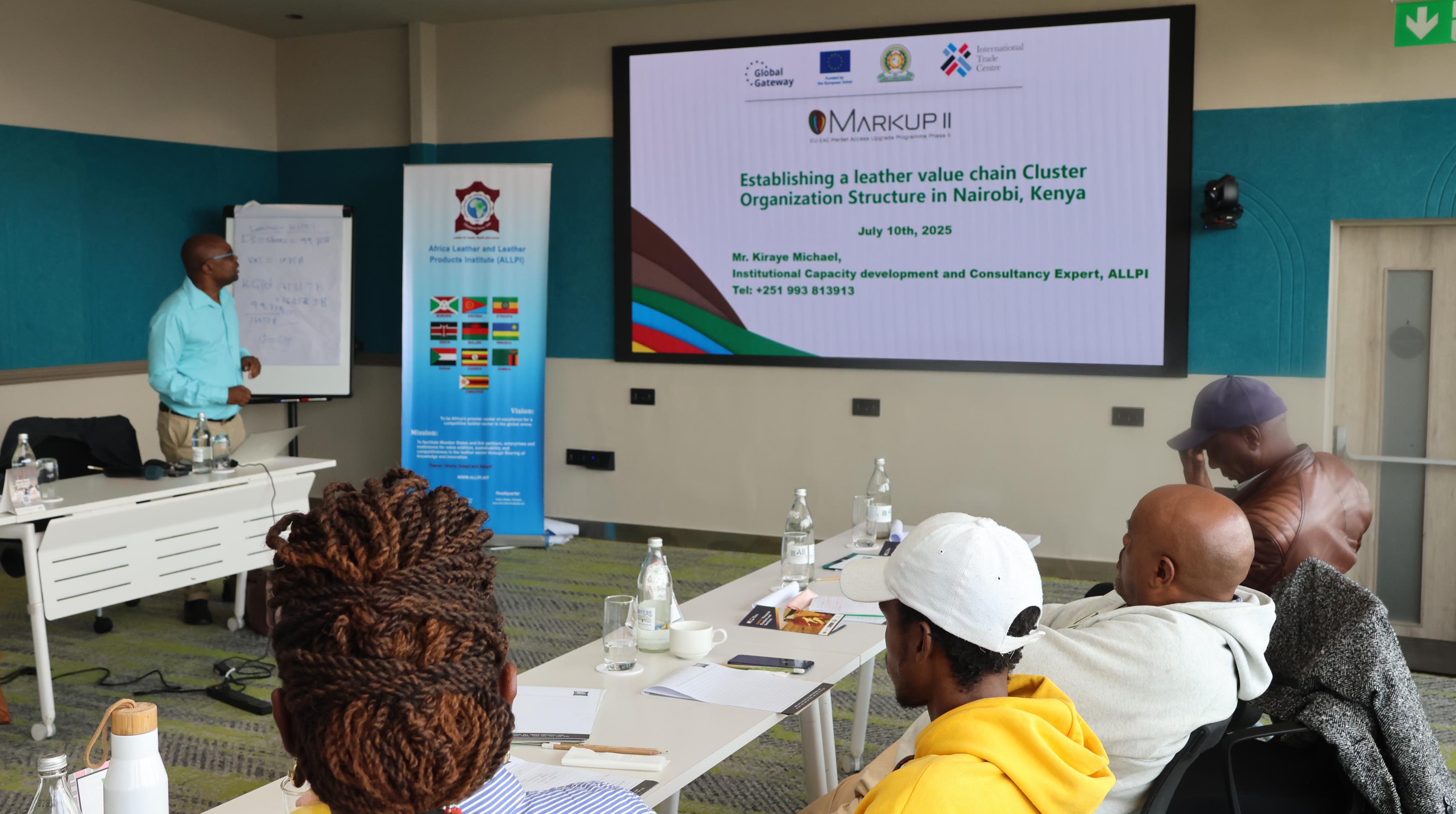
The expert, who spoke during a one-week workshop at a Nairobi hotel, noted that the training was aimed at equipping leather entrepreneurs on formation and management of business cooperatives.
The training, which is a collaborative effort between the State Departments for Industry, Cooperatives and Trade, is being undertaken by the ALLPI.
“The government is committed to building a vibrant and sustainable leather industry that supports livelihoods, drives exports, and positions Kenya on the global leather map,” said Peter Wanjohi, Deputy Commissioner for Cooperatives Development.
The traders and entrepreneurs appreciated the government’s efforts to mainstream the Micro, Small and Medium Enterprises (MSMEs) and support their growth through the Bottom-up Economic Transformation Agenda (BETA).
“We are struggling with unethical traders who make corrupt deals especially with the raw material producers, thus affecting market prices and leaving us with zero profits,” said John Ngonjo, an entrepreneur from Dagorreti, Nairobi County.
"Being in a co-operative will provide a platform and capacity to access legal assistance to deal with such traders because they are member-centric in nature,” he added.
Jackline Mutune, founder and CEO of Thonge Leather, said the biggest challenge the traders face is fluctuation of prices owing to lack of formal structures that mitigate unfairness in raw materials.
“Lack of skilled personnel also limits the quality of output in the sector,” she added.
President William Ruto while commissioning the Ewaso Ngi’ro Tannery and Leather factory Narok noted that development of leather development parks was meant to boost Kenya’s leather industry through local processing and value addition, further reducing reliance on imported leather goods.
The government has injected Sh1 billion for the expansion of the Ewaso Ng'iro tannery and leather factory in Narok County.
President Ruto said players will be capacity build and equipped with the right tools to ensure that the quality of the leather produced from the abattoirs meet the international standards.
The tannery has a processing capacity of 2.4 million tons annually and the boost to the tannery would go a long way in reducing Kenya’s reliance on imported leather goods and spur economy growth through job opportunities in the Arid and Semi-Arid Lands (ASALs) regions.
Leather as one of the oldest and most flexible sectors contributing approximately 1.5 per cent to the overall Gross Domestic Product [GDP]. The BETA Plan prioritizes the leather chain as a key area for industrialization and export expansion.
Kenya’s rich livestock population, estimated to be the 11th largest in the world, presents an abundance of raw materials positioning the country at a vintage point in the leather industry.
The Kenya Investment Authority (KenInvest), opportunities from production to manufacturing lie across the value chains. These are among others include manufacturing, supplying and testing of chemical used in the tanning process; supplying of accessories; and creation of complete leather products for the market.
Already, the Kenanie Export Processing Zone in Machakos County is designed to accommodate 36 tanneries and 18 leather product manufacturers, in addition to logistical services and amenities like banks and recreation services, available.
The Government through the Ministry of Investment Promotion, Trade and Industry has continued to open up markets for both local and foreign investors to access through trade agreements.