
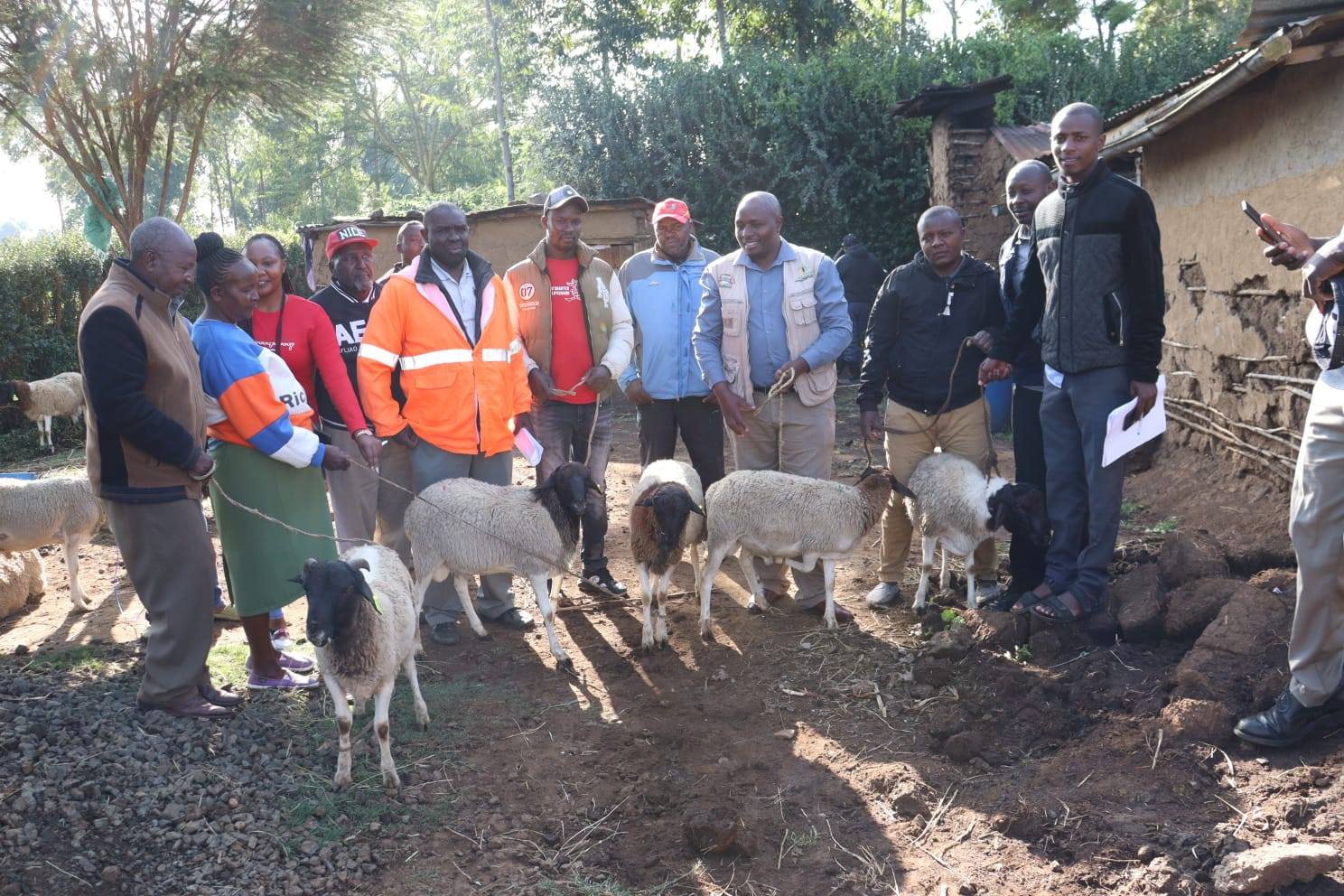
Dorper sheep gain popularity in Nakuru due to fast growth and high returns
Anne Mwale-KNA
Dorper sheep rearing is gaining traction in Nakuru due to the breed’s hardiness, rapid growth, and good meat quality.
Originally from South Africa, Dorpers have adapted well to Kenya's climate, especially in semi-arid regions.
Their ability to thrive on minimal feed coupled with their fast maturity and high lambing frequency makes them a profitable choice for commercial sheep farming.
The County Government of Nakuru through its livestock breeds improvement programme is distributing Dorper rams to enhance sheep breeds and productivity in the region.
When he handed over 65 Dorper rams to ten farmer groups from Elementaita Ward in Gilgil Sub-County, Livestock, Fisheries, and Veterinary Services Chief Officer Dr Michael Cheruiyot noted that the breed also has a very good feed conversion efficiency and not selective grazers, hence will flourish even on relatively poor-quality feeds.
“Some farmers in what are called veld management systems put Dorper at the tail end of the feeding hierarchy for consumption of feeds not utilised or rejected by other livestock. This saves feed wastage,” he pointed out.
Previously, he noted, most farmers in the devolved unit had been relying on recycled breeding rams, which had led to the production of undersized sheep, hence fetching a low income from their flock.
“Dorper sheep reach market weight quickly, offering faster returns on investment. They are fast growers and will attain 40 kilogrammes in just four months: making it very economical to produce.
“Research has put its daily weight gain at around 90 grammes. Add good nutrition into your plan and this can be increased and market weight attained even faster,” Dr Cheruiyot explained.
He was optimistic that the livestock breeds improvement programme will help improve sheep production and help weed out the current breeds that have been affected by inbreeding.
The Chief Officer said the change to dorper sheep is good for farmers since they are relatively low-maintenance animals and have good resistance to diseases and parasites.
Dorpers also have strong foraging abilities, which allows them to graze on a variety of vegetation, making them well-suited for extensive grazing systems.
The veterinarian said by rearing the sheep, local farmers can tap into the high demand of their potentially upper market prices for their products, adding that they can be effectively crossbred with other breeds to improve specific traits such as wool quality or disease resistance.
Dr Cheruiyot said the breed’s flexibility allows farmers to adapt their flocks to specific production goals and market requirements, and that makes them extremely popular.
Additionally, he said Dorper sheep are known for their adaptability to various climates and environments since they can tolerate both hot and cold weather conditions, making them suitable for Nakuru’s diverse climate.