
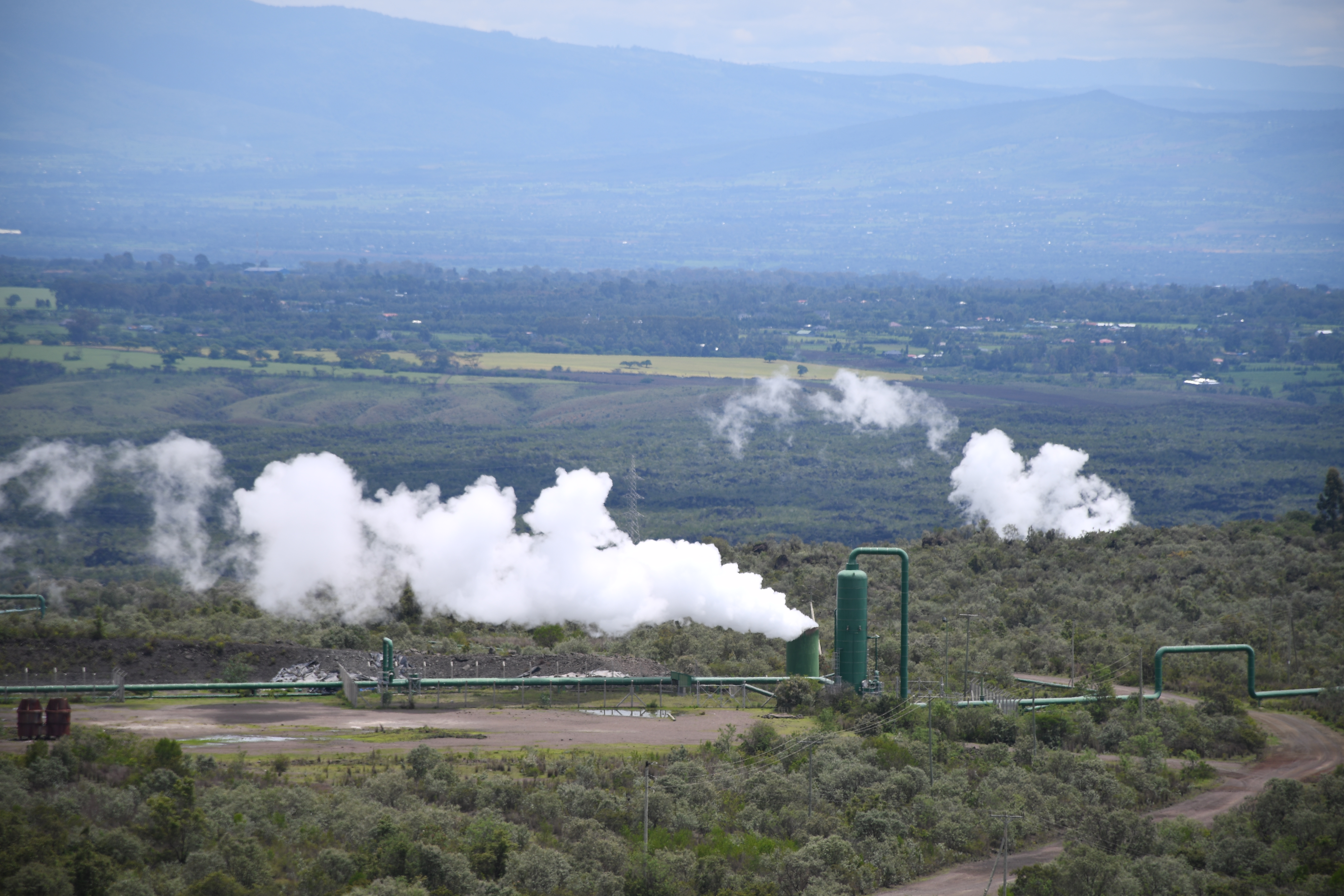
GDC’s additional 105MW to lower power tariffs
Jane Ngugi and Dennis Rasto-KNA
Kenyans will soon benefit from lower power bills when two independent power producers (IPPs) start generating geothermal power next year.
The IPPs will be generating power from geothermal steam wells on the floor of Menengai Crater in Nakuru County.
The first geothermal power plant at Menengai, built by local firm Sosian Energy started electricity production in 2023 after completion through Sh6.5 billion funding from the China-based, Zhejiang Kaishan Compressor.
The Geothermal Development Company (GDC) signed a 14-year Sh1.8 billion operation and maintenance of systems agreement with Sosian Energy.
The Menengai fields were developed by GDC, which is mandated by undertaking the capital-intensive work of exploration for geothermal steam and then developing viable fields by drilling production wells and building steam gathering systems.
GDC competitively selected three firms, Sosian Energy alongside Quantum Power East Africa and the American firm OrPower Twenty-Two Company in 2013, through competitive bidding to build, operate and own the first three power plants in Menengai, each generating 35 megawatts to pump into the national grid a cumulative 105 megawatts.
According to the Deputy Manager for Corporate Communications and Marketing at GDC Mr. Eric Wamanji, construction of Quantum Power East Africa’s power generation facility was 60 per cent complete, while works at OrPower 22 Power Company were 50 per cent complete.
Mr. Wamanji affirmed that once the two firms join Sosian on the nation grid within the first quarter of next year, electricity generated from the multibillion-shilling Menengai Geothermal Project will cost at least Sh8 per kilo watt compared to fossil fuel or hydro generated power which costs Sh22 per Kilowatt hour (kWh).
He said entry of the three IPPs into electricity generation is expected to yield a significant drop in power tariffs and in turn attract more investors locally and regionally, as they will have a huge saving on energy and creating employment opportunities. Prices of various value-added commodities, he observed, will drop drastically.
Speaking during GDC’s public engagement with the public and stakeholders at the Nakuru Agricultural Society of Kenya (ASK) Trade Fair, Mr Wamanji explained that the state corporation has drilled steam wells with an output of 165 megawatts which is more than enough for the first 105MW of electricity expected to be generated by the three IPPs.
GDC has constructed the steam gathering system while Kenya Electricity Transmission Company (Ketraco) has set-up a 132 kilovolt (kV) substation that will transmit electricity from the three power plants.
The GDC was to take care of upfront risks and then invite private sector players to construct, own and operate the plants for 25 years under the Menengai Model.
According to Mr Wamanji, the completion of the 105MW Menengai project will elevate Kenya’s global ranking to fifth overall, establishing beyond all contestation that economic growth and clean energy development can go hand in hand.
In addition to increasing the renewable energy generation capacity in the country, the Menengai geothermal project is expected to reduce greenhouse gas emissions by 1.95 million tonnes of carbon dioxide annually.
The country will save more than Sh13 billion as fuel levy annually and ultimately lower the cost of power bills, a move that would see Kenya save some Sh45 billion spent to buy diesel, he said.