



Relief for exporters as Kenya meets EU deforestation standards
Wangari Ndirangu KNA
Kenya has been classified as a low-risk country under the European Union’s new deforestation regulations, a reprieve for local exporters concerned about emerging compliance costs.
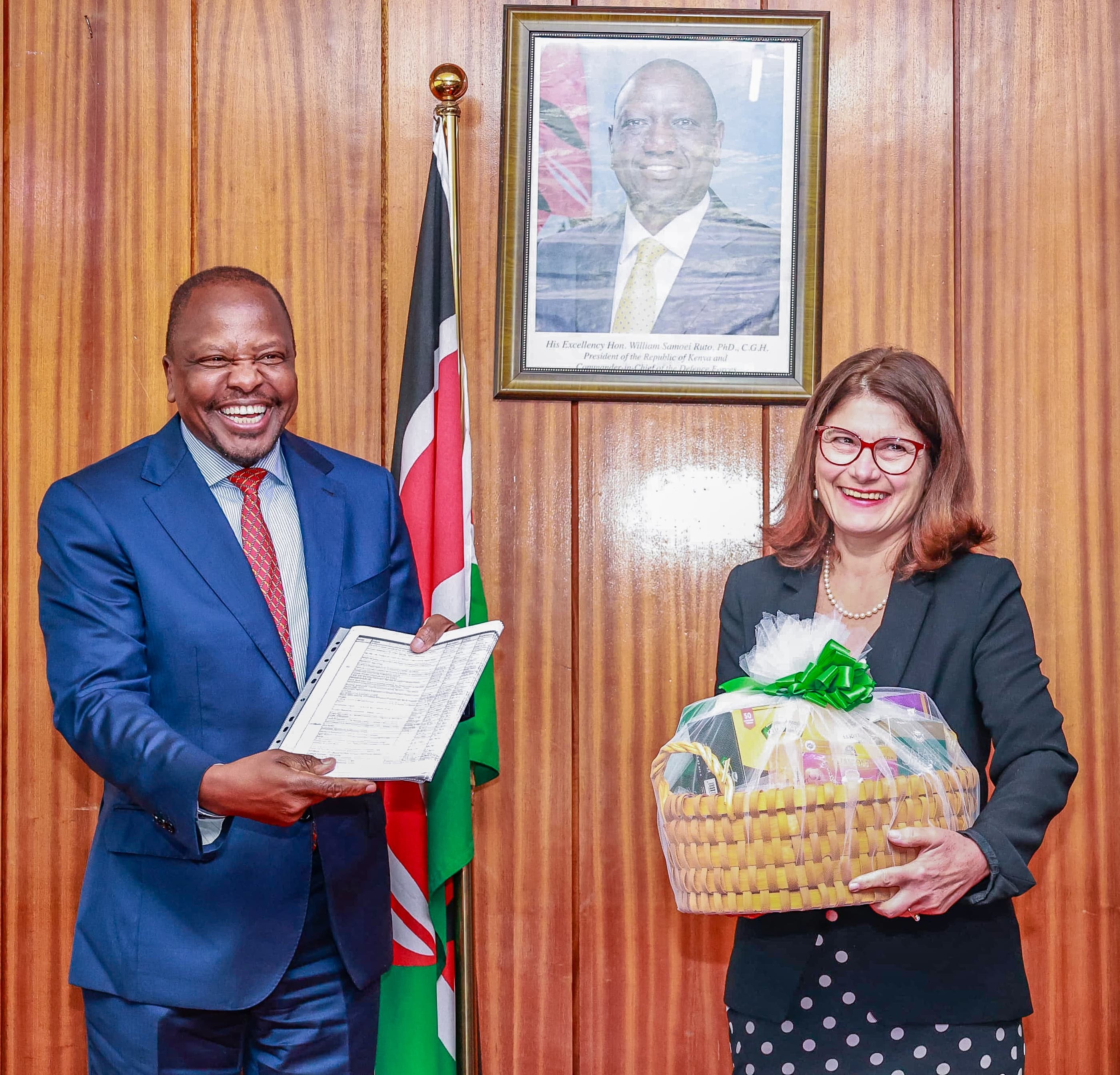
The reassurance came during a high-level meeting between Agriculture and Livestock Development Cabinet Secretary Mutahi Kagwe and EU Ambassador to Kenya, Ms. Henriette Geiger, held at Kilimo House.
The meeting comprised top officials from the Kenya Plant Health Inspectorate Service (KEPHIS) and the Agriculture and Food Authority’s Coffee Directorate and centered on strengthening agricultural trade ties while addressing challenges posed by evolving EU regulations.
Kagwe welcomed the EU’s recognition of Kenya’s environmental efforts, acknowledging that the country’s tree cover is steadily increasing, bolstered by the expansion of crops such as avocado and coffee, which contribute to reforestation.
The CS warned against what he termed shifting goal posts that could jeopardize Kenya’s competitiveness in the European market.
“These regulations increase the cost of production for Kenyan farmers,” he said, referencing the recent introduction of the deforestation law shortly after Kenya had successfully implemented the False Codling Moth (FCM) Systems Approach Protocol for rose flower exports.
Geiger, on her part, allayed fears, assuring the Cabinet Secretary that Kenya was regarded as low risk and that it will not face a stringent assessment under the new EU rules.
She further indicated that the EU would continue to consult its partner nations to evaluate the real-world impact of such regulations.
On the issue of FCM, the meeting heard that Kenya’s efforts to control the pest are yielding good results. KEPHIS reported a drastic reduction in flower interceptions at EU borders, with none recorded last month and only one this month.
KEPHIS began implementing the Force Code Removal System Approach Protocol in January of that year, and following its implementation, there was a drastic reduction in the number of cases—strengthening Kenya’s phytosanitary compliance and safeguarding a vital export sector.
Despite the progress, exporters have raised concerns over the current 25 per cent sampling rate for flower consignments, arguing that it is overpriced.
KEPHIS Managing Director (MD) Prof. Theophilus Mutui urged the EU to consider reducing this to between five and 10 per cent and called for the deployment of more inspectors to facilitate smoother export processes.
With daily exports exceeding 60 million stems of cut roses to the EU and UK, enhancing value chain efficiency is essential for sustaining Kenya’s competitiveness in the global floriculture market, he said.
The discussions also centered on pesticide regulations. In response, Kagwe said the government is actively promoting the pyrethrum industry as a sustainable and organic alternative, aligned with both local priorities and global environmental standards.
The Coffee Directorate, on its part, shared ongoing efforts to geo-map coffee farms across the country, a move aimed at enhancing traceability and aligning Kenyan coffee with international compliance standards.
The meeting underscored Kenya’s commitment to meeting international baselines while advocating for fair and stable trade practices that do not unduly burden farmers.