
Government to establish specialized college for correctional officers
ALBERT MUTESHI-KNA
The Government will establish a premier institution, the Kenya Correctional Service College, to provide training on correctional service matters. The college, which will operate under the State Department for Correctional Services, will offer teaching, training, and innovative research in correctional education and development.
According to the technical committee vice chairperson, Senior Assistant Commissioner General of Prisons and Commandant at the Prisons Staff Training College, Angus Masoro, the college is part of the recommendations in the Correctional Service Bill, 2025, which is currently undergoing public validation.
“This does not mean we will do away with the Prisons Staff Training College, but we aim to professionalize the correctional service. Over the years, we have been sending our staff to other universities and institutions, including the Kenya School of Government, for training,” he said.
“We shall also be able to attract other personnel to train in our college and stamp our authority as correctional services,” he said.
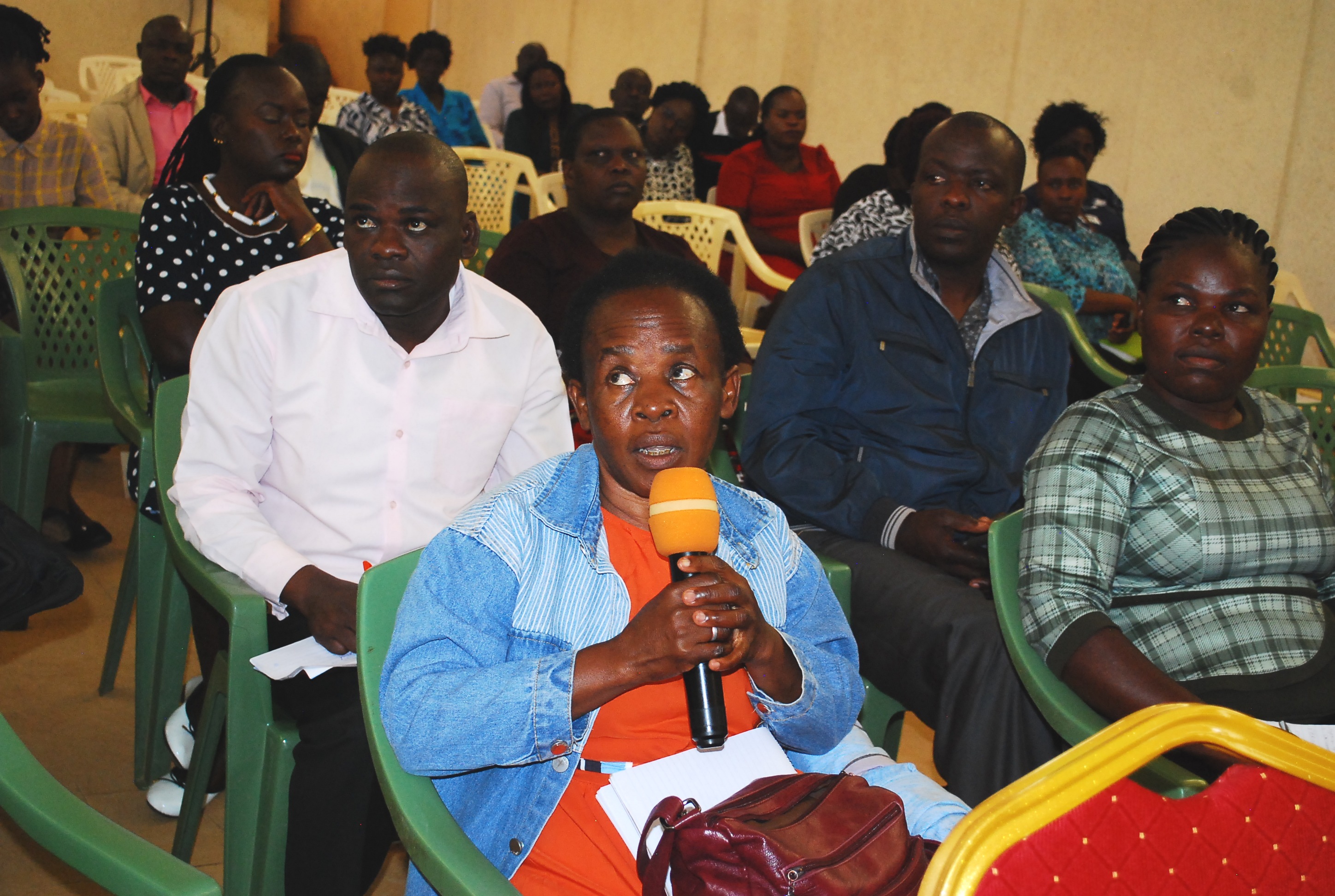
Speaking in Kakamega town during a public validation forum, Masoro said the proposed bill on policy and regulatory framework also seeks to merge the Prison Service, Probation and After-care Service to become the Department of Correctional Service.
Masoro said the controversial issue of conjugal visits for inmates in prison has once again come into the spotlight.
“The hot debate on this subject has not been addressed fully in the regulations, neither in the previous law nor in the proposed policy,” he added.
“There is also the general feeling that intersex, who are being confined within one institution but separately from male and female, should be accommodated in their own institution,” he added.
Probation Officer and a member of the Technical Committee on the Development of the Legal and Policy Framework for the Correctional Service, Mr. Michael Matekwa, said the legal and policy mandate in the field had not been reviewed for about 100 years.
“This is a window of opportunity to align the laws we are making to both the constitution of 2010, the international instruments and the good practice in the offender management,” he said.