
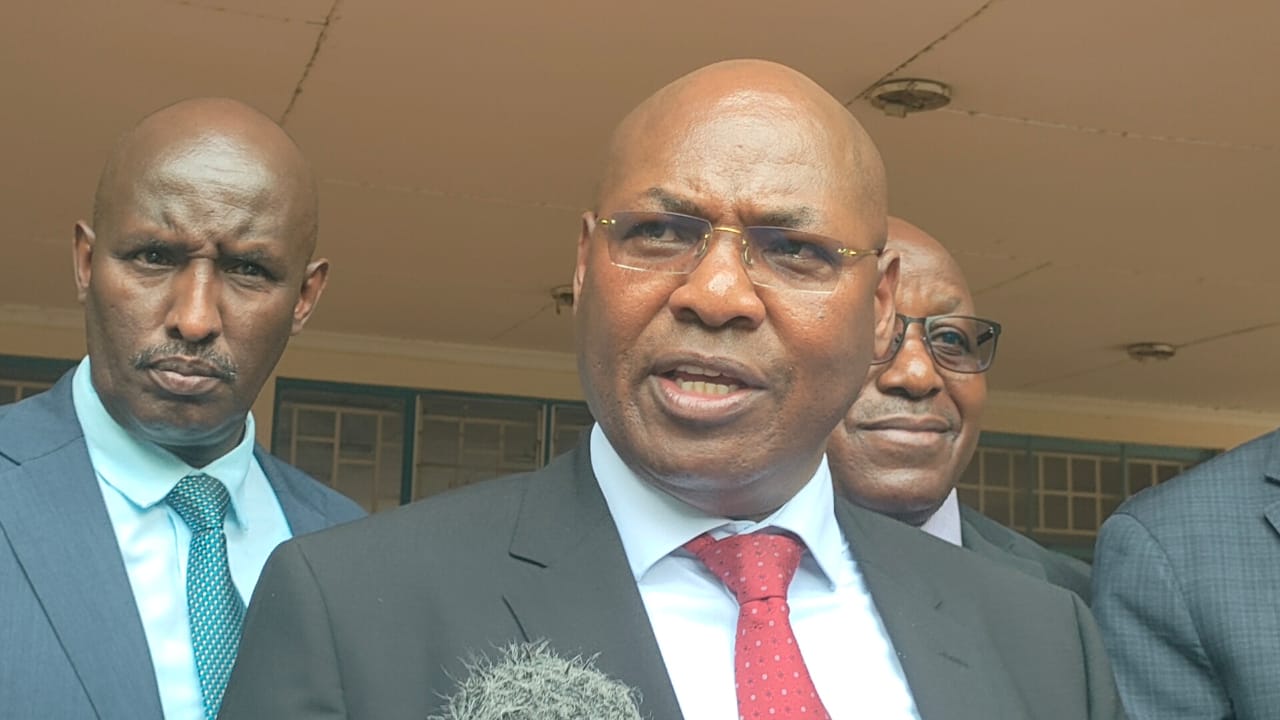
Gov’t warns private hospitals sabotaging Taifa Care program
SAMUEL WAITITU-KNA
Private hospitals that decline to offer outpatient services under the Taifa Care program risk having their operating licenses revoked. Outgoing Health Principal Secretary Harry Kimtai said the government will not hesitate to take stern action against such facilities, accusing them of jeopardizing the lives of Kenyans and sabotaging the national medical scheme.
Speaking in Embu Town during the handover of new digitization devices for the Taifa Care health program, Kimtai accused some private hospitals of deliberately denying outpatient services to pressure the government into settling outstanding medical claims owed to them under the defunct NHIF.
He emphasized that the government will not be coerced into meeting these demands, noting that it has already committed to settling all valid claims.
“We will not succumb to pressure. Private hospitals with claims exceeding Sh10 million must provide verifiable supporting records for scrutiny,” he stated.
“Failure to do so will leave the government with no choice but to take serious action, including suspending the operations of non-compliant hospitals.
“If you hold a license to provide healthcare services but fail to do so, then you have no business operating,” he warned.
Kimtai said the ministry is fed up with private hospitals manipulating the system and vowed that such actions would no longer be tolerated. Additionally, he questioned the timing of the claims, suggesting a deliberate attempt to discredit the SHA program.
“Why are these hospitals demanding payment for claims dating as far back as 2016? Why didn’t they pursue these claims earlier?” he asked.
He reiterated that the SHA program is designed to ensure all Kenyans— whether they visit public or private hospitals—can access essential medical services without financial barriers.
The PS urged private hospitals to uphold their commitment to public health by offering outpatient services as required under SHA. Kimtai also highlighted the role of digital systems in increasing transparency in a process long plagued by opacity and manipulation.
“The government is determined to track every shilling, ensuring it reaches the right facilities and serves the people who need it most,” he said.
Meanwhile, the President’s Economic Advisor for Special Programs, Moses Kuria, stressed that under the SHA program, Kenyans are entitled to free primary medical services at government facilities.
He noted that in Embu County alone, the government has allocated Sh32 million for outpatient services, benefiting more than 24,000 people.
Of this amount, Kuria said Sh24 million was earmarked for public facilities, while Sh8 million will go to private hospitals participating in the program.
However, he pointed out that the amount each county receives depends on the number of registered SHA beneficiaries, emphasizing that the government is committed to ensuring equitable resource distribution.