
Nakuru unveils Sh2.55b nutrition programs to improve public health
ESTHER MWANGI AND PATIENCE MORAA- KNA
The County Government of Nakuru is implementing the Sh2.55 billion County Nutrition Action Plan (CNAP) by reviewing its nutrition programs and policies to improve the health and well-being of the population.
County Nutrition Coordinator Wangui Kihara stated that the County has introduced commu nity-based management, supplementary feeding programs for pregnant women, and capacity building for healthcare workers to provide nutrition services in all health facilities as a means of ad dressing undernutrition within the devolved unit.
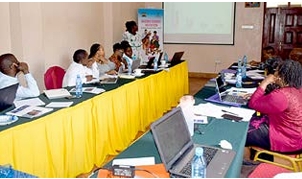
To assess the outcomes of the program, the coordinator mentioned that the Department of Health, in collaboration with Nutrition International, is conducting an end-line survey to evaluate nutrition practices, knowledge, and capacity in various contexts.
The weeklong survey is expected to measure how interventions have influenced nutrition behaviors, practices, and outcomes. She added that the end line survey will provide critical insights into the effectiveness of interventions and approaches implemented under the CNAP.
“We’re looking at outcomes in knowledge and how different strategies have shaped nutrition practices in various set tings,” Ms. Kihara added.
Kihara explained that the County Nutrition Action Plan (CNAP) developed with financial and technical support of Nutrition International, county administration and nutrition stakeholders, was guiding the devolved unit in scaling-up the nutrition interventions over the next five years.
According to Kihara the CNAP program reflects the Governor Susan Kihika’s administration commitment to evidence-based programming to improve the nutritional health of the region’s population and ensure sustainable development in Nakuru going forward.
While acknowledging that malnutrition has both health and economic consequences and under mines basic human rights, Ms Kihara said the County was targeting to reduce malnutrition in children under five and expectant women by 60 percent and 58 percent respectively in the next five years as outlined in the County’s 2018-2025 CNAP.
“Other interventions by the county towards addressing malnutrition are provision of afforda ble healthcare services and medical and nutrition commodities and supplies to hospitals,’’ added the County official.