
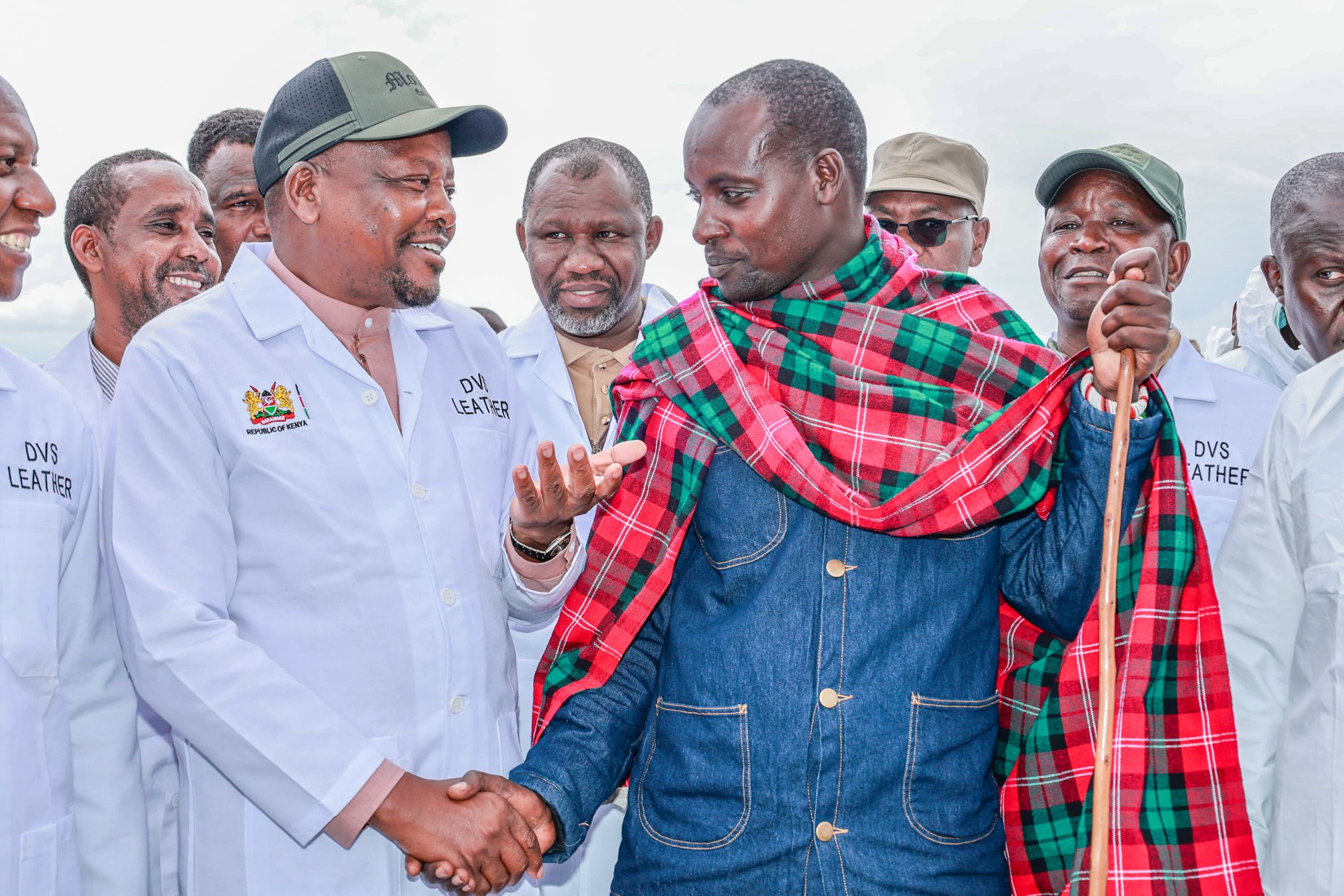
State rolls out mass vaccination for livestock to secure export markets
MARTIN MUNYI, KNA
The Government has launched a nationwide vaccination campaign for all livestock in the country against Foot and Mouth Disease (FMD), targeting cattle, sheep, and goats.
abinet Secretary for Agriculture and Livestock Development, Mutahi Kagwe, launched the campaign on Thursday at Kisargei village in Laikipia County.
The exercise aims to vaccinate 22 million cattle, 23 million sheep, and 35 million goats. Kagwe urged livestock keepers to present their animals for vaccination at designated centers across the country and dismissed negative narratives against the exercise, calling them propaganda.
“The propaganda stems from misinformation, with many of those opposing the exercise speaking out of ignorance. Initially, I also didn’t fully understand its importance, but now I am well-informed,” Kagwe said.
The CS assured farmers that the vaccines were safe for livestock, emphasizing that they were manufactured locally at the Kenya Veterinary Vaccines Production Institute (KEVEVAPI) and certified for use.
He dismissed speculation that the vaccines were imported from Western nations. He further noted that KEVEVAPI was also producing Fortvax for FMD and Pestevax for ruminants, supplying vaccines to 12 other African countries that lacked production capacity.
“KEVEVAPI exports vaccines to 12 countries in the region. For instance, we still have pending orders from neighboring Uganda. As a government, we are increasing the institute’s manufacturing capacity to meet demand,” he said.
The CS urged Kenyans not to politicize the vital vaccination exercise by spreading unfounded speculation, reiterating that the vaccines were locally produced by Kenyan experts.
He highlighted that vaccinated livestock would fetch better prices in export markets, encouraging farmers to take advantage of the free vaccination program.
“The livestock our farmers rear are their livelihoods. It is the government’s responsibility to ensure they have healthy herds, and one way of achieving that is through vaccination,” he said.
Currently, Kenya has signed trade agreements with the UAE and the EU, which have GDPs of USD 850 billion and 17 trillion euros, respectively.
These lucrative markets are at risk if livestock diseases persist, a challenge the vaccination program seeks to address. The CS also announced that Laikipia County would benefit from the government’s livestock restocking program to replace animals lost during last year’s drought.
Laikipia County Governor Joshua Irungu, who also attended the event, warned that unvaccinated livestock from neighboring counties would not be allowed to migrate into Laikipia in search of pasture.
“I am putting herders from Samburu, Isiolo, and other bordering areas on notice—no animals will be allowed to graze in Laikipia unless they have been vaccinated. We are committed to ensuring all our livestock are vaccinated and healthy,” Irungu said.
He stated that the county aims to vaccinate all 800,000 sheep and goats and 350,000 cattle within the next six months. Laikipia North MP Sarah Lekorere urged pastoralist communities to embrace the vaccination exercise, emphasizing its benefits for their livelihoods.