
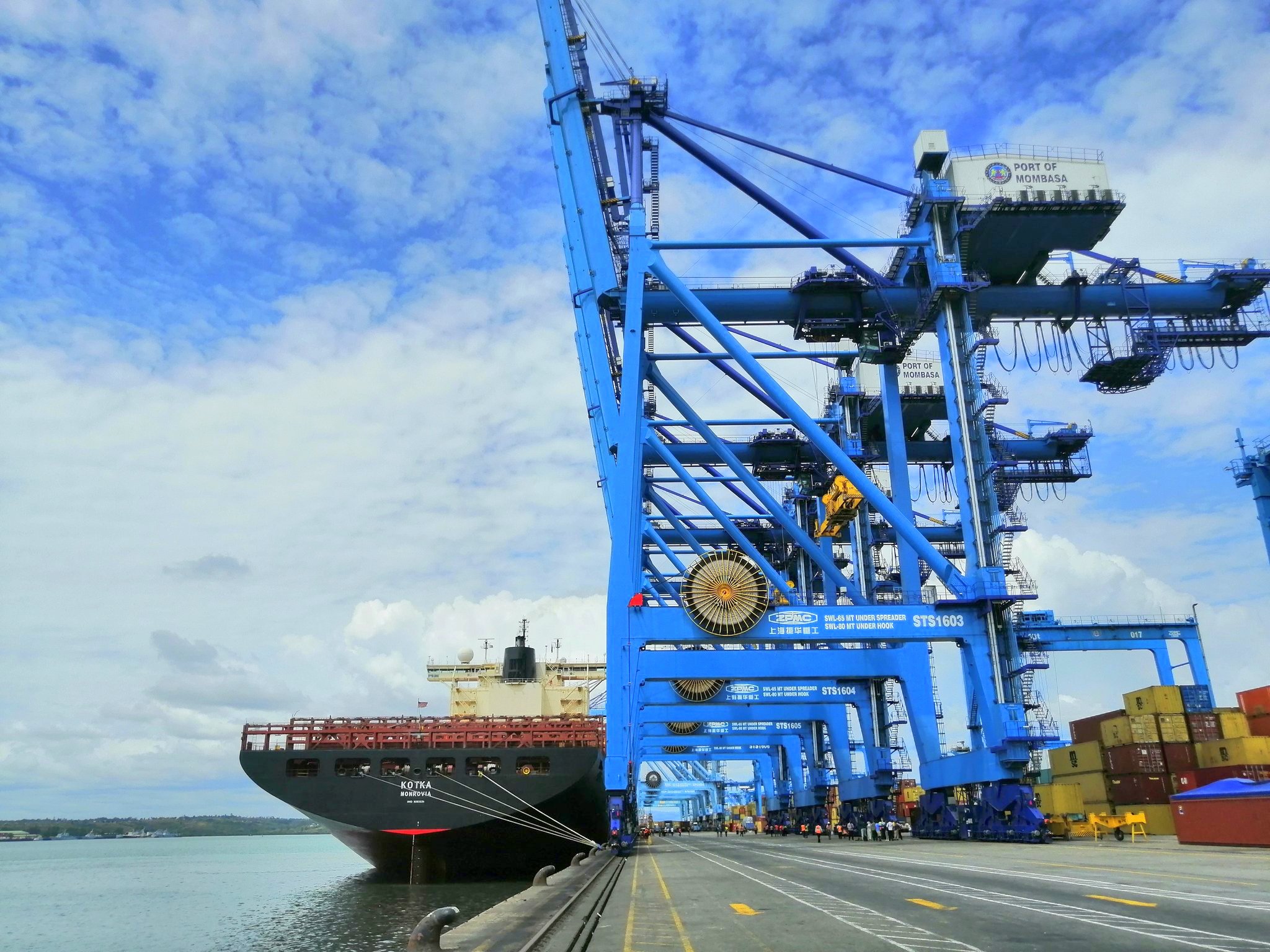
Cargo growth soars at Mombasa Port amid operational efficiency
FATMA SAID-KNA
The Kenya Ports Authority (KPA) anticipates handling 2.2 million twenty-foot equivalent units (TEUs) by the end of 2024, marking a 20 percent increase from last year’s performance.
KPA Managing Director, Captain William Ruto, revealed that the port has already exceeded last year’s target of 1.6 million TEUs, with current volumes reaching 1.75 million TEUs.
He attributed this impressive growth to improved operational efficiency and streamlined processes at the facility. “The growth of the global economy is at five percent, while that of East Africa is about five to seven per cent,” Ruto noted.
Ruto applauded KPA’s growth, saying such levels have not been reached before. He added that over the last two years, cargo volumes have increased so significantly that they will soon surpass the port’s current capacity of 2.1 million TEUs.
Speaking at the KPA headquarters in Mombasa, Ruto said the Authority is working to boost the port’s capacity by expanding Container Terminal 1, also known as Berth Number 19B.
He added that KPA will soon sign a contract with the contractor to add 240 meters of quay length, increasing the port’s capacity by an additional 300,000 TEUs. “Before I took over as the CEO, the port was handling 1.4 million TEUs.
By the end of my first year in 2023, we had achieved 1.6 million TEUs, a growth of 12 per cent compared to the previous 0.4 percent,” Ruto said.
He further stated that the port now serves more than eight transit countries and that the transit market has grown by over 35 per cent.
Ruto said the Port is also implementing major upgrades including the modernization of the Terminal Operating System and the acquisition of advanced equipment in order to enhance the Port’s operational efficiency.
As he reaffirmed commitment to operational efficiency, cost reduction, and environmental sustainability through the strategic investment in the new oil terminal which has drastically reduced ship waiting times, he noted that KPA has also addressed the long-standing challenge of high demurrage costs.
These costs, which are often passed on to consumers, have historically contributed to the rising prices of fuel and related products.
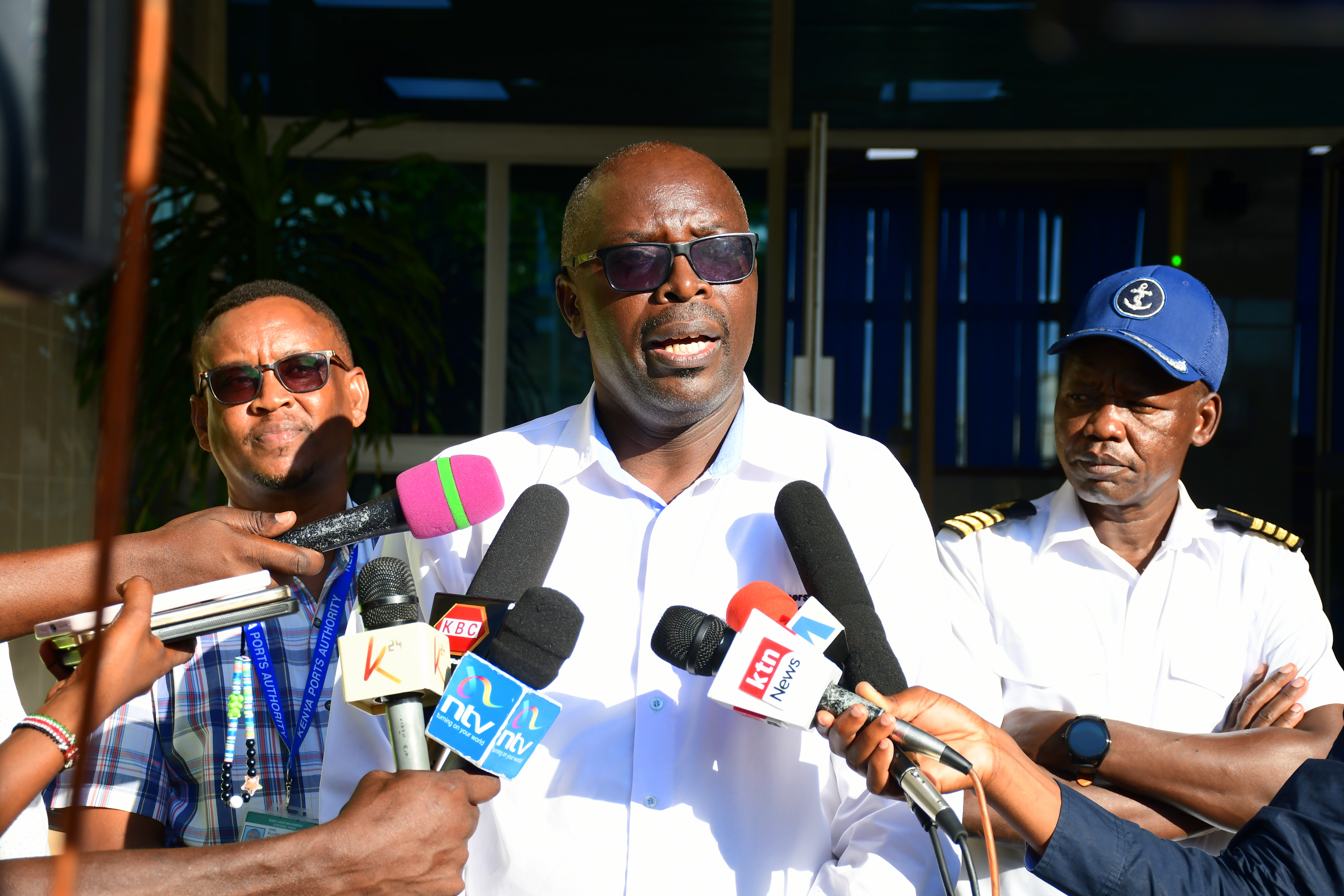
Chief Executive Officer (CEO) of the Shippers Council of East Africa Agayo Ogambi (c) flanked by Kenya Ports Authority (KPA) Managing Director (MD) Capt. William Ruto (R) briefs the media at KPA Headquarters, Mombasa. Photo/Andrew Hinga
By minimizing these delays, KPA is ensuring that the cost burden on end-users is significantly alleviated which has led to the continuous drop of petroleum products’ cost.
“KPA’s investment in the oil terminal is a testament to its unwavering dedication to modernization, economic growth, and environmental stewardship. As the project takes shape, it is poised to cement Kenya’s position as a leader in innovative and sustainable port management across Africa,” Ruto said.
He noted that several ships have recently introduced new services at the Port, noting that despite what is going on in the Red Sea, KPA has continued to record improved efficiency, improved ship turnaround time, and improved rail productivity.
Agayo Ogambi, the Chief Executive Officer (CEO) of the Shippers Council of East Africa, who is also the chairman of Port Charter on his part appreciated the tour of the facility noting that the Port chatter has helped to monitor the port’s performance and efficiency.
Ogambi said the cargo dwell time in Nairobi has been reduced from highs of 4.5 to 3.5. while Mombasa has above 79 hours, which is a good indicator.