
Kenya’s rhino conservation efforts get a boost with advanced tracking technology
Arnold Linga Masila-KNA
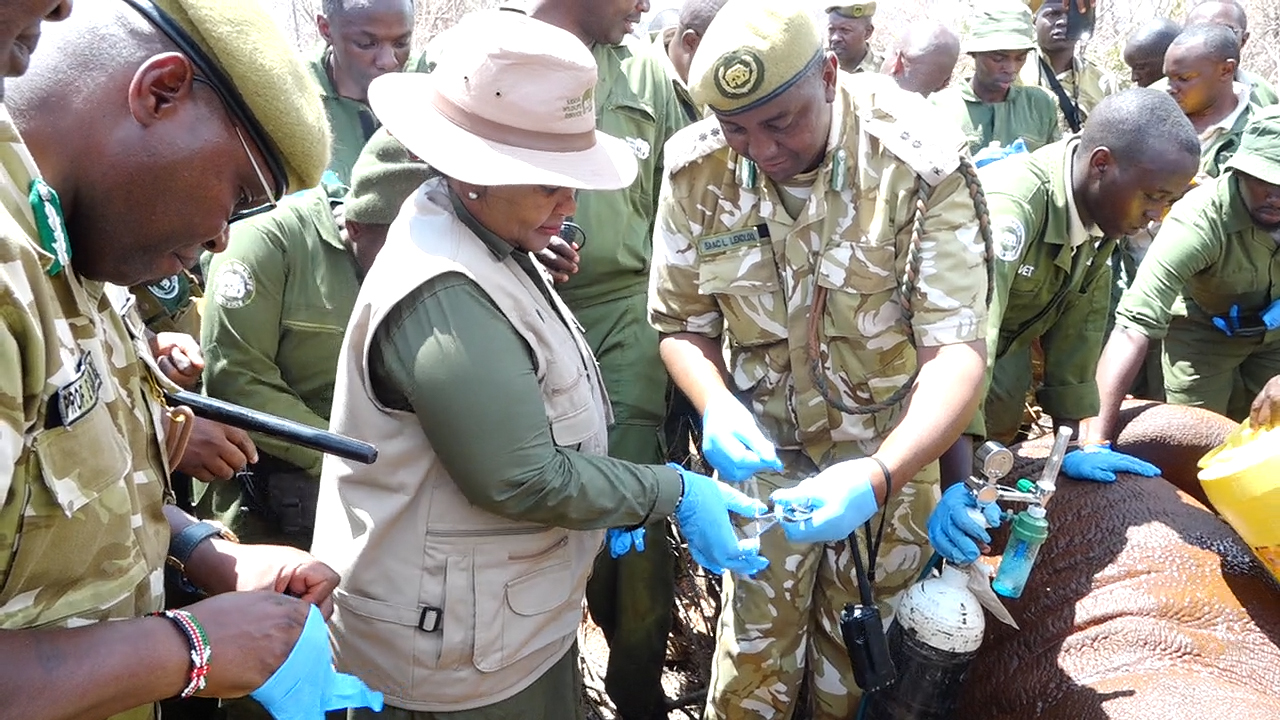
The Government has implemented a high-tech tracking system to monitor black rhinos at Ngulia Rhino Sanctuary to enhance conservation efforts for this endangered species.
The exercise was launched by Tourism and Wildlife Cabinet Secretary Rebecca Miano.
The initiative combines ear-notching and real-time surveillance to curb poaching and ensure the well-being of the threatened rhino population.
The project, managed by the Kenya Wildlife Service (KWS), will use advanced tracking devices to monitor the movements and health of 178 black rhinos within the Tsavo West Conservation Area.
Ngulia Wildlife Sanctuary hosts 90 per cent of the remaining Southern black rhinos globally. Hence, Miano emphasized the significance of these efforts, noting that the sanctuary has grown its rhino population from just three to over 100 in the past four decades, reflecting Kenya’s role as a global leader in wildlife conservation.
“Kenya is a custodian of 90 per cent of southern black rhinos; 90 per cent of those in the world are found in Kenya. And so, we need Kenyans to know what heritage we hold, and that conservation is an initiative that no one should be left behind and Kenyans can only participate if we give them the information and we show them what we are doing,” the CS said.
The tracking devices, which include ear-notches and VHF transmitters, allow KWS teams to track each rhino’s movement hourly, gathering essential data to enhance anti-poaching efforts and improve animal care.
On the other hand, Kenya Wildlife Service Director General Erastus Kanga highlighted that the technology used, including a long-range network device, would provide a year’s worth of detailed tracking information, allowing real-time monitoring from both aerial and ground patrols.
“We have tagged the animals in three ways. We did earmarks and put in a number there.The number was I think 130. And we have also put in a transmitter that is a VHF that you can go to locate where the animal is when you are out flying.
"The third one is a long-range network device that can give us signals every hour of where the animal is and the wellbeing of the animal, and we're able to collect a lot of other information using those devices,” Kanga explained.
However, according to Kanga, the entire exercise for the most critically endangered animals, especially rhinos, cost about Sh4 million, which is government money, and is complemented by KWS partners.
As a symbolic gesture, the rhino tagged during the launch was named “CS Madam Miano” in honour of the Cabinet Secretary, who has adopted it.
This highlights the government’s dedication to conservation and calls on public and private sectors to adopt rhinos as part of the national “Tunza Mali yako” (Take care of your wealth) campaign, encouraging all Kenyans to support wildlife protection.
“Our clarion call is that we are asking our executives both in private and in public to come in and adopt the very many other animals, especially the critically endangered ones that we are conserving so that we can all learn together and conserve our heritage,” Kanga stated and urged Kenyans to join the ‘Tunza Mali Yako’ initiative adding that the heritage that the government has given to KWS is the people's heritage and that KWS is there to protect and conserve.
Miano highlighted the government’s commitment to compensate communities affected by wildlife-related incidents, acknowledging the ongoing human-wildlife conflict issue.
“We appreciate the communities, and we know many communities have embraced the animals, and they take care of them. But we are also cognizant that human-wildlife conflict is real, and that affects our communities,” she stated.
The CS emphasized that conservation efforts align with Kenya’s strategy to strengthen its wildlife economy, a vital component of its tourism industry.