
State launches regional peace initiative to combat violent extremism in East Africa
SHARON ATIENO- KNA
The Ministry of Interior and National Administration has launched a peacebuilding and violent extremism prevention initiative aimed at addressing the root causes of violent extremism across East Africa.
The program provides a valuable opportunity to assess achievements, ad dress challenges, and take actions that align with the new peacebuilding framework.
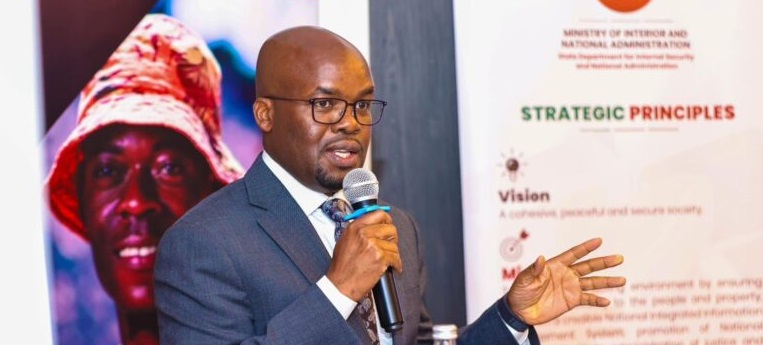
Speaking at the event, Dr. Raymond Omollo, Principal Secretary of the State Department for Internal Security and National Administration, stated that the launch marks a significant milestone in the partnership for lasting peace and development, as well as a commitment to addressing the critical challenges posed by violent extremism.
He commended stakehold ers in the sector for their shared responsibility and collective determination to tackle one of the most pressing security threats facing the continent. The PS noted that the country has been a strong advocate for peace, consistently prioritizing development over conflict, and has managed to maintain peace and stability, becoming a beacon of hope in the East and Horn of Africa region.
Dr. Omollo noted that certain regions of the nation have witnessed occasional extremist activities and incidents including those at Westgate, Mpeketoni, Garissa University, Dusit, and the Shakahola tragedy, which under score the persistent threat of religious motivated violence in the nation.
“These occurrences have not only led to devastating losses but have also left us in a perpetual state of heightened security and anxiety,” he said, adding that the competition for natural resources and border disputes, especially in arid and semi-arid regions, has similarly been a source of extremism.
Omollo said that pre-existing grievances are of ten exploited by extremist groups to further their agendas and from experiences, lessons are learnt which indicates that the communities, particularly in vulnerable regions, are often the primary targets of these threats.
“Social cohesiveness and peace cannot be enforced, they must be willingly embraced by citizens to be fully guaranteed and sustainable,” he observed, adding that Kenya’s journey on domestic peace building has accelerated in the last two years.
The PS announced that in March 2023, President Dr. William Ruto initiated a comprehensive evaluation of the peacebuilding architecture demonstrating the commitment to tackle the dynamic challenges related to peace, security, and societal cohesion.
He maintained that his ministry has a team of 13 distinguished Kenyan peacebuilding champions, whose mandate is mainly to spearhead the national dialogue and formulate the New Agenda for Peace in Kenya.
“While acknowledging the valuable contributions of existing peace mechanisms, the new framework identifies persistent conflict triggers and emerging pressures, such as violent extrem ism,” he said.
Omollo added that the new framework high lights varying risks across different regions that con tribute to radicalization and the escalation to violent actions.
Additionally, he stated that the peace building architecture outlines specific violent extremist risks including conflicts related to iden tity and politics, exposure to extremist ideologies and sensationalist coverage through online and media platforms and limited eco nomic opportunities that push individuals towards extremist groups.
“Our country recognizes the crucial need to strengthen our national legal and institutional frameworks, enhance border controls, and promote regional cooperation,” he stated, adding that effective implementation of the measures requires not only local efforts but also a sustained political will, adequate re sources and enhanced international assistance.
The PS noted that experience has revealed that the risks faced are not unique to Kenya, but are common globally, hence the need to leverage the collective security frame work outlined in the UN charter to address threats effectively.
Omollo noted the avail ability of a network of over 500 community-driven peace committees, which integrate traditional dis pute resolution mecha nisms involving elders, women, and youth and inter-faith leaders.