
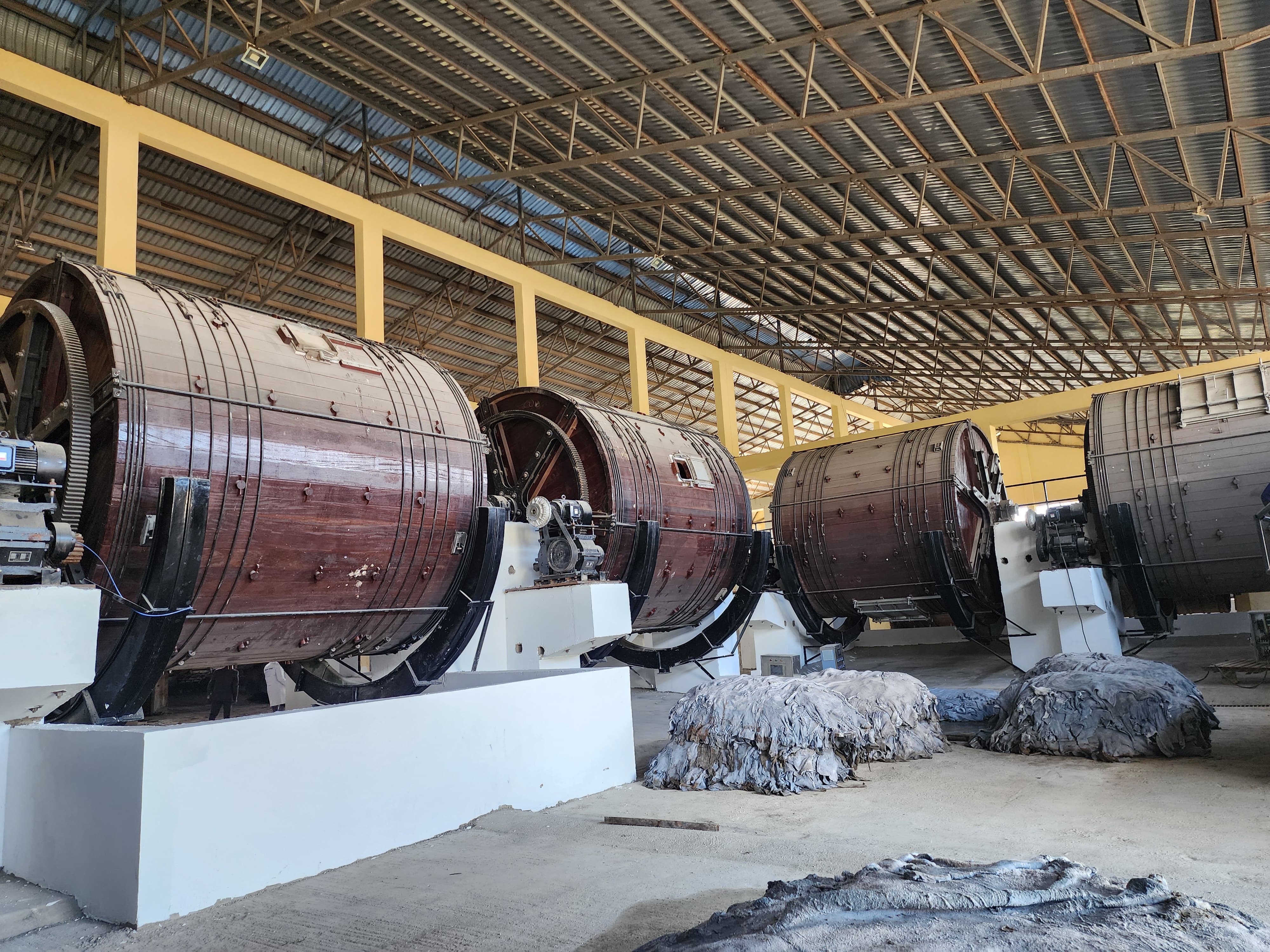
Kenya’s leather output to increase with Ewaso Ngiro tannery expansion
JOHN KALEKE- KNA
The Government has announced plans to expand the Ewaso Ngiro tannery’s annual output from 1,200 metric tons to 2,400 metric tons, effectively doubling its leather production capacity.
This increase is equivalent to 4.8 million square feet of leather, positioning Kenya as a strong player in the regional leather industry.
During a site visit to the Ewaso Ngiro tannery and leather factory, Ngala Oloitiptip, Managing Director of the Ewaso Ngiro South Development Authority (ENSDA), provided updates on the project’s expansion.
Oloitiptip stated that the expansion is under way, with the installation of new machinery set for a test run in December 2024, in preparation for full operations. He encouraged local suppliers to prepare for the factory’s increased demand for hides, emphasizing the need for a steady supply to maintain full operations.
“Our goal is to double production capacity, not only by increasing out put but also by enhancing the quality and variety of products available,” Oloitiptip said.
The Managing Director emphasized that the project is financially sustain able, with government backing to ensure its successful implementation.
Oloitiptip called on stakeholders to support the ambitious project. He urged the county government to help monitor and improve hide quality and encouraged learning institutions to train future factory workers.
“This expansion will create new job opportunities and drive economic growth, and we need all hands-on deck,” he added.
Engineer Anderson Korir, from the Presidential Delivery Unit, also the Secretary to the County Implementation and Coordination Management Committee (CICMC) reaffirmed the government’s commitment to addressing challenges in manufacturing.
“We’re working closely with ENSDA to overcome hurdles like skin quality, and we urge locals to adopt advanced branding methods such as hydrogen branding to preserve hide quality,” Korir noted.
He praised ENSDA management for their dedication to progress in the leather sector, recognizing the facility as a key asset for the region’s economy.
Narok County Commissioner Kipketch Lotiatia stressed the importance of adopting modern techniques to maintain hide quality.
“Traditional branding like the use of hot metal rods have compromised skin quality. Transitioning to new technologies is essential for producing hides that meet factory standards and satisfy international demand,” he said.
With all efforts aligned, the expanded tannery is set to become a corner stone of Kenya’s leather industry, driving local economic growth and establishing the nation as a key supplier of quality leather products in the region, he added.