
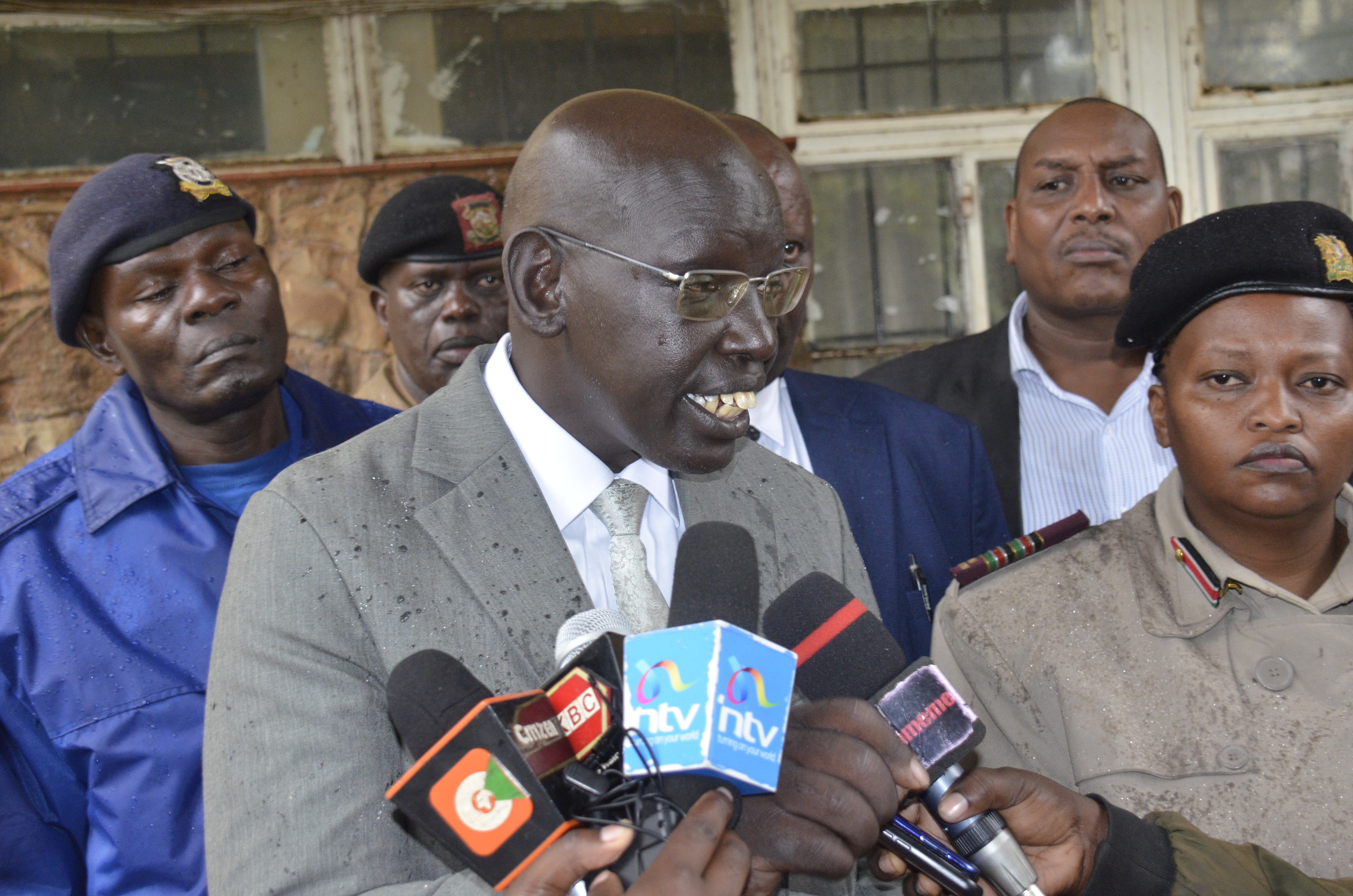
State to construct 2,600 labs in secondary schools in 2025
WANGARI MWANGI-KNA
The Government has announced plans to con struct 2,600 laboratories in secondary schools beginning January 2025 as part of preparations for the transition of pioneer Senior School learners under the Competency-Based Curriculum (CBC).
According to Dr. Belio Kipsang, Principal Secretary (PS) in the State Department for Basic Education, 1,600 physical laboratories will be built in secondary schools that currently lack these facilities.
Additionally, the government plans to establish 2,000 virtual laboratories to support Science, Technology, Engineering, and Mathematics (STEM) education when Junior Secondary School learners join Grade 10 in 2026.
“We are committed to ensuring that, by the time the first cohort of CBC Grade 8 progresses to Senior School in Grade 10, every school will have at least one laboratory.
Starting January next year, we will construct 1,600 physical labs in existing AirAsia X makes maiden flight to Kenya secondary schools, which will transition into Senior Schools by 2026,” said Dr. Kipsang.
He added, “We will also establish 2,000 virtual labs, al lowing students to engage with practical experiments in physical labs while leveraging the technology offered by virtual platforms.”
These initiatives are part of the government’s broader effort to establish the systems and structures needed to anchor and implement the CBC effectively.
Providing a status update on the implementation of the Basic Education Framework, Dr. Kipsang said the Ministry of Education has developed draft guide lines for Grade 10 placement.
After completing the Kenya Junior School Education Assessment in Grade 9 next year, learners will be placed into one of three pathways: STEM (for those excel ling in mathematics and sciences), Social Sciences, or Arts and Sports.
Dr. Kipsang noted that the government aims to provide all learners with the opportunity to pursue STEM as they transition to skills-based institutions. “Placement will not be as straightforward as be fore, where marks solely determined the school.
This time, the focus will extend beyond grades to include the learner’s chosen pathway,” he explained.
The Ministry has also developed draft guide lines for managing Senior Secondary Schools, recognizing secondary school heads as critical stakeholders in the CBC transition.
“We are preparing for the final transition from Grade 9 to Grade 10. This is an opportune time to discuss how to manage this transition effectively.
Once the Kenya Certificate of Secondary Education (KCSE) exams conclude, we will engage school heads to review and refine these guidelines,” Dr. Kipsang stated.
To address teacher shortages, Dr. Kipsang said the ministry is enhancing teacher capacity and collaborating with the Teachers Service Commission (TSC) to recruit additional teachers for Junior Secondary Schools (JSS).
The ministry aims to have more than 90,000 teachers in the JSS frame work by January 2024, with a long-term goal of deploying 120,000 teachers.
“We are working closely with TSC to recruit more teachers and appraise existing primary school teachers who can be upgraded to teach at the JSS level.
Within the next year, we aim to have all teachers equipped with the necessary skills,” he said.
The PS was speaking at Giakanja Primary School in Nyeri County after inspecting the construction progress of Grade 9 class rooms.
He confirmed that textbooks and other learning materials for Grade 9 had already been delivered to schools, ensuring each student has a textbook for all nine learning areas.
“We are distributing textbooks on a 1:1 ratio across the nine learning areas, so every child will have a book,” Dr. Kipsang stated.