
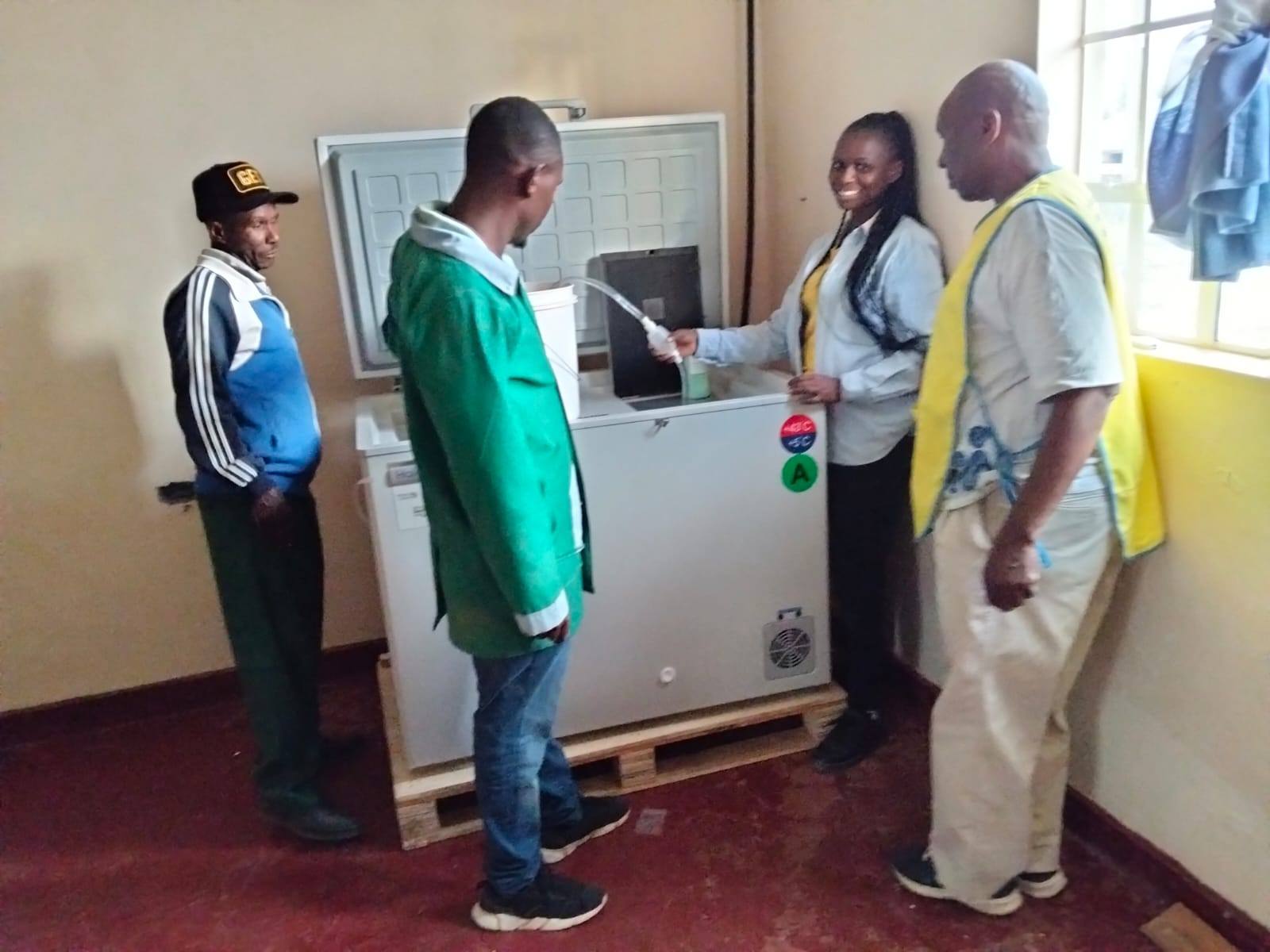
New solar fridges to protect lifesaving vaccines in Nakuru
ESTHER MWANGI-KNA
The County Government of Nakuru is adopting the use of solar-powered refrigerators to strengthen vaccine storage and delivery, particularly in remote areas with limited or no electricity, in a bid to reduce vaccine wastage.
According to the devolved unit, this transformative investment means Nakuru’s health facilities can keep lifesaving vaccines and essential medicines fresh even in areas with inconsistent power supply, directly improving service delivery and health outcomes for residents.
The initiative, according to County Biomedical Engineering Officer Mr Kibet Keitany, has significantly expanded storage capacity at public health facilities in hard-to-reach and off-grid areas.
Already, Solar Direct Vaccine Fridges have been installed at Munanda Dispensary in Gilgil Sub-County, Gacharage Dispensary in Kuresoi North, and Roret and Lomolo Dispensaries in Rongai SubCounty, with support from the Ministry of Health and the United Nations Children’s Fund (UNICEF).
Solar powered fridges are game-changers as they reduce electricity costs, require minimal maintenance, and ensure reliability for frontline health services.
Facilities such as Chepakundi, Tendwet, Kiplemeiywo, Masaita, Kapsinendet, Ndoroto, Kinungi, Ngondi, Korabariet, St. Joseph’s Hospital and Mwangi Michuki Dispensaries already benefit from solar cold chain systems, added Mr Keitany.
He added that installations were ongoing at Rongai Turi, Kamosop, Kigonor, Lusiru, Arus and Kapyemit dispensaries.
While describing installation of the new cold chain equipment as a milestone that will significantly improve access to life-saving immunization services for residents of the county, Mr Keitany said the innovation ensures vaccines are safely stored at optimal temperatures without relying on electricity or fuel-powered generators.
The equipment, he added will provide continuous cold storage powered by solar energy and will ensure vaccine quality as the solar-powered unit guarantees uninterrupted vaccine preservation, even in remote or off-grid areas.
The Biomedical Engineering Officer indicated that adoption of solar powered vaccine storage refrigerators aligns with Governor Susan Kihika’s commitment to strengthen primary healthcare systems and expand equitable access to essential health services across all the 11 sub-counties.