


New bill proposes 10-year tender ban for corrupt firms
Kibe Mburu and Daniel Kibet-KNA
Persons, and entities convicted of corruption, will face a mandatory 10-year ban from participating in public tenders under sweeping reforms proposed in the Anti-Corruption Laws (Amendment) Bill 2025.
The proposed law seeks to amend several key anti-graft statutes, including the Anti-Corruption and Economic Crimes Act, to disqualify any individual, corporate body, or unincorporated body convicted of corruption from being awarded public contracts, a deterrent measure targeting repeat offenders and firms perpetuating corruption through procurement fraud.
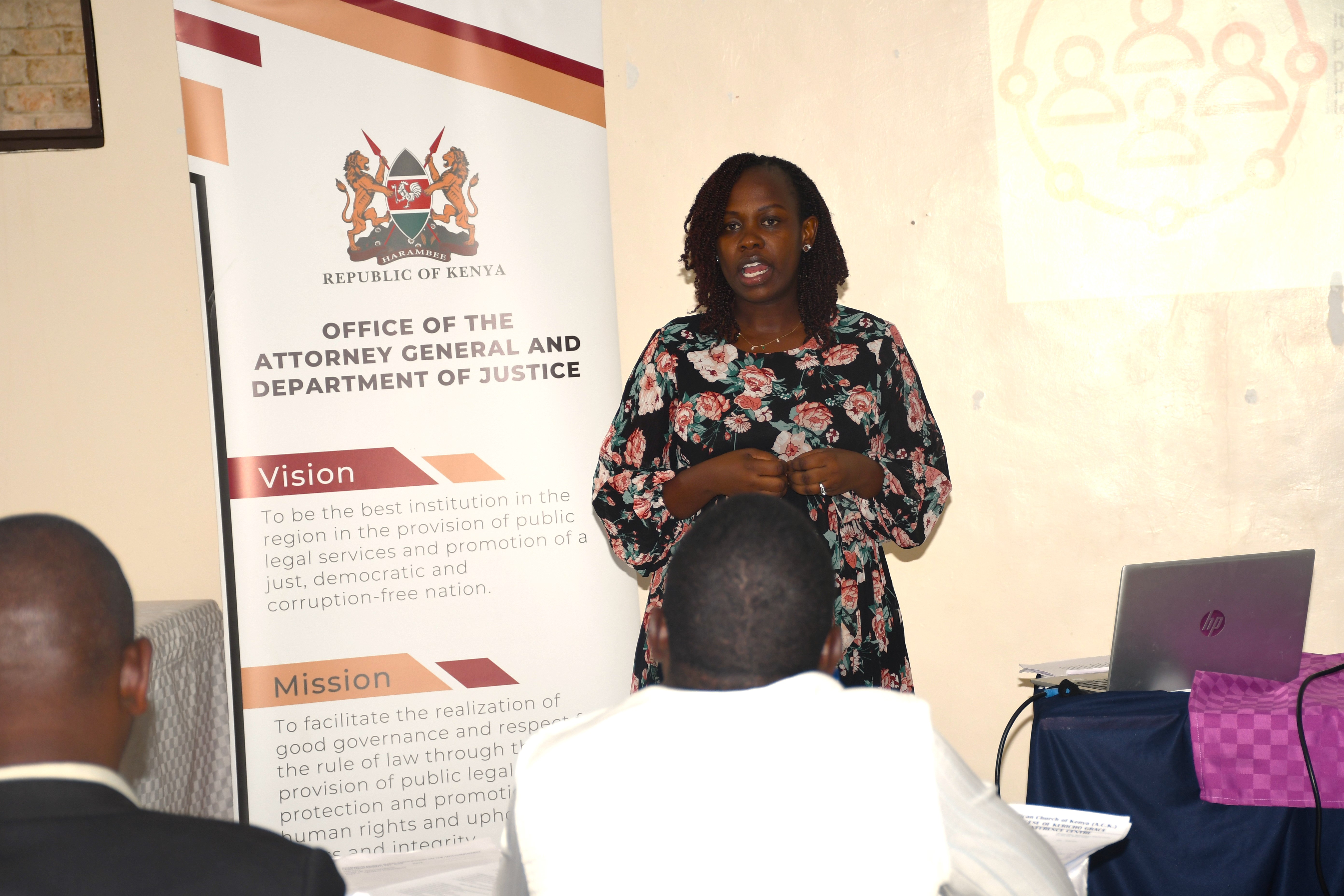
Speaking during a public participation event at ACK Holy Trinity Church in Kericho Town, the Principal State Counsel in the Office of the Attorney General Claries Kariuki explained that the amendments are designed to tighten legal loopholes that have allowed corrupt individuals to remain within public systems through proxies or under different business entities.
Ms Kariuki, who led the forum, said the proposed bill also introduces a six-month time limit for the conclusion of anti-corruption cases to reduce prolonged litigation and promote faster delivery of justice.
This, she said, is in response to criticism over delays in prosecuting high-profile economic crimes, which often result in loss of evidence and public trust.
“Clause 11 of the bill proposes to insert a new section 29A in the Anti-Corruption and Economic Crimes Act to give EACC the power to inspect bank accounts, accounts held in non-banking financial institutions, mobile money accounts, money transfer accounts and call data and to apply to the court for orders prohibiting transactions thereon for a period of thirty days,” she added.
Ms Kariuki emphasised that the bill further enhances the powers of investigative agencies to seize, freeze, and recover illicit assets and broadens the definition of “proceeds of corruption” to include property derived or indirectly obtained through corrupt practices, even if it has been transformed, intermingled, or reinvested.
“Corruption proceeds are no longer limited to direct gains, but they now include any asset, benefit, or income linked to corruption, even those disguised through laundering or transferred to third parties,” Kariuki said.
The legal team of the Office of the Attorney General and Department of Justice also presented two other bills during the same forum: the Whistleblower Protection Bill 2025 and the Public Participation Bill 2025, which were opened to scrutiny as part of a nationwide public participation campaign.
The Whistleblower Protection Bill 2025 is designed to encourage the reporting of unethical conduct by protecting individuals who disclose information in public interest, explaining that the bill guarantees confidentiality, immunity from civil and criminal liability, and protection from reprisals such as dismissal or intimidation.
According to Kariuki, the bill obligates all public and private entities to establish secure internal reporting mechanisms and ensures that whistleblowers are not penalised for good-faith disclosures, even if their claims are not substantiated after investigations.
“The bill defines a whistleblower as any person with access to or knowledge of improper conduct who makes a report in accordance with the Act. It also protects those who assist whistleblowers in exposing wrongdoing. Legal protection will apply to disclosures concerning both unlawful activity and any conduct deemed dangerous or prejudicial to public interest,” she explained.
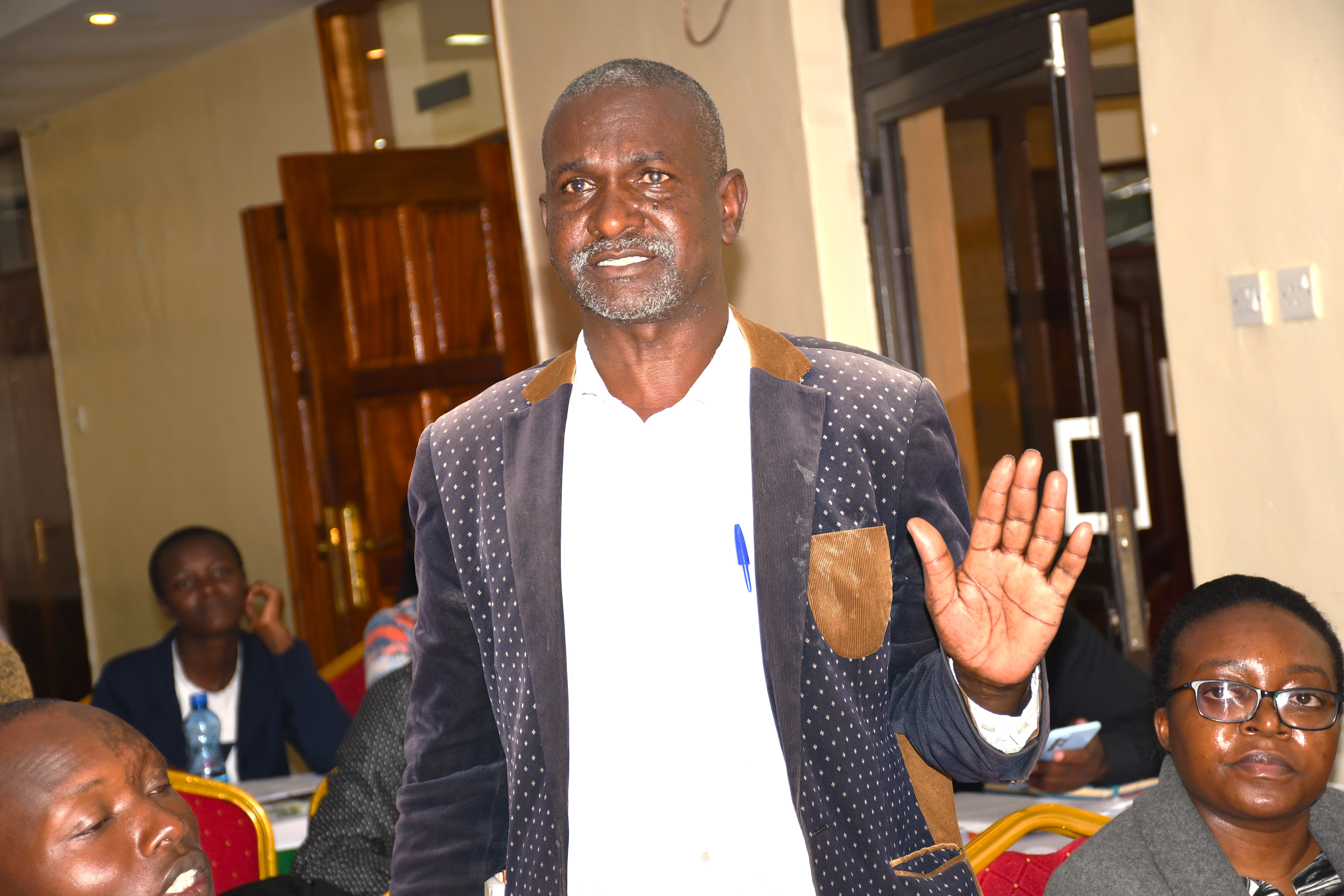
The forum brought together a diverse cross-section of Kericho residents, including national and county officials, civil society organizations, religious leaders, legal professionals, and representatives of women, youth, and persons with disabilities who welcomed the whistleblower bill, with many citing fears of retaliation as a key reason for underreporting corruption and unethical behaviour.