
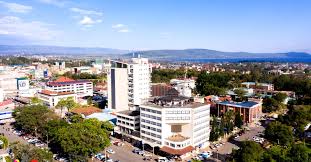
Nakuru boosts urban planning with new Spatial Data System
Anne Mwale-KNA
The County Government of Nakuru is working with various state agencies and international entities to establish a Spatial Data Infrastructure (SDI) to improve resource management for data-driven urban planning and development.
The initiative, which includes the setting-up of a Geographic Information System (GIS) lab, is expected to streamline the administration of development projects and enhance resource allocation based on data analysis.
City Manager, Mr Gitau Thabanja, disclosed that the SDI is being designed to play a crucial role in various sectors, including infrastructure planning, natural resource management and disaster response.
Highlighting the transformative power of the GIS in the SDI and its critical role in urban planning, tackling encroachments and in promoting public feedback, Mr Thabanja said he is hopeful that the GIS laboratory system will improve development planning and management.
He made the remarks when a delegation from the Humanitarian OpenStreetMap Team (HOT)’s global team led by the Global Director, Fabrizio Scrollini, met with the city management and other officials to review a collaboration and sign a memorandum of understanding between the two parties that leverages open mapping and geospatial tools to support disaster preparedness, infrastructure development and inclusive community planning.
The GIS lab is expected to provide a platform to store and manage digital footprints of development projects in sectors such as water, education, health, roads, rangelands, environment and natural resources.
Thabanja elaborated that the laboratory system will further help local and foreign investors to conveniently access land information. The City Manager indicated that the system would help them collect, process and analyze data in digital form.
He observed that Nakuru City is emerging as a model for data-driven urban planning through its partnership with HOT.
The City Manager added that through past and ongoing collaborations, the achievements include flood-prone area mapping, street-level imagery for climate resilience and Nakuru’s successful bid for Municipal Spatial Data Infrastructure (MSDI) support.
“This partnership is critical as mapping is shaping how we plan and connect with residents. It supports better decisions, especially around public spaces and infrastructure. We acknowledge the collaboration’s growing impact in promoting more inclusive, data-informed urban development,” he said.
In June last year representatives from the World Bank met with officials from the County Lands and Physical Planning Department and the State Department of Housing and Urban Development for an engagement to assess the geospatial data needs and potential support areas within the Municipal Spatial Data Infrastructure (MSDI).
Mr Thabanja pointed out that the initiative aims to address challenges related to data duplication, improve resource management and facilitate effective governance.
“We aim to provide better access to spatial data, reducing wastage and duplication. By providing a standardized approach to data management, we make more informed decisions. The initiative promotes the production and sharing of spatial data for sustainable development,” he elaborated.
HOT is a global Organization that uses open mapping to respond to humanitarian crises and promote community development.
Nakuru City Board Director and Chair of the Urban Planning and Infrastructure Development Committee, Mr Chrispus Wathimba, emphasized the importance of actualizing urban data as part of Governor Kihika’s urban transformation agenda.