
Multi-million Thwake Dam brings life and opportunity to Lower Eastern Kenya
By MyGov Reporter
A blast of hot air blows from the horizons of Kisayani village, Katithi sub-location, Mavindini location in Makueni County.
On this day, Mama Katilu Matheka, 80, carefully tends to her farm with the hope of harvesting plenty of kunde (cow pea leaves) and mtama (millet), traditional food crops synonymous with the Ukambani area.
Mama Katilu, whose source of livelihood depends on farming, is a pure case of the portraits of transformation.
As one of the Project Affected Persons (PAP) after construction of the Thwake Dam commenced, she was able to utilize the compensation cash she received from the Government and constructed a modern house since her land was partially acquired to pave way for the dam’s construction.
Like millions of other residents, Mama Katilu is optimistic that one day, she will be able to irrigate her farm with water expected to flow from the nearby Thwake Dam.
“Even in my sunset years, I am optimistic that this dam will be a game-changer for us. Our hope relies on it. We waited for years for the State to bring such a good project to us,” she says of the dam being co-funded by the Government of Kenya and the African Development Bank (AfDB).
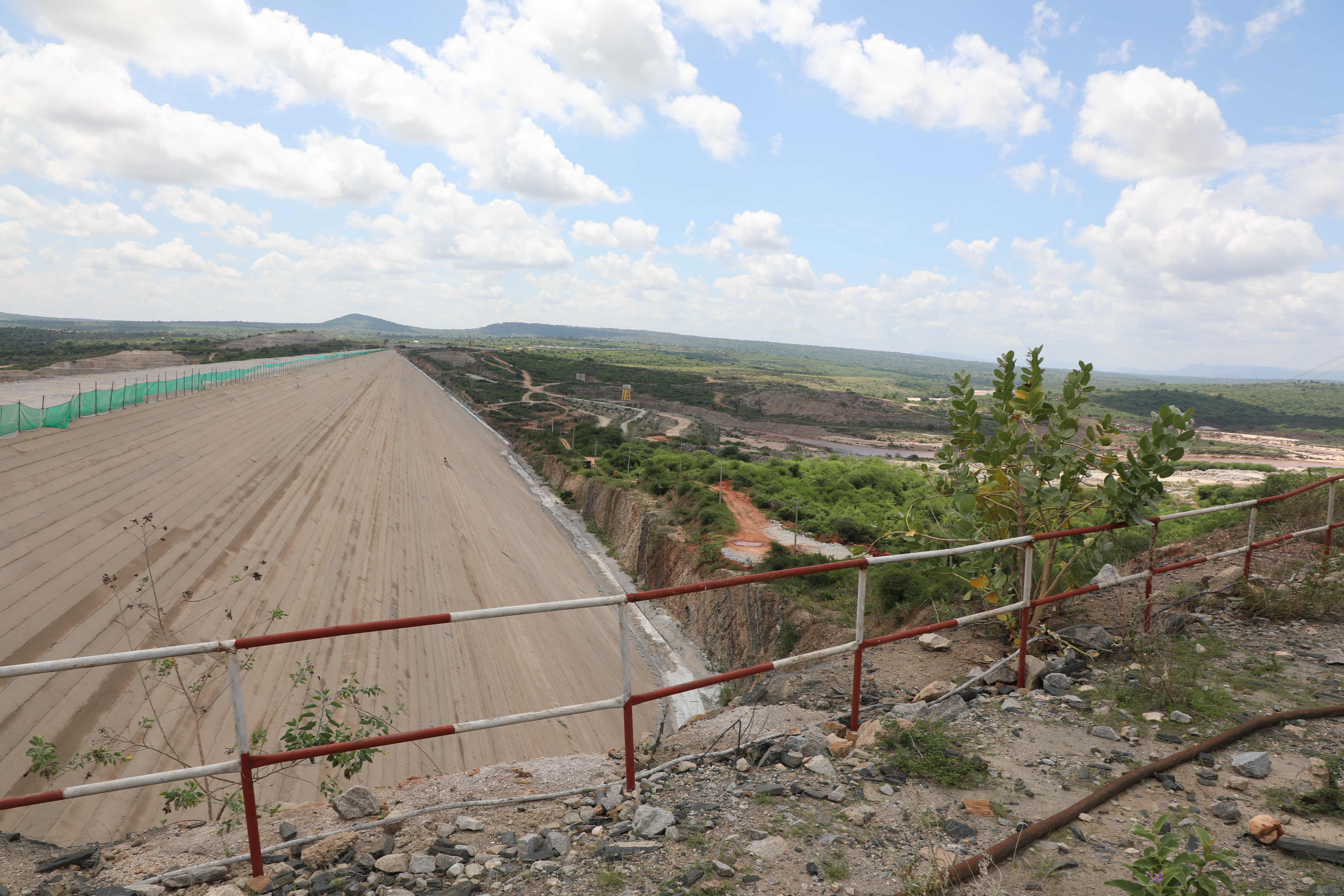
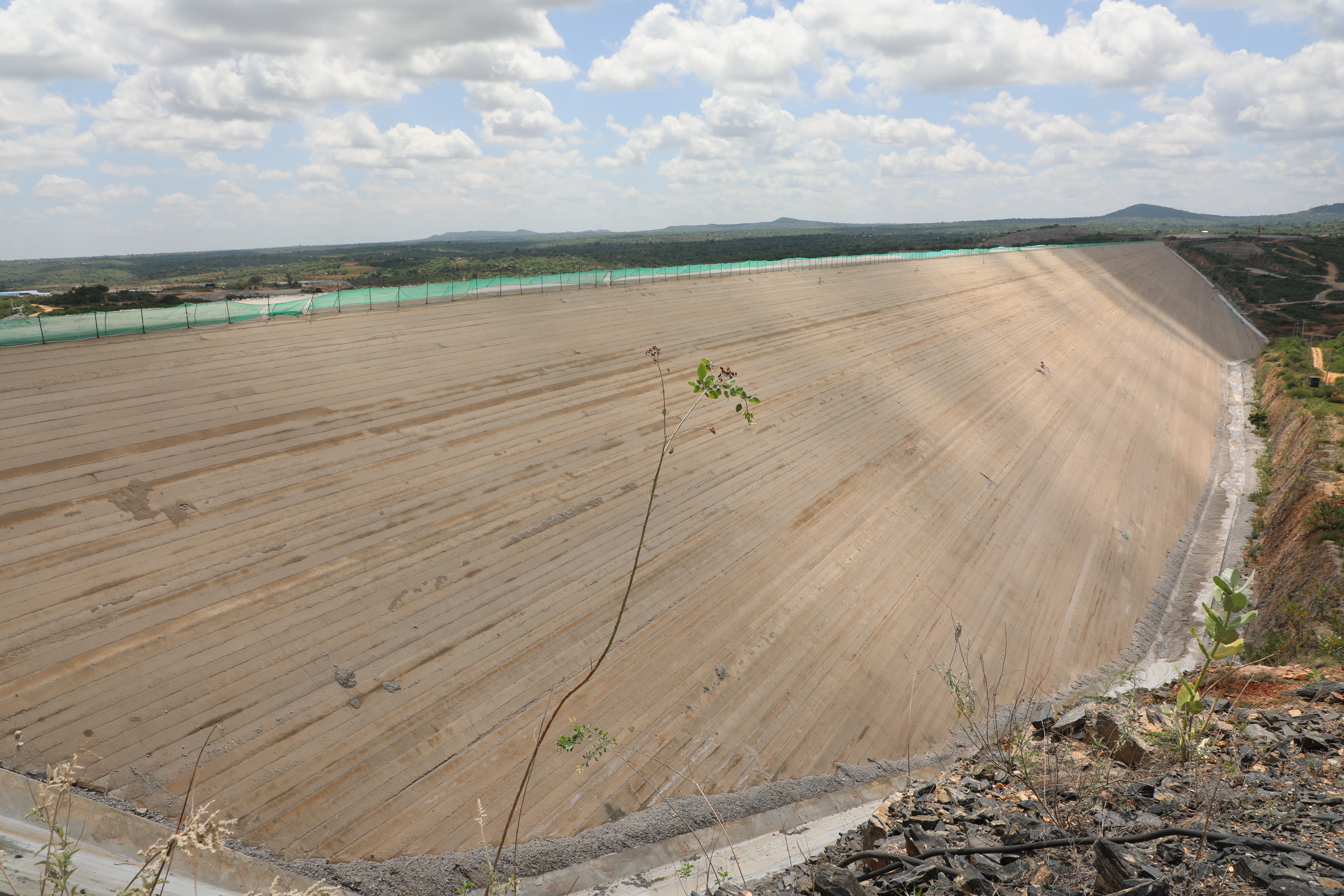
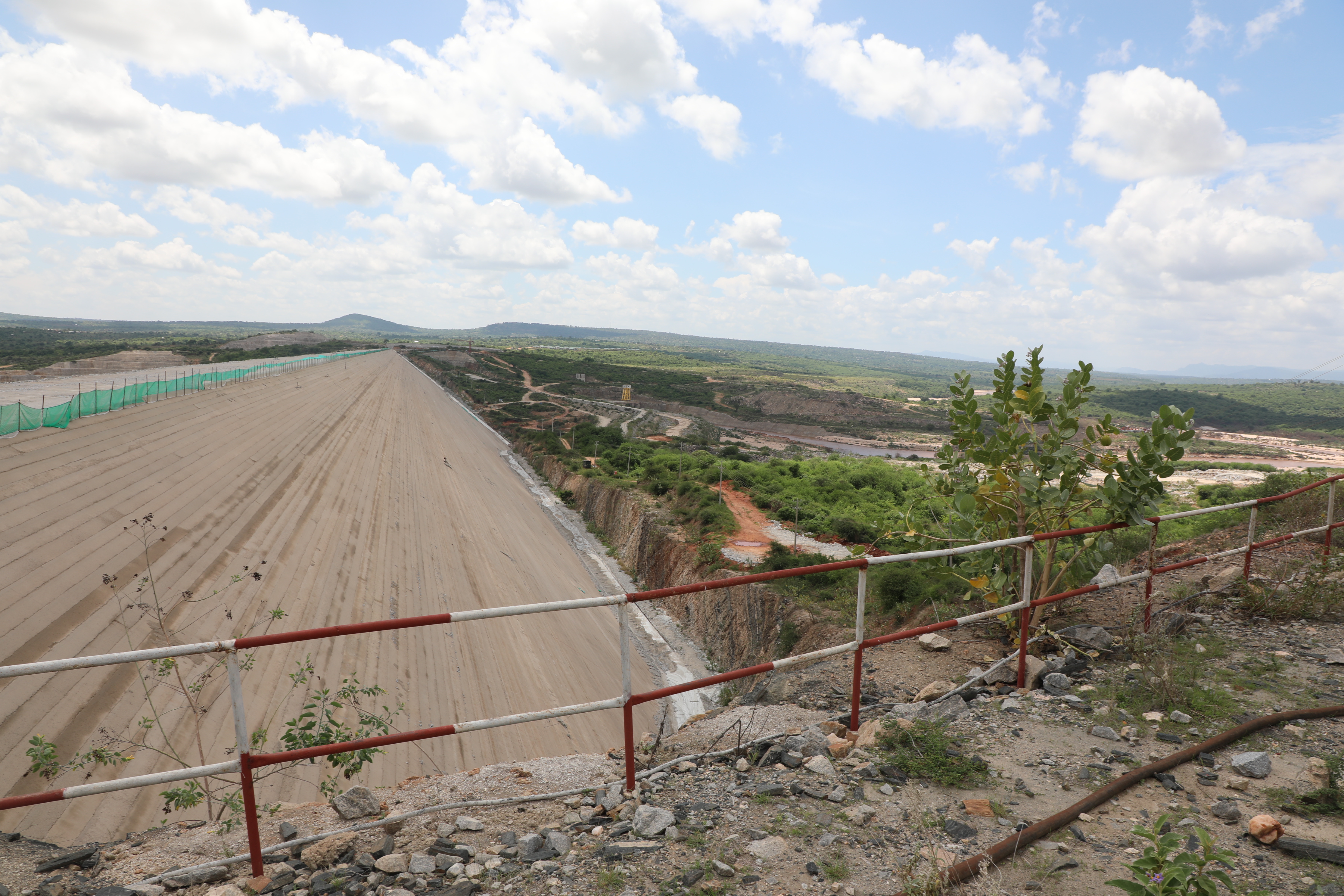
The Dam whose physical construction progress has hit 94 per cent, is being constructed at the confluence of rivers Athi and Thwake at the border of Makueni and Kitui Counties.
The facility is expected to benefit at least 1.3 million residents drawn from the rural parts of the Lower Eastern counties.
Today, living conditions of billions of people are certainly improved by the construction of dams. Indeed, dams have played a key role in socio-economic development since the third millennium BC when the first great civilization evolved on the major rivers.
Dams are estimated to contribute approximately 12-16 per cent of world food production feeding about 1 billion people.
President William Ruto, is on record stating that the country uses approximately Sh200 billion on food imports alone.
However, Kenya is progressively working towards reversing this with irrigation fed agriculture, and the Thwake Dam, once completed will be a key pillar in boosting irrigation.
The Thwake Multipurpose Water Development Program will be done in four phases by the implementing agency, the Ministry of Water, Sanitation and Irrigation.
The Dam, considered to be the second largest water reservoir in the country, will benefit approximately 1.3 million residents from the rural parts of semi-arid counties of Makueni, Kitui and parts of Machakos.
The project will critically transform the socio-economic enterprise of the region which has suffered rampant water scarcity for decades.
Drought and famine, have severely affected millions of residents – especially women and children.
Speaking during an inspection tour of the Vision 2030 flagship project, Water, Sanitation, and Irrigation Cabinet Secretary Eng. Eric Muuga assured Kenyans that the State has fully engaged key stakeholders, including the African Development Bank (AfDB) to fast-track funding to hasten the completion of the dam.
“We have engaged all stakeholders involved to ensure that we complete this project. The fiscal financial space we are currently operating in as a nation is cutting across all the ministries, including water and sanitation. This is why we are in constant communication with the AfDB to fast-track payment of pending certificates so that the contractor can complete the work,” said the CS.
Meanwhile, officials from the Government Delivery Service (GDS) unit have also said that the Government has given extra attention to a number of key flagship projects in the region and Thwake Multipurpose Dam tops that priority list.
“The Government has given extra attention to a number of key flagship projects in the Lower Eastern region of the country and Thwake Multipurpose Dam is amongst the projects prioritized,” said GDS officials during a past visit.