

Ministry leads policy talks to revive kenya’s print and publishing industry
Victoria Njeri-PCO
The Government has embarked on a reform agenda to rescue the struggling publishing and printing sector.
This follows weeks of high-level consultations between industry leaders and Principal Secretary for Investment Promotion, Abubakar Hassan Abubakar.
The engagements, held across Nairobi with a mix of long-standing publishers and printing manufacturers, aimed to identify investment barriers and propose practical solutions to revive the struggling sector, that directly supports education, employment, manufacturing and the creative economy.
These meetings brought together captains of the industry from English Press Limited, Ramco Printing Works, Kenafric Industries Limited and Twiga Stationers & Printer who are all members of the Kenya Association of Manufacturers (KAM).
Their firms represent some of the leading companies in publishing, packaging and stationery production sector which employs thousands of Kenyans. KAM also played a pivotal role in convening and documenting policy proposals on behalf of the manufacturers.
During these engagements, an emerging resounding message was the challenge the local publishers and printers faced due to a combination of policy gaps, unsustainable taxation, unfair competition from cheap imports and inefficient procurement systems.
English Press, a five-decade leader in textbook production and a key partner to the Kenya Institute of Curriculum Development (KICD), flagged the government’s 20-60-20 payment model as a major source of cash flow disruption.
Under this system, publishers receive only 20 per cent of payments upfront, 60 per cent upon partial delivery and the final 20 per cent after delivery confirmation. The payments timelines often stretch to months.
The model, coupled with lengthy order confirmation processes and unreliable third-party transporters, has forced publishers to rely on expensive bank loans to finance operations.
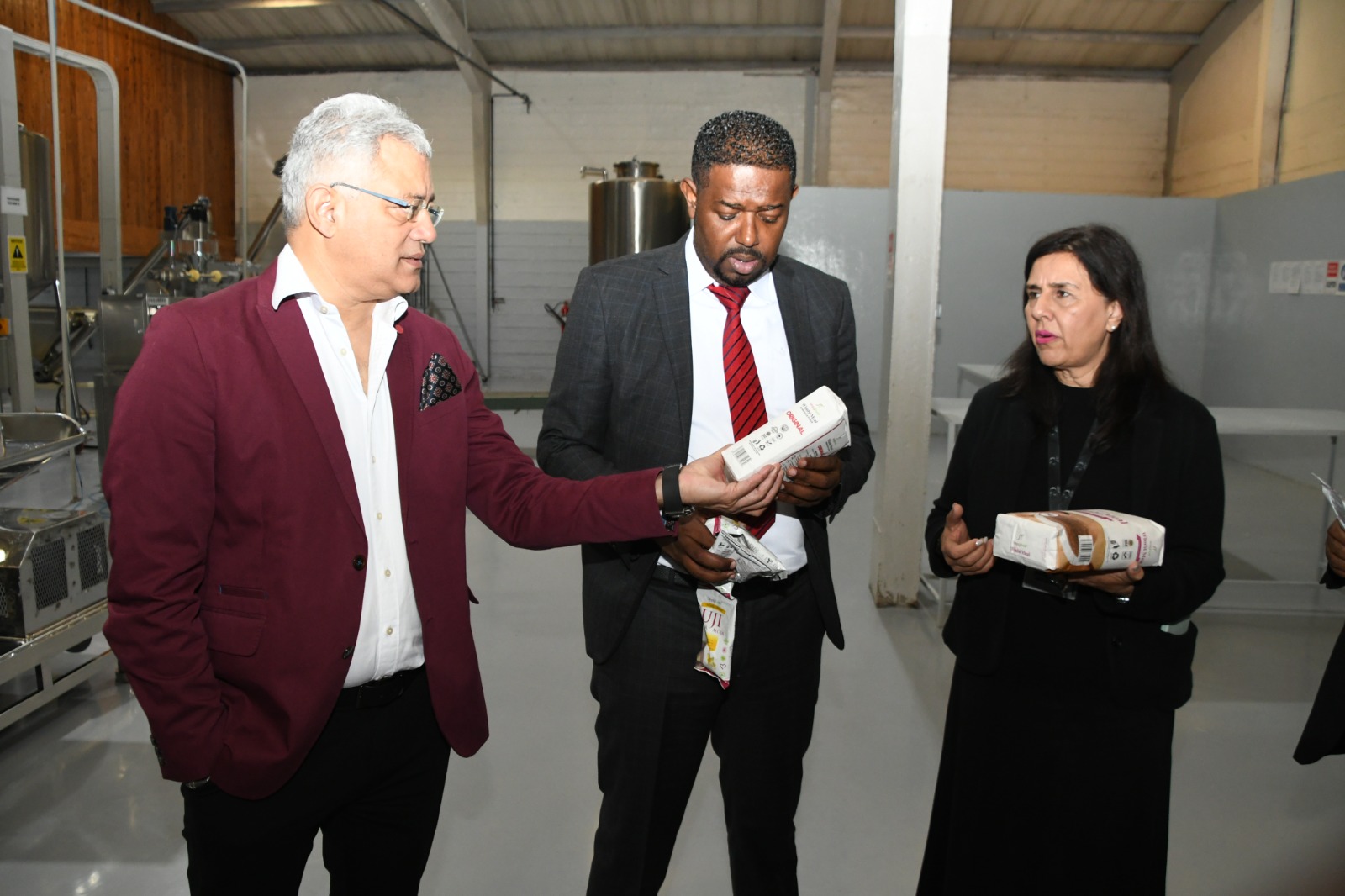
The English Press also showcased its millet value chain innovation, a social impact initiative that supports smallholder farmers while promoting food security.
Through a partnership with the Farm to Market Alliance, the company processes millet into flour and ready-to-consume porridge, aiming to commercialize and introduce the product into the mainstream supermarkets.
Twiga Stationers reported a 50 per cent drop in sales despite its capacity to produce 35,000 tonnes of material annually.
Kenafric Industries echoed similar struggles, blaming the uncontrolled influx of cheap imported exercise books, mainly from China, which undercut local products.
At Ramco Printing, which operates two high-tech plants and employs over 400 workers, management raised alarm over skyrocketing costs of raw materials, including Kraft paper, ink and power.
Even with significant investment in innovation and environmental sustainability, Ramco said fiscal pressure is eroding competitiveness.
Through the Kenya Association of Manufacturers, the affected firms submitted a comprehensive set of policy proposals to PS Abubakar, detailing practical actions which when taken, would protect and stimulate local publishing and printing enterprises.
Key among the proposals was: a call to classify imported exercise books as “sensitive products,” similar to Uganda’s trade protection strategy. Such an action would enable the government to impose higher import duties or establish import quotas to limit the flooding of the local market by cheap products.
The industry leaders also requested the removal of the 15 per cent exercise duty currently levied on printing ink. The publishers argued that eliminating this particular tax would lead to a 20 per cent slash on production costs thereby giving local firms the much needed breathing space in an increasingly squeezed market.
Equally urgent was a call to review the current 35 per cent VAT and 10 per cent export levy imposed on Kraft paper which is the primary raw material used in both book production and packaging. They contended that the levies were unsustainable and continue to drive up the cost of doing business.
“These policy reforms we are calling for, are not just about survival, but are to assist out country position herself to compete globally. Our industry is ready to scale up, but we need an enabling policy environment to do so,” said Nilesh Shah, Managing Director of Twiga Stationers.
Stakeholders called for bold government action to avoid the country risks scraping out its manufacturing base and losing its cultural and intellectual sovereignty in educational publishing.
PS Abubakar assured the stakeholders of escalating the recommendations to relevant government bodies that contribute to supporting business environment such as the National Treasury, Kenya Revenue Authority (KRA) and the Kenya Bureau of Standards (KEBS) among others.
He pledged to continue having such engagement to enable the government capture the concern of investors.
He appreciated efforts by KAM for developing the coordinated response mechanism for their members. Areas of concerns were mainly around tariff reforms, tax incentives and regulatory adjustments.
“We are not just here to listen we’re here to act. These recommendations are being compiled and will be forwarded to the highest decision-making levels,” PS Abubakar said. He committed to having follow-up meetings with regulatory bodies to create a coordinated, sector-wide response.
“These firms are critical to Kenya’s industrial ecosystem and national education value chain and needed a level playing field to compete, grow and expand investment,” emphasized Miriam Bomet, KAM’s Head of Policy and Regulatory Affairs.