


KPC to expand storage facilities to ensure seamless oil supply, says CS
Ekuwam Sylvester and Judy Too-KNA
The Cabinet Secretary in the Ministry of Energy and Petroleum Opiyo Wandayi has affirmed the Ministry’s commitment to strengthen Kenya Pipeline Company (KPC) infrastructure and systems across all the depots in the country to ensure efficiency in services to meet the increased demand both locally and internationally.
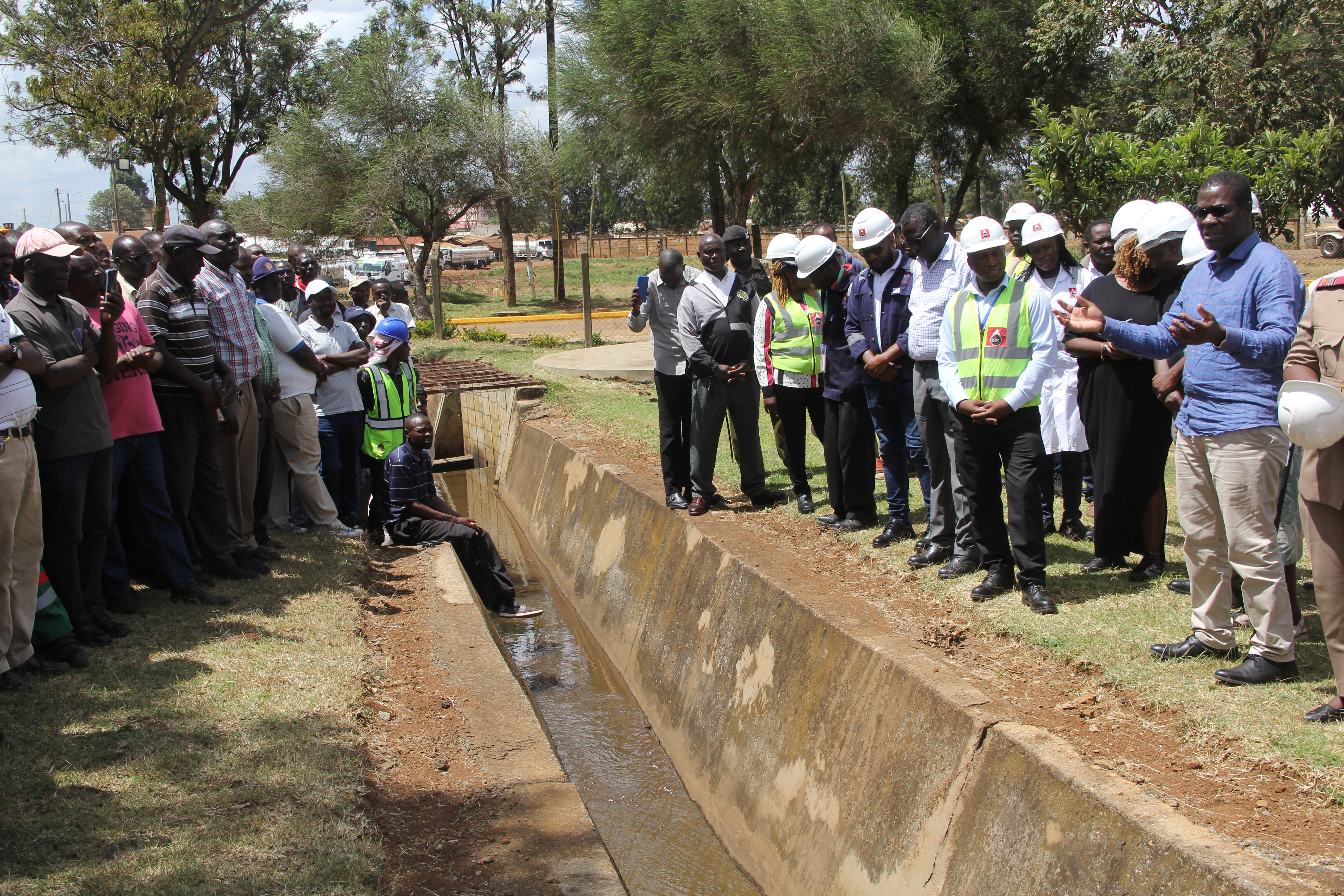
Speaking during his familiarization tour to Eldoret Depot, Eldoret, Uasin Gishu County, to identify the challenges and the coming up with the way forward to boost operations in terms of efficiency, the Energy and Petroleum CS reiterated the need to work collaboratively with partners, KRA and others including NGAOs, the Kenya and others to achieve the KPC mandate.
Noting the government’s role of providing a proper and enabling environment to ensure stakeholders conduct their business operations in a convenient and profitable way, the CS affirmed his commitment to continue to support them in whichever way they may require, making work easier for the benefit of the people and the company.
He indicated that energy and petroleum is key in the economy of the country as it also serves a crucial role in the integration of the region by facilitating trade between Kenya and the East African and Central African countries in terms of export of petroleum products which account to 80 to 85 per cent of the total monthly deliveries.
“We are going to add the storage capacity here in Eldoret for MSP (super petroleum) and for JET A-1 also, diesel tank for Nakuru depot and super and diesel for Kisumu depot too so that we have seamless supply and flow of oil as compared to before when we had challenges of lacking these products due to lower storage capacity,” he said.
CS Wandayi lauded the work done by the KPC management in collaboration with stakeholders that has seen the exchequer receive Sh6.9 billion this year. He expressed hope for a higher figure than that in the next financial year.
“This year alone you were able to give the exchequer about Sh6.9 billion, we are hoping for a higher figure than that next financial year. We are proud of this company and its management and staff, keeping up the spirit of working smart and hard so that we can be able to get more output,” the CS noted.
KPC General Manager (GM) Eng. Okova Wangaki echoed the sentiments of the CS on the additional storage, noting that it will help improve turn around and efficiency in terms of receiving to storage and transporting to the issuing tanks.
He emphasized that additional storage for Jet A-1 and MSP (super) means increased revenue and improved efficiency.
In his remarks, Eldoret KPC Depot Manager Eng. Jeremiah Mwangangi, pointed out that the PS27 Eldoret Depot is a vital hub for the distribution and supply of petroleum products to Western Kenya and neighbouring countries of DRC, Uganda, South Sudan, Rwanda and Congo.
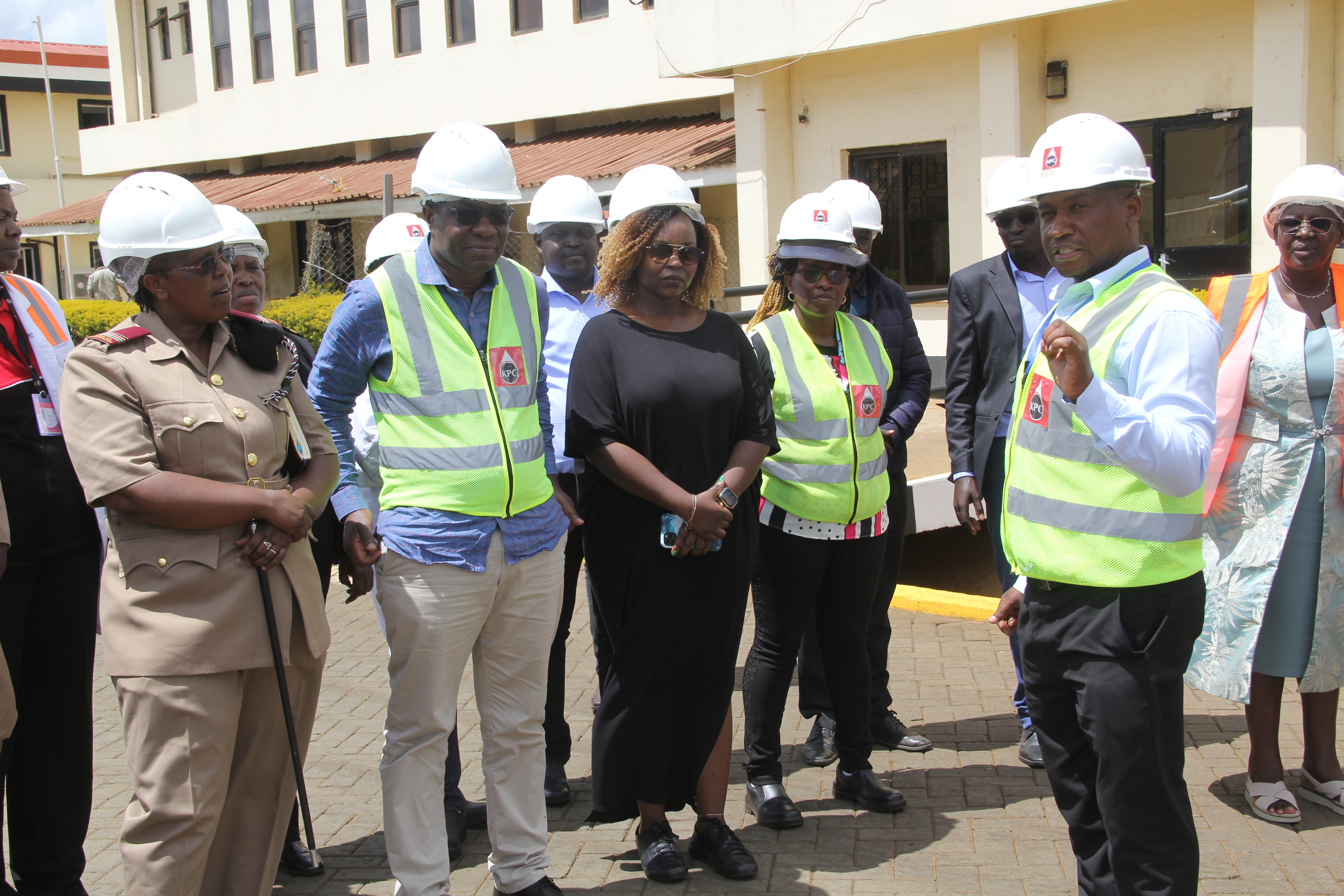
The Energy and Petroleum Cabinet Secretary Opiyo Wandayi (in blue), speaking to the members of the oil Marketing Companies (OMCs) and the employees of the Kenya Pipeline Company (KPC), during his tour to the Eldoret Depot, Eldoret, Uasin Gishu. Photo/ Ekuwam Sylvester
He said the depot, has 45,000 million litres capacity for four products which include two tanks of automotive gas oil (AGO) which is also known as diesel with a total capacity of 20 million litres, four tanks of motor spirit premium (MSP) also known as super petrol with capacity of 12 million litres, two tanks of illuminating kerosene (paraffin) amounting to 3.8 million litres and four tanks of JET-A1 with total capacity of 5.2 million litres.
He expressed concern that the demand has increased 10 times since the establishment of the depot in the year 1994, as he reiterated the need for capacity upgrade of the main line to supply enough stock to the depot.
“We are doing seven to 10 million litres daily deliveries depending on the product availability, monthly this figure goes up to 175-185 million litres, exports amount to 80-85 percent of the total monthly deliveries,” he said.
He highlighted various challenges affecting business performance at the terminal which include limited flow rate and storage capacity leading to stock outs, low uplifts of paraffin in the depot leading to clogging of the pipeline system.
“The mandate will be achieved through timely and efficient loading of trucks for delivery of product to customers,” Eng. Mwangangi noted.
This is in addition to political instability in the region like in the Democratic Republic of Congo (DRC) and South Sudan which affect truck turn around and different custom regimes; Uganda Revenue Authority (URA), DRC, South Sudan Revenue Authority (SSRA) and Rwanda Revenue Authority (RRA) which affect truck clearance from the depot.