
Kirinyaga County rolls out clean energy drive with free gas cylinders
David Wandeto-KNA
Kirinyaga County Government has rolled out a broad range of community-focused projects aimed at tackling environmental challenges, improving livelihoods, and promoting clean energy.
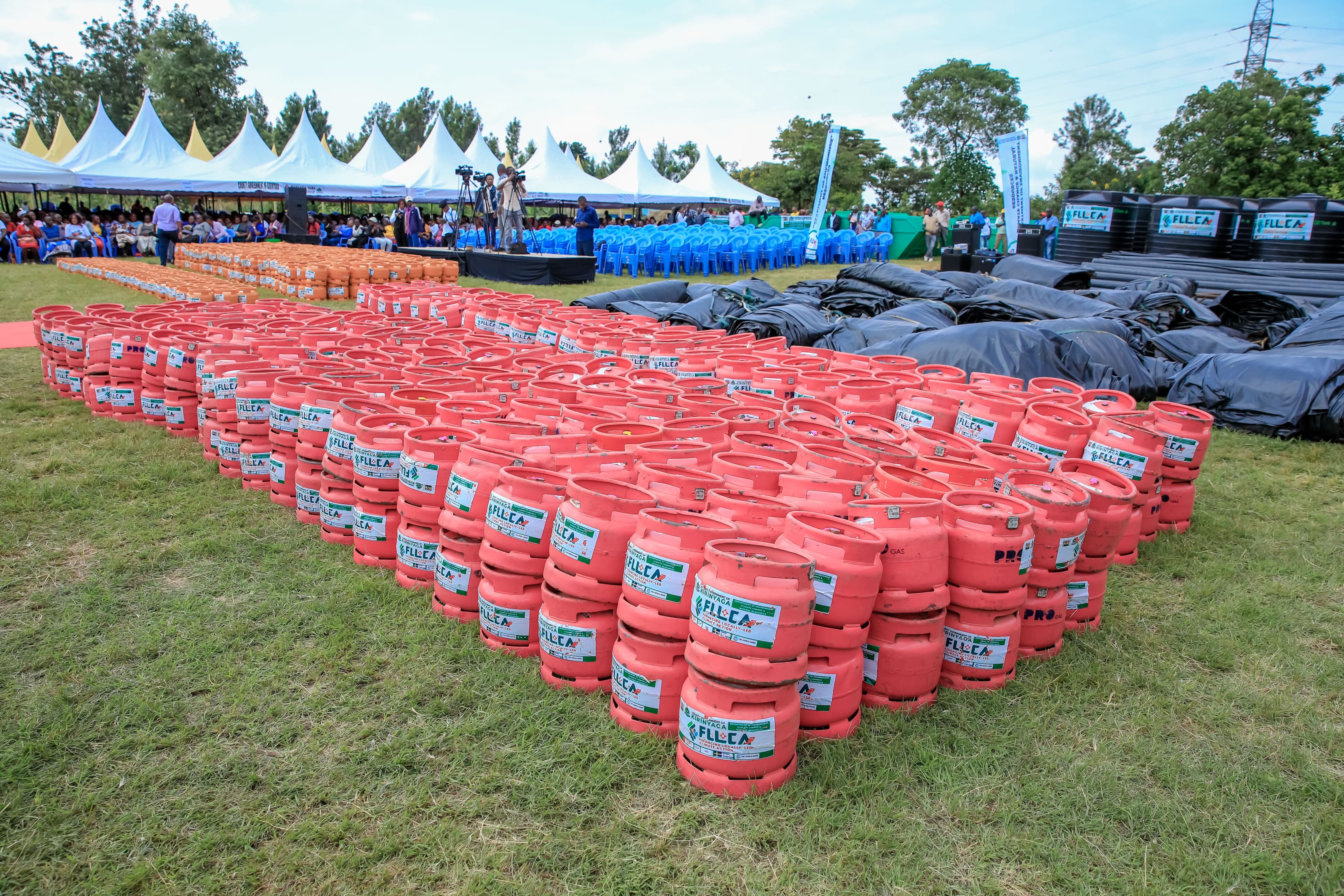
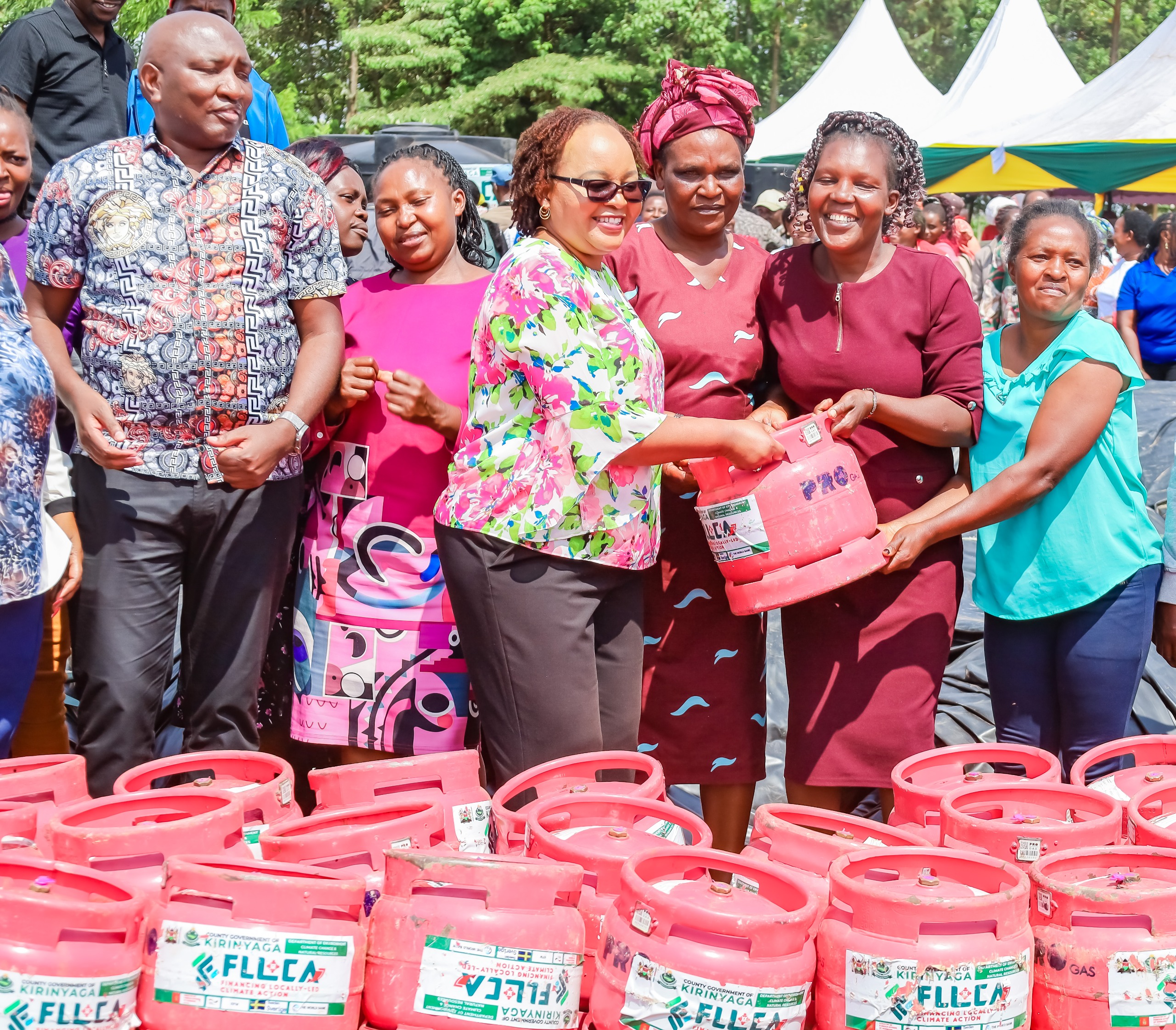
Consequently, Governor Anne Waiguru led the distribution of 5,800 free gas cylinders to households across the county in a public event at Kamiigua Grounds in Kutus.
The initiative, she said, is part of an ongoing effort to reduce the use of firewood and charcoal, protect forests, and safeguard the health of women and children exposed to indoor smoke.
Waiguru said as a county, Kirinyaga is responding with sustainable, people-driven solutions. She emphasized that the gas cylinders are not just for cooking, they boost health, environmental protection, and dignity for thousands of families.
Gas cylinder distribution is part of the Financing Locally Led Climate Action (FLLoCA) program, a government initiative that empowers counties to implement climate adaptation projects suited to local needs.
Waiguru noted that the county had previously distributed 600 cylinders to families living near Mt. Kenya, where forest conservation is a pressing concern.
She added that the initiative helps preserve trees, improve air quality in homes, and save lives. She noted that the move had been estimated to save over 500 mature trees every year.
Alongside the gas distribution, Waiguru’s administration has initiated several complementary development interventions, including water supply and irrigation support, waste management, and climate-smart agriculture.
To boost access to water and improve household food security, 10,000-litre water tanks were handed over to 20 community groups to support rainwater harvesting and kitchen gardening.
Waiguru noted that the tanks would help the people grow food in their homes, even during dry seasons.
She also highlighted the Inua Jamii Rupingazi Water Project which will connect over 500 households in Njukiini and Murinduko Wards to clean, piped water.
The Rukenya Project received new piping infrastructure to help farmers shift away from dependence on erratic rainfall.
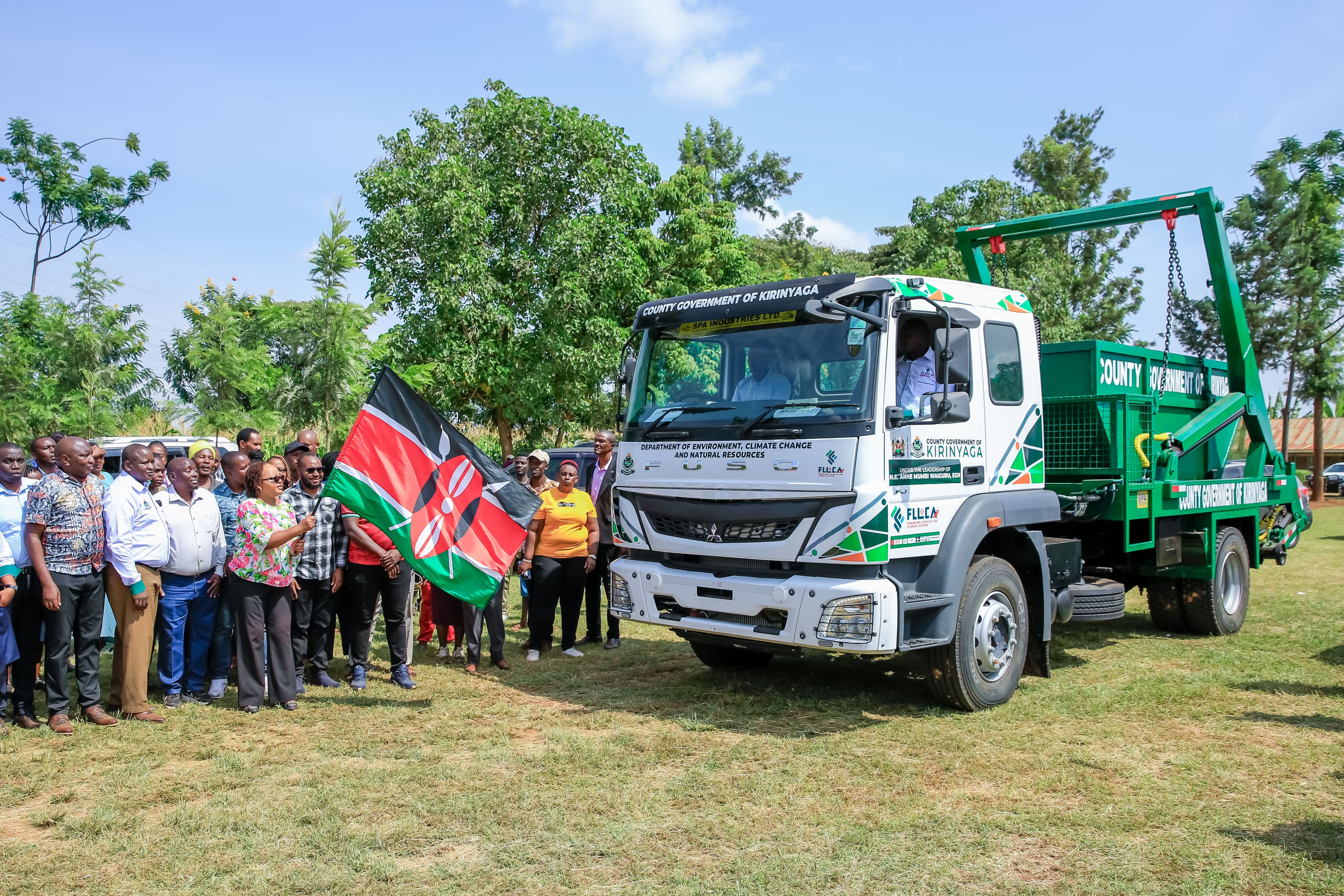
The county also distributed 26 garbage skips and a skip loader truck to improve cleanliness in markets and trading centers. Waiguru further revealed that the county is setting up a Material Recovery Facility (MRF) to sort and recycle waste.
She said that it had not just been about keeping the environment clean, it had also been about creating jobs for the youth, tapping into the circular economy, and building a culture of responsibility in how waste was handled.
Atleast 60 farmers received dam liners to support irrigation and fish farming. In addition, the county introduced a fish feed production machine, enabling local farmers to produce quality feed at lower cost, reducing dependency on commercial suppliers.
Waiguru said the goal has been to make farmers self-reliant, noting that by supporting fish farming, the county government had not only created food but also generated business opportunities for their people.
She announced that 20,000 avocado and macadamia seedlings had been distributed to farmers as part of an agroforestry initiative aimed at increasing tree cover while boosting household incomes.