
Kenya’s petroleum sector gets state support amid global energy shift
JOYCE LUTOMIA-PCO
The Government is supporting the petroleum sub-sector as a precursor for micro and macro-economic stability of the country.
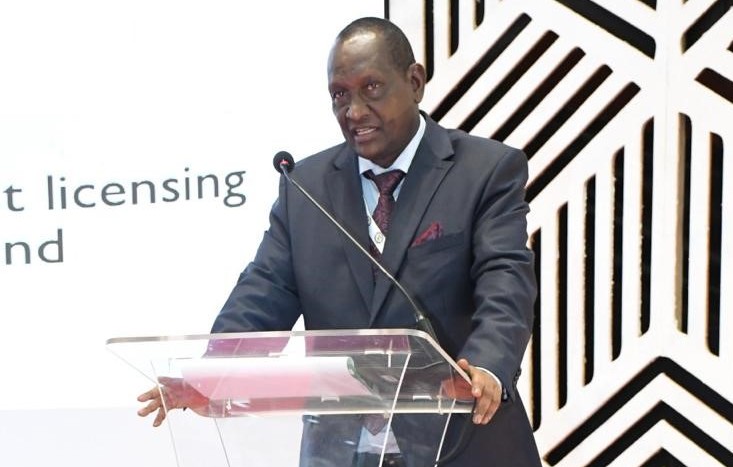
Principal Secretary, the State Department for Petroleum, Mohamed Liban (Pictured), noted that the government is very much aware of the critical role played by petroleum products and has deployed deliberate efforts to work harmoniously with all players to support the country’s development.
Speaking in Nairobi during the Nation Petroleum Summit, Liban said Kenya’s upstream petroleum sub-sector has experienced significant growth over time despite various challenges that underpinned the sector that include the global shift to renewable energy in the light of the global climate change.
This global trend, the PS said, has immensely undermined investor interests and financing, thus slowing explorations activities in Kenya.
“However, the path to exploitation of the critical upstream resources in the country is well on course. The State Department has in this regard undertaken ranking of exploration blocks based on prospectivity potentials in line with the global best practices to attract investments in our 50 petroleum blocks,” the PS said.
In the recent past, Liban observed that the country has made some oil discoveries in the South Lokichar Basin, in 2012, and natural gas discoveries in Block 9 of the Anza Basin and offshore Lamu Basin.
He explained that the Department, in collaboration with stakeholders, has marshalled investment partners to leverage these positive discoveries, especially on the need to hasten the progress of the South Lokichar discoveries to production phase.
“In order to optimize our hydrocarbon potentials in the country, we are at the tail end of finalizing ambitious upstream regulatory frameworks to attract and maintain investment confidence in the subsector,” Liban noted.
Understanding the crucial role played by petroleum in the economy, Liban said, the government had to take drastic but far-reaching policy measures to cushion people and businesses from the adverse effects of the challenges which culminated into a government-to-government initiative for the importation of bulk petroleum products.
This framework, he said, allowed oil marketers to trade in the Kenya shillings, hence immensely contributing to stability of the shillings against US dollar by freeing dollars for other sectors of the economy and curbing market speculative tendencies.
He noted that the deal granted a favourable credit period of 180 days for marketers while also ensuring negotiable and predictable premiums for Kenya’s products.
“I can authoritatively report that the country has a stable security of supply and has not faced a stockout for the last 18 months. Petroleum remains a dominant source of energy in transportation, industries, power generation and our farms among other critical sectors of our economy,” Liban said.
He said the LPG sub-sector is increasingly recognised as an alternative energy in the light of transition to cleaner energy solution and it is now the preferred cooking fuel, particularly in urban and peri-urban areas.