
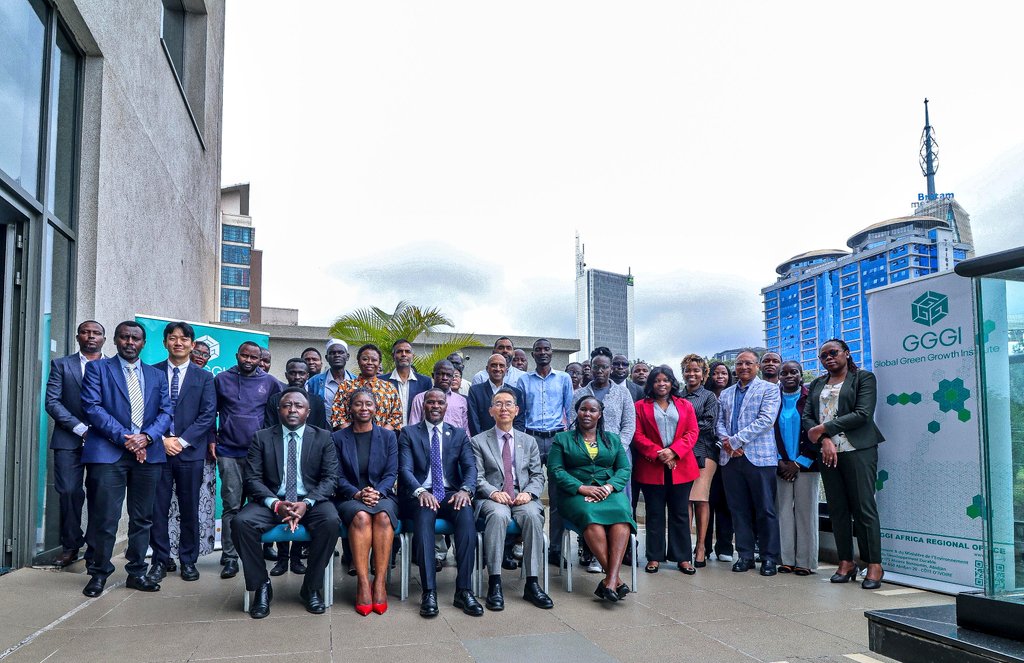
Kenya strengthens fight against plastic pollution
CHRISTINE CHERYL-MyGOV
Kenya has launched the Plastic Circular Investment Initiative (PCII) to fast-track implementation of Extended Producer Responsibility (EPR) regulations and unlock financing for plastic waste management.
The initiative aims to convert policy commitments into bankable circular economy projects by mobilizing private capital and strengthening regulatory systems.
Speaking during the launch, Dr. Festus Ng’eno, Principal Secretary of the State Department for Environment and Climate Change, said the initiative comes at a crucial time as Kenya transitions toward a modern, accountable, and investment-driven circular economy.
“The EPR regulation requires producers to take responsibility for their products throughout their lifecycle and ensures that plastic waste is not left solely to governments or communities,” said the PS.
He highlighted that Kenya generates close to one million tonnes of plastic waste annually, yet only about 8 percent is recycled, while collection rates remain relatively low. Ng’eno urged producers, regulators, and consumers to share responsibility for collecting, recycling, and reintegrating materials into the economy.
“Plastic waste should not only be viewed as an environmental challenge but also as an economic opportunity,” the PS said.
He added that with the right investments, innovation, and partnerships, plastic waste can be transformed into a valuable resource. “This transformation can support green industries, create jobs for youth and women, and strengthen local value chains,” he said.
Ms. Nagnouma Kone, Manager for Africa Strategy and Partnerships at the Global Green Growth Institute (GGGI), said the PCII is designed to bridge the gap between regulatory ambition and financial execution.
“Kenya has made bold legislative progress, but policies alone do not transform systems. Fees must translate into functioning infrastructure and ambition must translate into investment,” she said.
“Through the Sustainable Waste Management Act of 2022 and the EPR Regulations of 2024, Kenya is taking a historic step away from the traditional linear ‘take–make–dispose’ model and moving toward a circular economy where waste becomes valuable,” she added.
Ms. Koné observed that while Kenya has demonstrated regional leadership in environmental governance, implementation challenges remain, including evolving EPR structures, limited investment-ready project pipelines, capacity gaps among PROs and the need for strengthened digital data systems.
“If these structural gaps are not addressed, private capital will remain hesitant and statutory recycling targets may not be fully realized,” she said.
“This is not just environmental reform. It is an economic opportunity, a functioning circular economy creates jobs, reduces pollution, strengthens value chains, supports small and medium enterprises and enhances Kenya’s competitiveness.” Ms Kone added.
Kang Hyung‑Shik, Ambassador of the Republic of Korea and host of the GGGI headquarters, affirmed the initiative’s value, highlighting that it provides a valuable opportunity to raise public awareness.
“Korea strongly recognizes the impacts of plastic pollution and is actively working with Kenya, the Global Green Growth Institute (GGGI), and the United Nations Environment Programme (UNEP) through international partnerships to address this issue and promote sustainable solutions.
“This launch is therefore not merely the beginning of a project it represents a shared commitment among governments, development partners, investors, and entrepreneurs to accelerate systemic change,” he said.