
Kenya reaffirms commitment to fight against plastic pollution
DICKSON MWITI-KNA
Plastic pollution remains one of the most urgent global environmental threats, with significant impacts on ecosystems, human health, and economic sustainability.
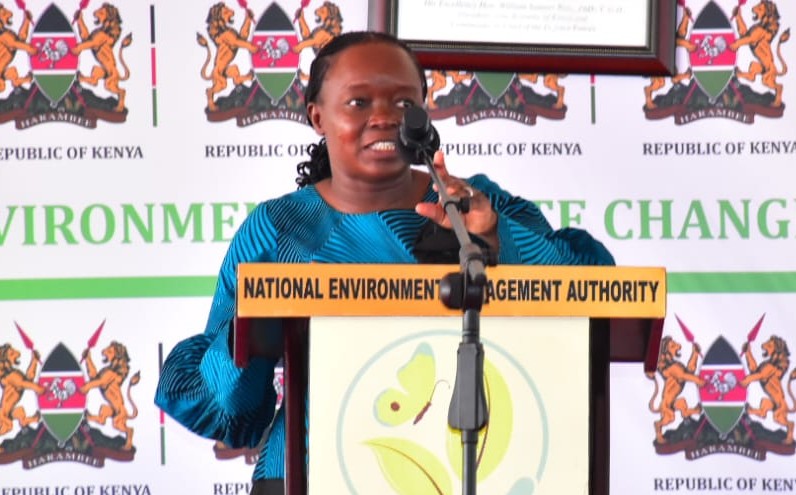
Speaking at Tharaka University, where this year’s World Environment Day celebrations were held, Environment, Forestry and Climate Change Cabinet Secretary (CS) Dr. Deborah Barasa said that more than 430 million tonnes of plastic are produced annually. Of this amount, two-thirds becomes waste—polluting oceans, degrading land, and threatening biodiversity.
Yet only nine percent of all plastic ever produced is recycled. “As the world celebrates World Environment Day 2025 under the theme Ending Plastic Pollution, Kenya reaffirms its commitment to environmental stewardship,” the CS said.
She noted that Kenya has emerged as a leader in plastic pollution control, beginning with its 2017 ban on plastic carrier bags, which achieved more than 80 per cent compliance and significantly reduced litter.
“The National Marine Litter Management Action Plan (2021-2030) furthers this progress by targeting plastic waste in coastal and freshwater ecosystems through source reduction, cleanups, awareness and research, complementing policies like the sustainable waste management act,” she said.
“Today, we join the global community to celebrate this day by renewing our shared commitment to face one of the most pressing environmental challenges of our time - plastic pollution,” the CS said.
She added, “Innovative solutions are transforming perceptions of waste, not as a problem, but a resource. Across Kenya, we are witnessing promising strides in converting plastic waste into valuable products such as eco-friendly building materials, fencing poles, paving blocks, roofing tiles and even furniture.”
She said the innovations are not just reducing pollution, but creating green jobs, especially for youth and women as well as driving local economic development.
She further said Kenya’s circular economy movement is growing, powered by grassroots innovation, community-based organizations and private sector champions.
Informal waste pickers, often overlooked, she added, are now being recognized and integrated into formal systems through public-private partnerships and county-level waste initiatives.
She called on county governments, businesses, civil societies, and communities to take the lead in waste segregation, sustainable packaging and local recycling solutions.
“I especially want to emphasize the role of local communities in ending plastic pollution from grassroots led by county governments. My ministry is committed to transitioning the country from a linear to circular economy.”
“From bold policy, regional leadership and international negotiations to grassroots action and innovation, we are moving as one nation, with one purpose, to protect our environment and our future,” she said.
She added that every Kenyan has a role to play, from business owners to reduce plastic packaging, to schools teaching sustainability, and to farmers finding alternatives to agro-plastics in farming.
“Your everyday actions matter: participate in clean-up drives, support recycling centres and say no to single-use plastics,” Dr Barasa said.
She said this year’s theme is a shared call to action, and governments, policymakers, small and medium enterprises, the plastics industry, financial institutions and communities must all work together to drive changes in production, consumption, and waste management.