
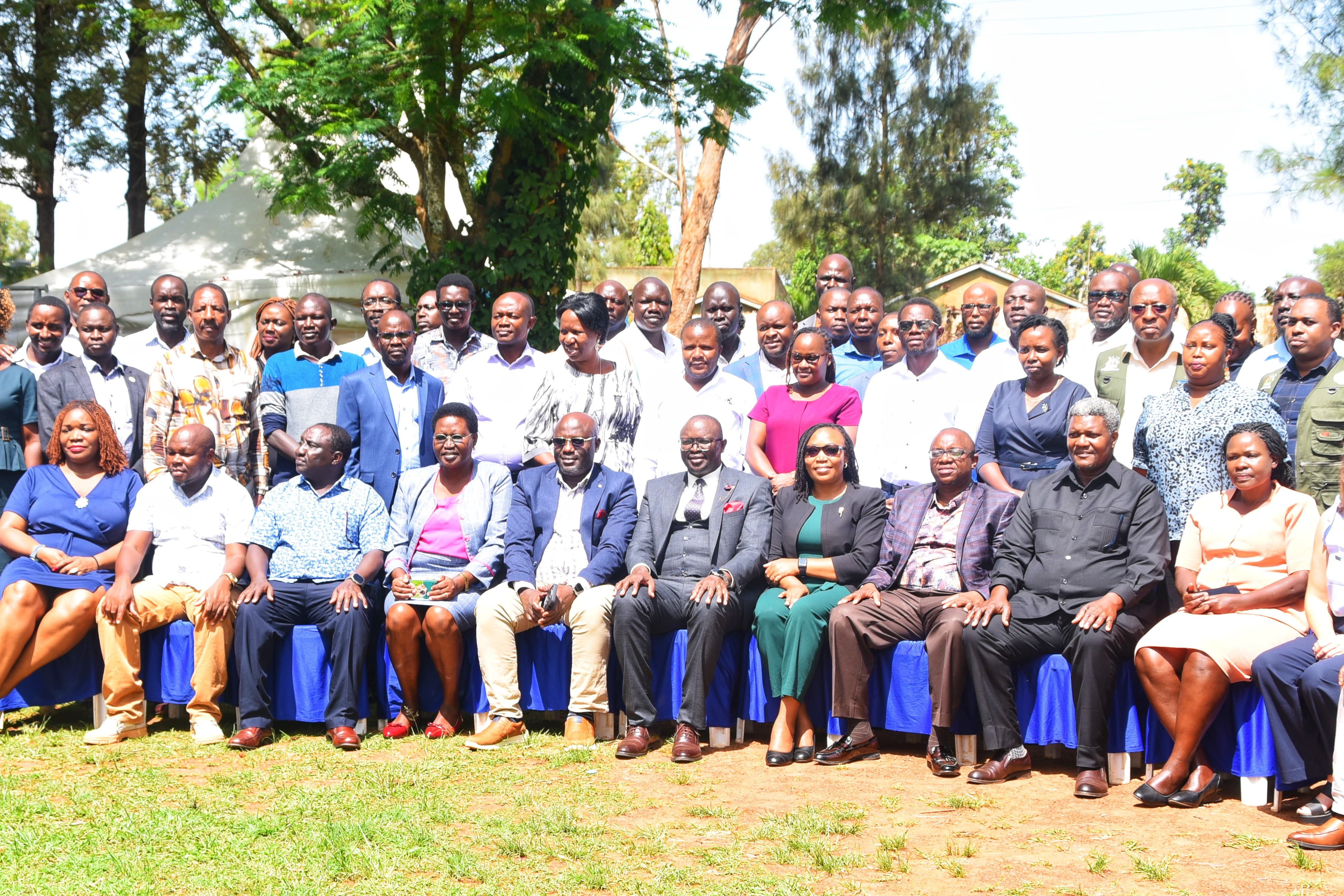

Kenya and Uganda launch cross border Malaria control initiative
Judy Sheri (PCO)
Kenya is collaborating with Uganda to tackle malaria through a joint cross-border malaria control initiative.
The initiative was launched last week during a three-day joint cross-border planning meeting held in Busia, Kenya.
Dr. Joseph Lenai, Kenya's Director for Primary Health Care, acknowledged the serious malaria burden in both countries.
He pointed out that globally, an estimated 247 million malaria cases were recorded in 2022, with Africa accounting for 95 per cent of these cases.
Uganda alone contributes five per cent to the global malaria burden, while in Kenya, Turkana County is seeing an alarming malaria incidence rate of 360 cases per 1,000 as of September 2024. Uganda’s Karamoja region reports a malaria prevalence of 34 per cent.
“Malaria knows no borders,” emphasized Dr. Lenai, highlighting the need for a unified approach to combat the disease, especially given the mobile and nomadic populations living in the border areas.
“This meeting builds upon previous regional malaria stakeholders’ meetings organized by the EAC Secretariat and sets the groundwork for strengthened collaboration between Kenya and Uganda in addressing malaria in the shared border regions,” he said.
He added that the Great Lakes Malaria Initiative (GLMI), which was approved by the EAC Council of Ministers in 2021, provides a strong framework for cross-border cooperation.
Kenya reaffirmed its commitment to reducing malaria incidence and mortality, with the 2019-2023 Malaria Strategy aiming for a 75 per cent reduction in malaria-related deaths and cases from 2016 levels.
The "Power of EveryONE" campaign launched in February 2024 is one of Kenya’s key efforts, focusing on high-burden counties such as Kilifi, Kakamega, and Kisumu.
Dr. Lenai emphasized the importance of five key focus areas for effective collaboration between the two countries.
These include enhanced surveillance and rapid response systems, targeted interventions in border areas, community engagement, harmonized policies and protocols, and sustainable financing.
“By strengthening surveillance and response systems, both countries aim to swiftly detect and address malaria cases,” Dr Lenai said.
Targeted interventions within a 2.5-kilometer-wide perimeter along the shared border will include measures like vector control, case detection, and preventive treatments.
He said community engagement is vital, and local health workers will play a crucial role in ensuring that people seek treatment and that healthcare providers test those presenting with fever.
Additionally, harmonizing policies and protocols for malaria control and treatment is essential to ensure consistent approaches across both countries, Dr Lenai said, adding that sustainable financing strategies will help ensure the longevity of the initiative.
The collaborative effort draws inspiration from other successful cross-border malaria control initiatives, such as those in the Zambia-Zimbabwe and Mozambique-Zimbabwe-South Africa regions.
He said with shared resources and unwavering commitment; Kenya and Uganda can significantly reduce the malaria burden in the border regions.
He added that the partnership between Kenya and Uganda offers hope for better public health outcomes and an eventual reduction in malaria transmission along their shared border.
Stakeholders present developed a comprehensive implementation roadmap, identified malaria control activities, and drafted a report documenting the collaboration mechanisms agreed upon by both countries.
The event was attended by representatives from both countries, the East African Community (EAC), the National Malaria Control Programs, esteemed researchers, and health organizations such as RBM, AMREF, CRS, and KEMRI.
County representatives from Turkana and Busia in Kenya, as well as district representatives from Uganda, were also in attendance.