
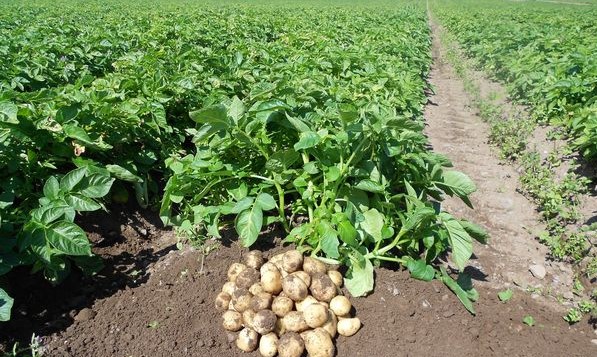
KALRO’s new potato variety promises higher yields, better resistance
John Kariba-KNA
The Kenya Agricultural and Livestock Research Organisation (KALRO) has introduced a game changing potato variety, Clone IG-70, that promises to revolutionize potato farming in Kenya.
The new variety, which is drought- and blight-tolerant, was unveiled during the Mkulima Open Week Exhibitions at the KALRO Potato Research Centre in Tigoni, Limuru Sub-County.
KALRO has been at the forefront of developing high-yielding, disease-resistant potato varieties, while adopting innovative farming methods, including improved post-harvest techniques, to enhance productivity.
“Certified seeds play a crucial role in enhancing potato productivity, and the KALRO Research Open Week aims to educate farmers on advanced technologies and best practices to meet the country's growing potato demand,” Robert Musyoki, the Director of KALRO Seeds said.
Musyoki revealed that Clone IG-70 was in its final verification stages and would soon be available to farmers. He emphasized that educating farmers on certified seeds would help bridge the gap in seed shortages and improve yields.
“There is a high demand for certified seeds in the country, but low production capacity has made it difficult to meet this demand. We invite all potential stakeholders to join us in increasing seed production to support the growing number of farmers,” he added.
According to the Director of the KALRO Horticulture Research Centre, Tigoni, Moses Nyongesa, farmers have long sought a potato variety that is both resistant to blight and capable of delivering high yields.
“The new variety meets this need, offering a high yield of 320 bags per acre, drought and blight tolerance, and excellent processing qualities, making it an ideal choice for potato farming,” Nyongesa stated.
To address the certified seed shortage, KALRO has introduced an innovative approach known as potato rooted apical cuttings technology, which enhances the production of early-generation seeds.
“This technology allows farmers to purchase potato seedlings in addition to seeds, enabling faster seed multiplication. It can also be applied to other crops like tomatoes, further boosting agricultural productivity,” Nyongesa added.
Research scientist, Faida Kelele John noted that 80 per cent of local farmers relied on uncertified seeds, which makes pest and disease control more challenging.
“Certified seeds undergo rigorous evaluation, curing, and analysis to meet required standards, making them more reliable than exchanging seeds among farmers. The Clone IG-70 variety stands out for its high resistance to blight and drought, large tuber size, and suitability for making fresh potato chips and roasting,” Kelele explained.
Farmers who attended the exhibition praised the new developments; however, they raised concerns about seed accessibility and cost.
Peter Magina, a potato farmer from Limuru, acknowledged that advanced seed technology has boosted yields and profitability, but called on the government to increase funding for KALRO to enhance seed production.
“Each farmer is receiving a maximum of two 50-kilogramme bags of potato seeds, which is insufficient for those with large plots of land. I urge the government to allocate more funds to KALRO to ensure increased seed production,” Magina said.
Rose Wathira, a farmer from Narok, highlighted the high cost of the seeds, urging the government to subsidize prices to make them more affordable.
“The seeds are expensive, with each bag costing Sh4,250. I urge the government to reduce the price to make them more accessible to farmers,” she said.