

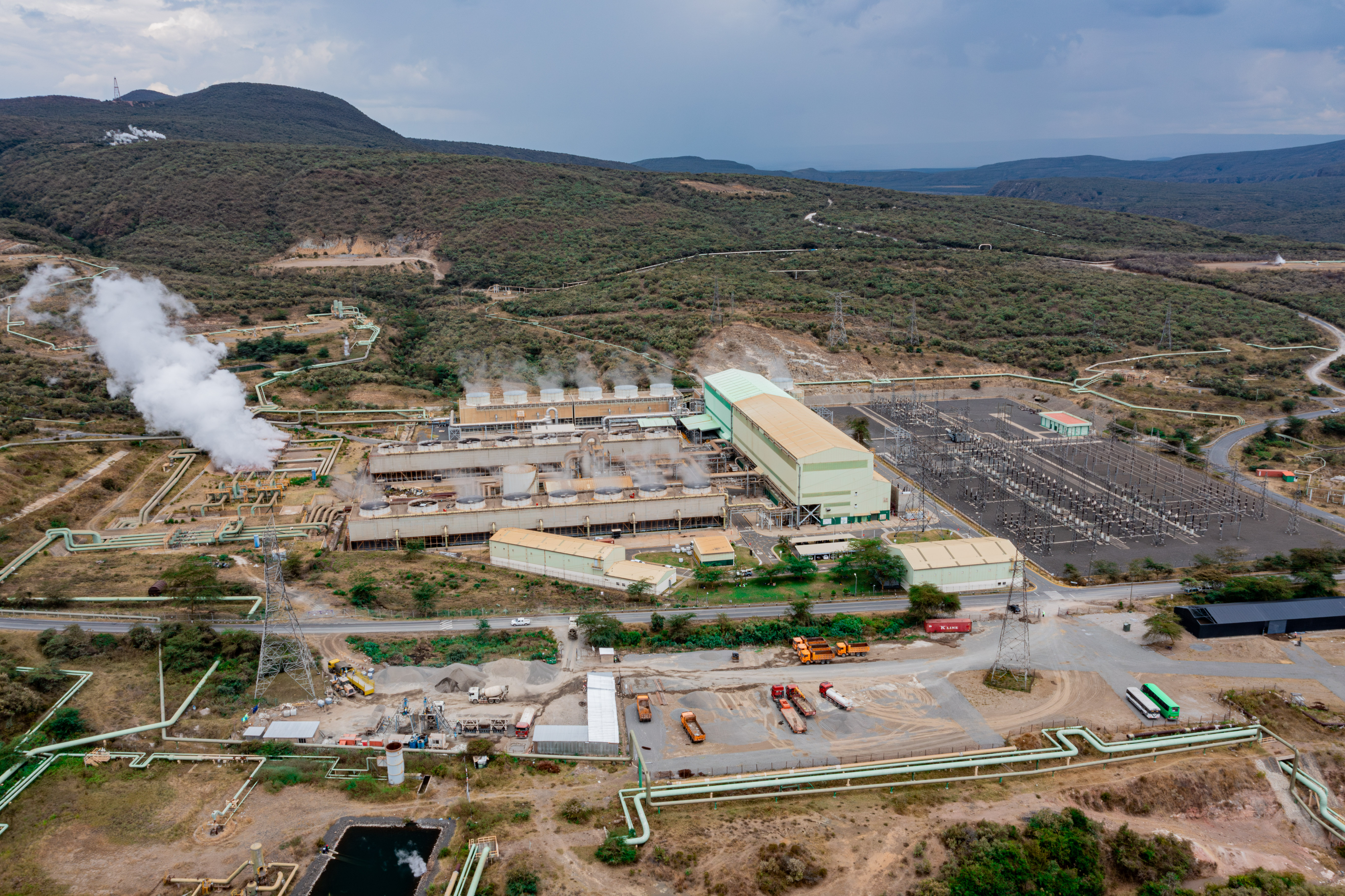

Power consumption in Kenya hits record high
Immaculate Chebet-MyGov
Kenya has hit a new record electricity demand of 2,362.28 megawatts (MW), marking a milestone in national energy use which is driven by industrial expansion, increased urbanisation, and rising household consumption.
The Kenya Electricity Generating Company (KenGen) Chief Executive Officer (CEO) Eng. Peter Njenga revealed that KenGen’s geothermal and hydropower delivered the lion’s share of energy to the system.
According to the Energy and Petroleum Regulatory Authority (EPRA), KenGen’s geothermal plants supplied 13,678.35 megawatt-hours (MWh), representing 31.85 per cent of the total, while hydropower plants delivered 10,915.93 MWh, representing 25.42 per cent of national output.
Combined, these sources accounted for 57.27 per cent of Kenya’s daily electricity generation.
The CEO noted that this has contributed significantly to stabilising supply and preventing outages.
“While the total energy demand stands at 42,943.11MWh, including thermal sources, wind, and interconnectors from Uganda and Ethiopia, we are glad to note that it was KenGen’s steady delivery from indigenous resources that ensured grid stability,” Mr. Njenga added.
He said the demand came without any reported load shedding, affirming the robust response by system operators.
Eng. Njenga said hydroelectric power stations like Kiambere exceeded expectations by producing 2,908 MWh, 23.31 per cent above dispatch projections, while other major hydros like Gitaru, Kamburu, and Masinga also supported system operations despite flow variability in the cascading river system.
“This greatly contributed to stabilisation of the cost of electricity in the country considering hydro is Kenya’s cheapest source,” he added.
The CEO noted that with minimal curtailment, geothermal power proved essential for baseload support – aligning with Kenya’s long-term energy transition strategy of reducing reliance on expensive thermal imports.
“However, transmission lines such as Muhoroni-Chemosit and Kisumu- Muhoroni exceeded 120 per cent capacity. This highlights the need for urgent infrastructure reinforcement to keep pace with surging demand,” Eng. Njenga said.
Currently, KenGen PLC has an installed generation capacity of 1,786 MW, of which over 93 per cent is drawn from renewable sources, namely hydro (826 MW), geothermal (754MW), and wind (25.5 MW).
Eng. Njenga announced plans of delivering 1,500MW of electricity, all from renewable sources including geothermal, hydro, wind and solar as part of KenGen’s 10-year G2G strategy.