
Kwale fishermen embrace Aquaculture to boost livelihoods
Hussein Abdullahi-KNA
Coastal communities in Kwale are increasingly turning to the fisheries sector to enhance their livelihoods, particularly through aquaculture and improved fishing techniques.
This shift by artisanal fisheries in the coastal region is driven by the potential for sustainable food production, economic growth, and improved food security.
The move is being supported by the county government in collaboration with the Kenya Marine Fisheries Socio-Economic Development (KEMFSED) project.
The KEMFSED project is implemented by the State Department for Blue Economy and Fisheries with support from the World Bank with the project duration being 2020-2025 with funding worth Sh10 billion.
The fishery project is being implemented in the coastal counties of Kwale, Mombasa, Kilifi and Lamu to enable artisanal and small-scale fisher folks to increase catches and improve livelihood activities in the coastal communities.
Through KEMFSED Artisanal and small-scale fisherfolks are receiving modern fishing boats through various initiatives to boost their livelihoods and the fishing industry.
The blue economy sector encompasses fisheries, maritime biotechnology, aquaculture, tourism and marine transport and logistics.
Area Governor Fatuma Achani says the KEMFSED project is making great strides towards building a climate-resilient aquatic food ecosystem.
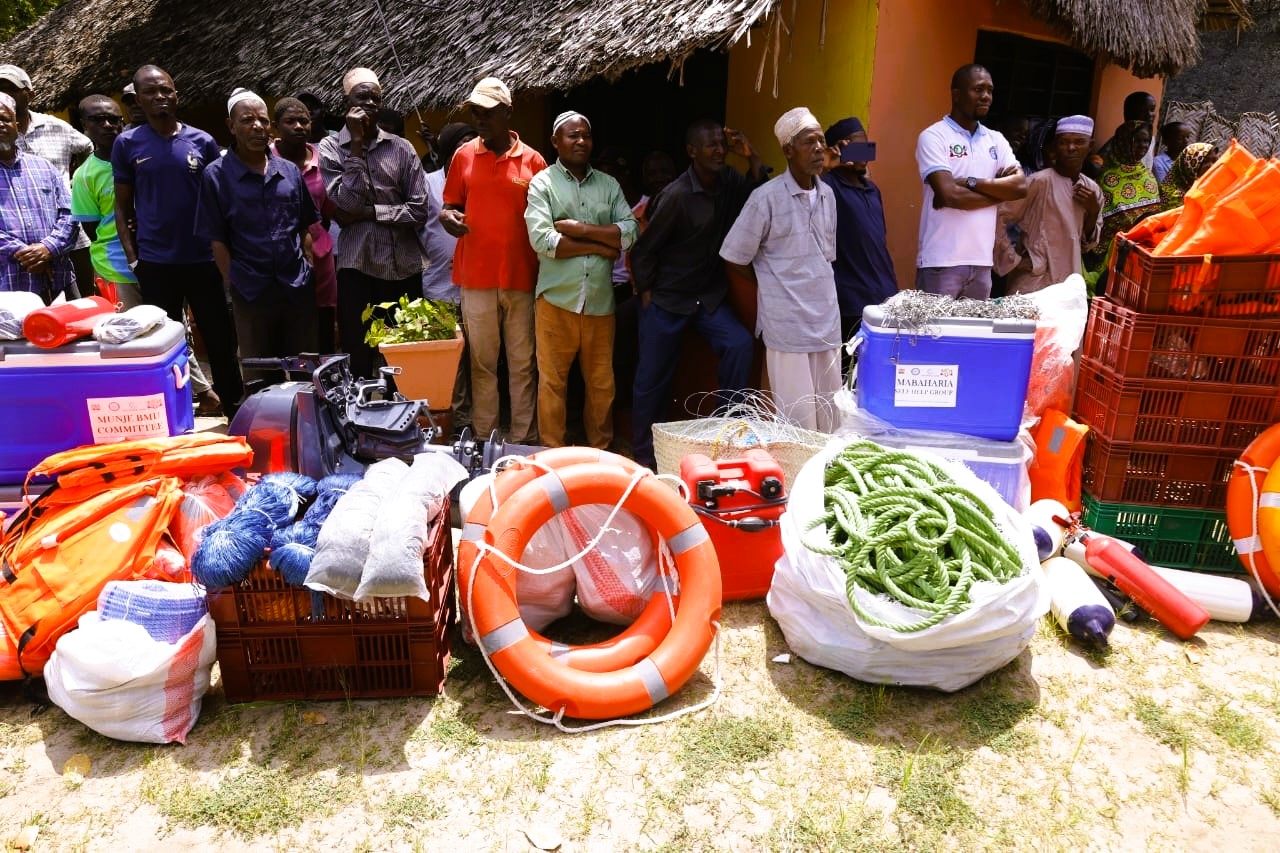
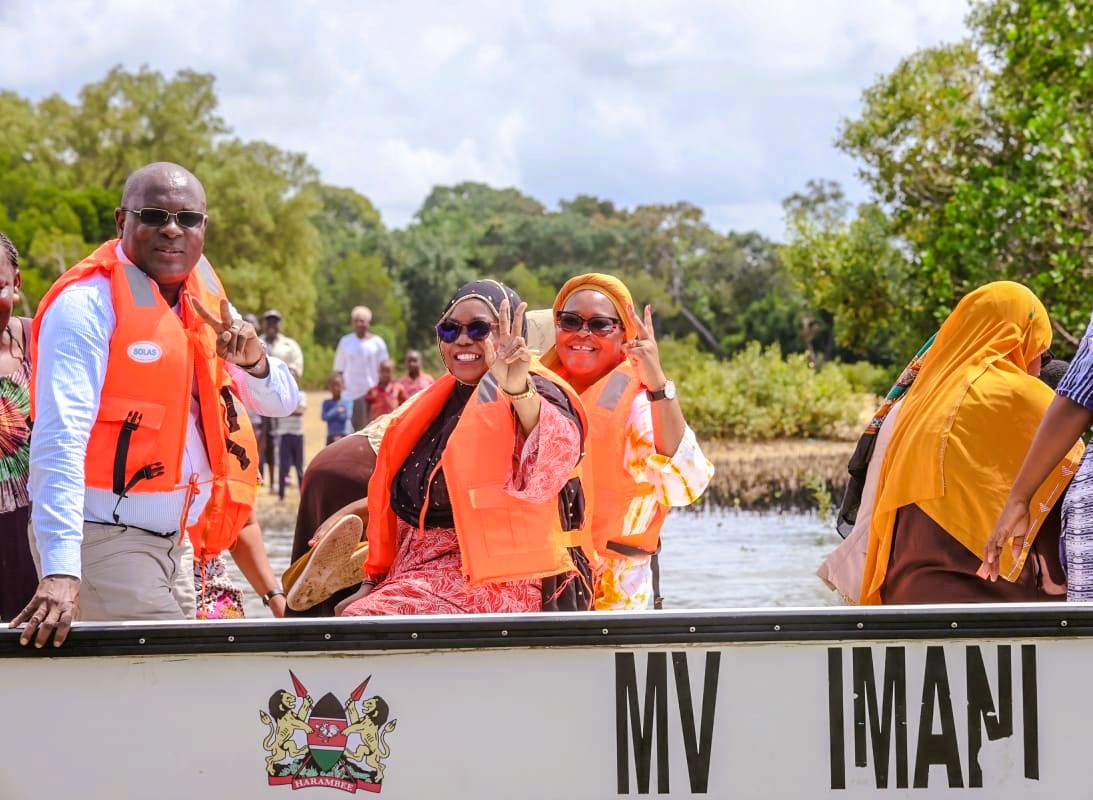
Fisherfolks in Msambweni sub county have received four fully equipped fiberglass motorised fishing boats through KEMFSED grants to enhance livelihoods for coastal communities.
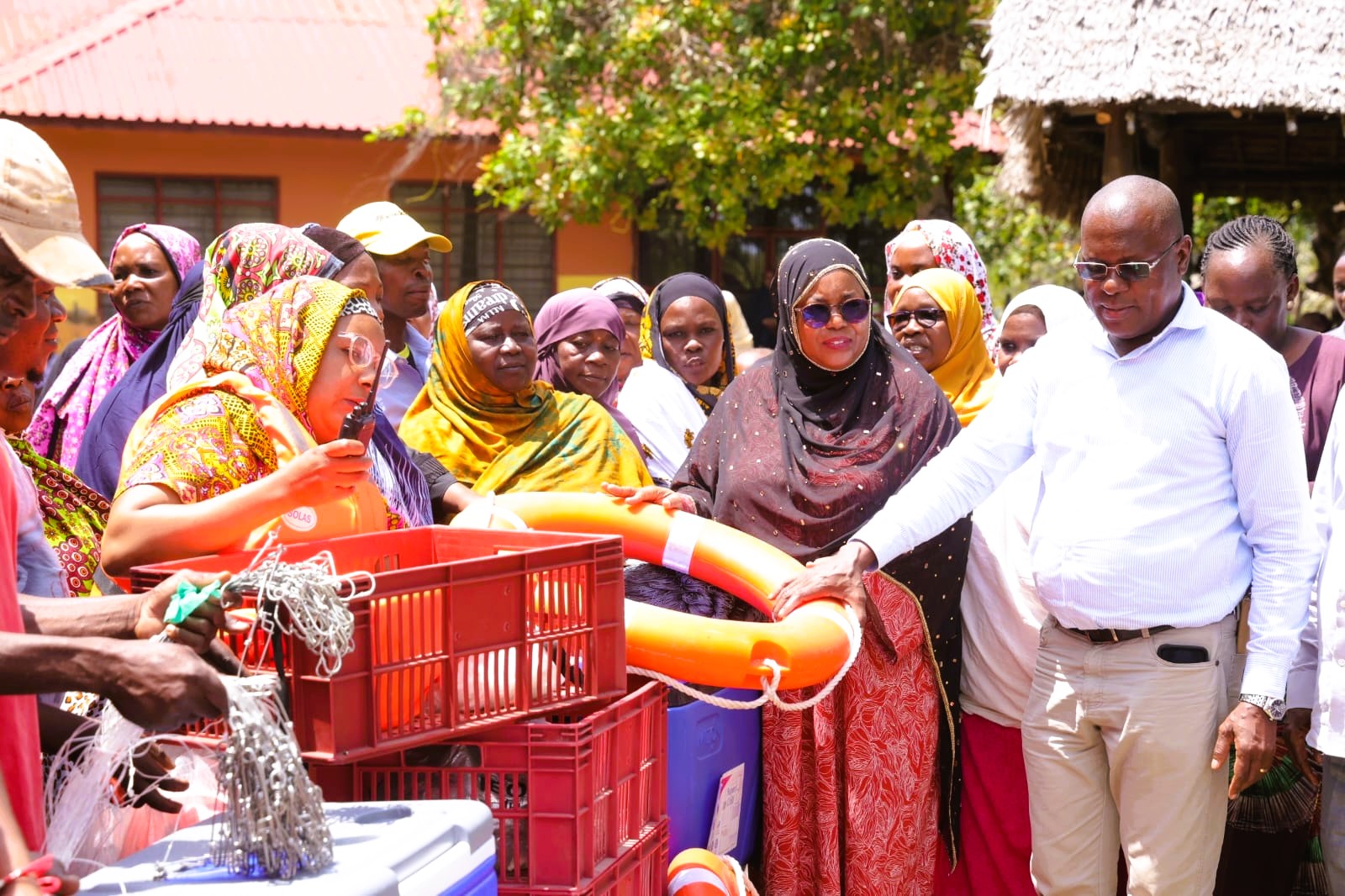
Governor Achani who handed over the equipment says the boats will enable the beneficiary groups to venture into offshore fishing, boost incomes and promote sportfishing.
Achani said the goal of the partnership with KEMFSED is to provide fishermen with the tools and resources needed to increase their catches, improve their safety, and enhance their livelihoods.
She noted that the project is undertaken through the KEMFSED funded by the World Bank, where the groups also received engines, fishing gears, safety equipment and post-harvesting handling tools.
“This is a major step forward in empowering our fishing communities with the tools needed including better boats, safety and fishing gears, to enhance their income,” she said.
She went further ‘as a county, we have issued at least 55 modern fishing and ecotourism boats, navigation equipment, fish finders, GPS among other fishing facilities to the fishery groups across the Kwale,’.
The coastal county boss has also issued value addition equipment including cold chain facilities such as freezers, chillers, cooler boxes, fish processing and vending equipment including modern energy saving jikos, frying pans, display boxes, solar lamps and umbrellas to several help groups and local Beach Management Units (BMUs).
“This project aims at boosting the income for the Small and Medium Enterprises groups (SMEs), which will further enhance their livelihood,” said Achani.
Bodo BMU chairperson Swaleh Kondo expressed gratitude to the partnership project adding that the new boats and equipment will help them achieve better catches.
“For years we have been struggling with old boats and unreliable fishing gear. These new modern boats with outboard engines will allow us to venture deeper into the ocean,” he said.
Kondo said the challenge traditional fishers face is the uncertainty of the catch due to depleting fish resources and increasing extreme weather events.
He said with motorised boats fisherfolks can now undertake deep sea fishing beyond the limit of territorial waters, which is seven nautical miles from the shore, and within the Exclusive Economic Zone (EEZ) of 200 nautical miles from the shore.
Kenya's Exclusive Economic Zone (EEZ) is a 200 nautical mile (370 km) area extending outwards from its coastline, granting the country sovereign rights over its resources such as fisheries, oil and gas and other seabed minerals within the zone.
Kondo who comes from a long line of fishermen says having access to outboard engines and improved fishing gears has allowed local fishermen to increase the amount of fish catches.
He says that modern fishing equipment such as the deep-sea vessels has allowed the fishermen to venture into the exclusive economic zone.
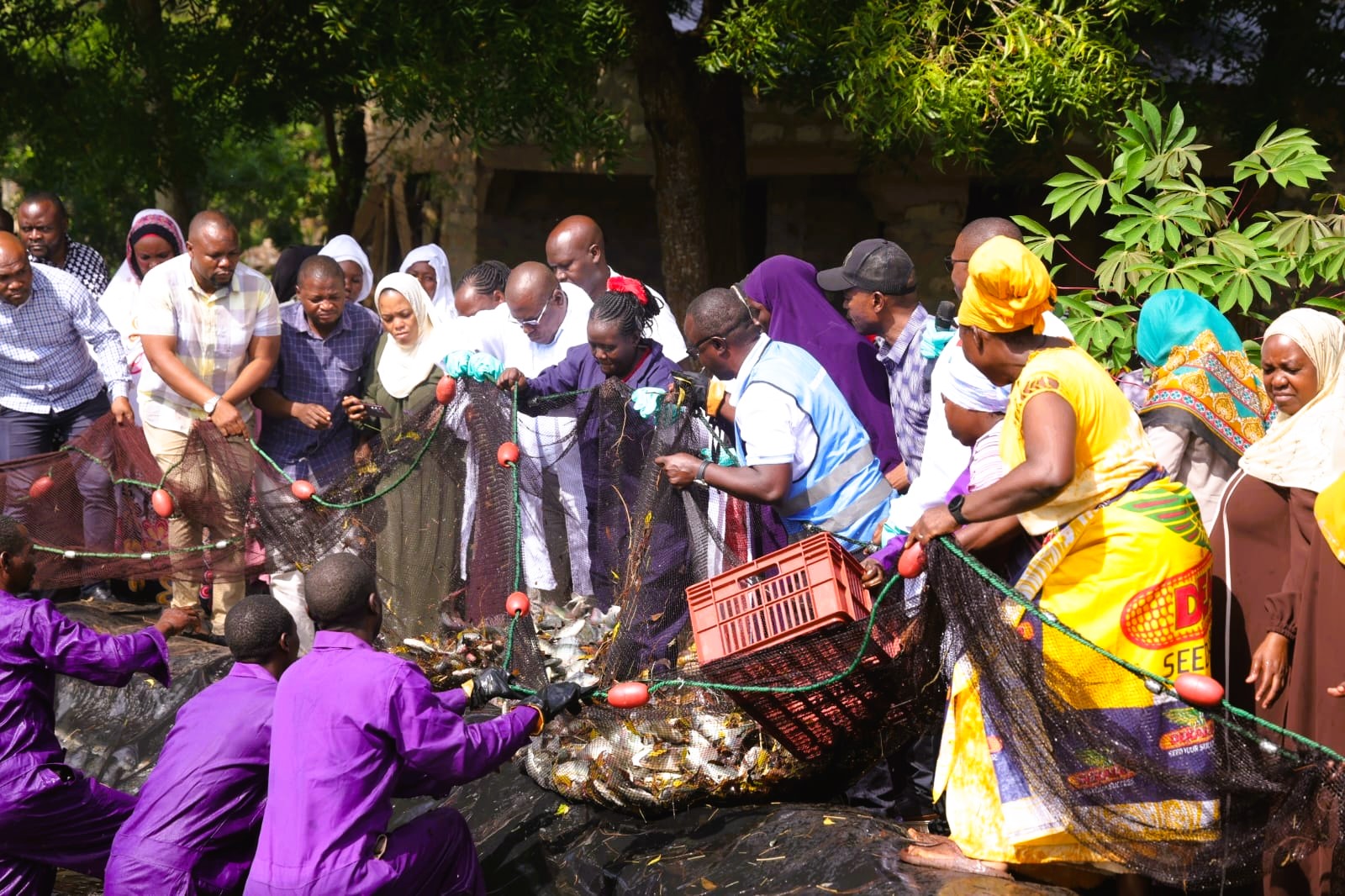
The Governor Achani who was accompanied by County Executive Committee Members Roman Shera (Agriculture and Fisheries) and Saumu Beja (Environment) later led a successful fish harvesting exercise at Mwazaro, in Lunga sub county where 2,800 fingerlings are being reared by the Sunflower Women’s Group through the support from the KEMFSED Project.
“This initiative is more than just aquaculture, it’s about economic empowerment, food security, and giving our communities the tools to thrive,” said Achani.
She said the county has so far constructed at least 58 fishponds in Tsunza, Msambweni, Kinango and Lunga areas with at least 70,000 fingerlings stocked.