
Ministry steps up biodiversity action ahead of global conference
NAIF RASHID-KNA
Kenya has renewed its resolve to tackle biodiversity loss by restoring degraded ecosystems and aligning environmental governance with its economic t r a n s f o r m a t i o n agenda.
Environment, Climate Change and Forestry Cabinet Secretary Dr. Deborah Barasa announced that the country is moving from policy ambition to practical delivery, backed by evidence-based monitoring and measurable socio-economic benefits.
Dr Barasa was speaking at the launch of the Regional Centre for Mapping of Resources for Development (RCMRD) as a Sub-Regional Technical and Scientific Cooperation Support Centre under the UN Convention on Biological Diversity (CBD).
The CS emphasized Africa’s need to strengthen technical and institutional readiness ahead of the 17th Conference of Parties (COP 17) this year.
The event also marked the opening of a workshop on biodiversity monitoring and reporting linked to Target 2 of the Kunming–Montreal Global Biodiversity Framework.
“Restoration is about giving nature a chance to recover while protecting livelihoods, securing water, supporting food production and building resilience to climate change,” Dr. Barasa said, noting that degraded forests, rivers, wetlands, grasslands and coastlines must be urgently revived.
She highlighted that the Kunming– Montreal Framework represents a global shift from ambition to implementation, with progress judged by measurable outcomes rather than intent.
Target 2, which calls for large-scale restoration of terrestrial, inland water, coastal and marine ecosystems by 2030, is both an environmental necessity and a development priority for Africa.
Delivering on this target, she added, requires clear baselines, reliable data systems, and strong national-to-global reporting mechanisms.
The designation of RCMRD as a regional support centre was described as timely, enabling countries to apply harmonised methodologies, leverage geospatial and earth-observation data, and strengthen biodiversity monitoring systems.
The Centre will also serve as a hub for technical exchange, ensuring consistency and shared learning across Africa. Kenya’s restoration efforts, Dr. Barasa noted, are firmly anchored in BETA, with initiatives such as the 15-billion-tree growing programme and broader landscape restoration projects.
Communities remain central to these efforts, involving county governments, forest associations, farmers, schools, faith-based groups, the private sector and individual citizens.
S u c c e s s , s h e stressed, will be measured not by numbers alone but by survival rates, ecosystem functionality, biodiversity outcomes and longterm resilience.
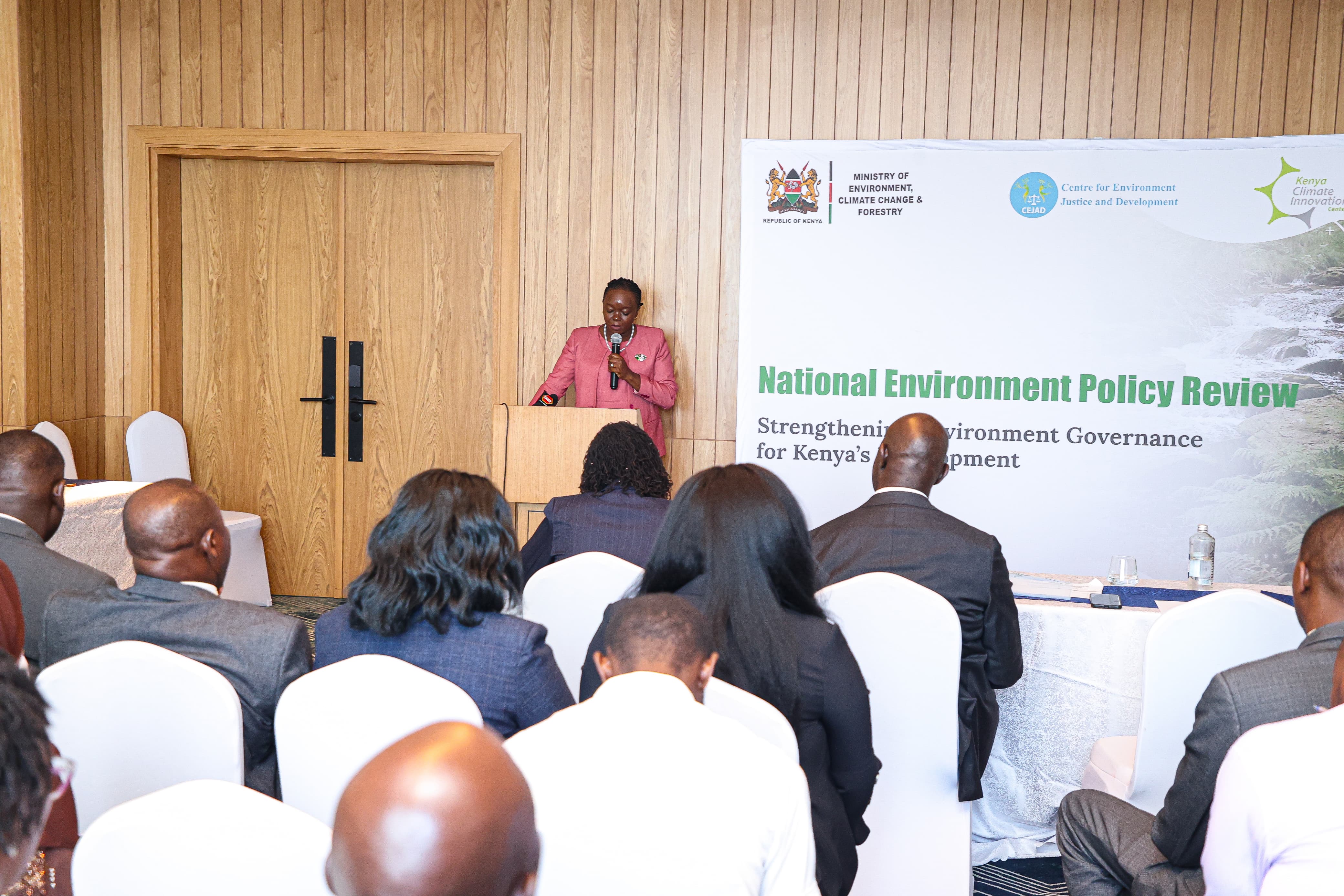
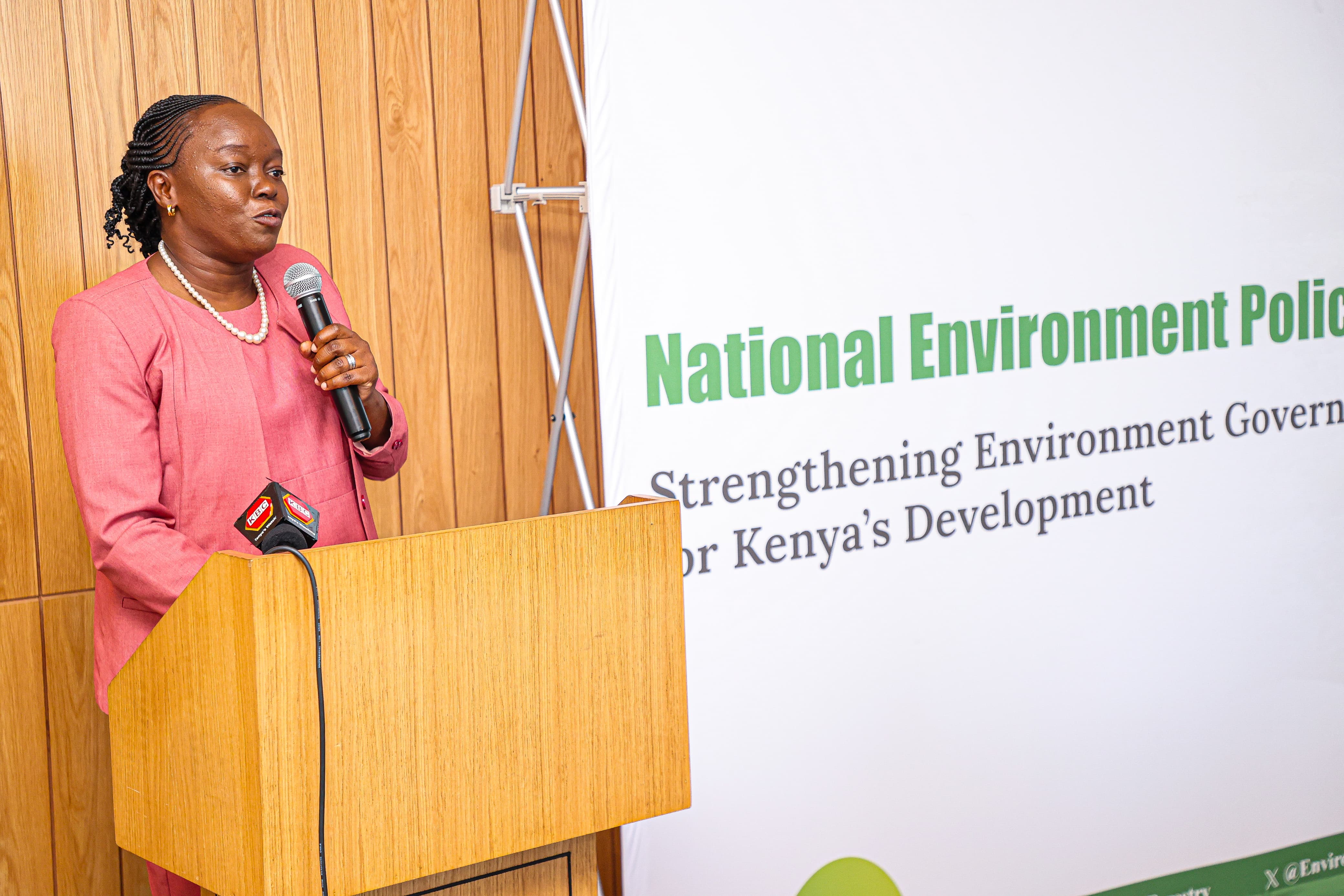
In a related engagement, Dr. Barasa launched the review of the 2013 National Environment Policy, calling it a critical process focused on delivery and economic transformation rather than routine administration.