
How an engineer turned to healing through bees
Florence Kinyua
In the sleepy rolling hills of Kandara, Murang’a County, a buzzing innovation is taking root.
It is an unusually warm afternoon in July when KNA visits Steven Kimani’s apiculture centre. From far and wide, visitors stream into the apiculture centre, to seek healing from nature’s oldest chemists- the honeybees.
Outside a makeshift tent, several visitors wait in line patiently for their turn to get the magical healing bee sting. Metres away another group of customers are streaming in and out of a well-stocked farm shop, with four attendants behind the counter.
Some came to buy raw honey, others propolis bee extract, bee pollen and beauty products from honey, while others came by to drink dawa- a honey blended concoction known for treating colds and boosting immunity.
“I graduated with a degree in Civil Engineering from Moi University in 2010 and after working for a while, I ditched the trade in 2015, before jumping into the murky waters of entrepreneurship,” says 38-year-old Kimani, the founder and proprietor of the Bella Apitherapy Centre.
He first tried dairy farming but quickly realized it was not tenable since he needed to be there physically, so he instead planted avocado trees as they were not labour intensive.
“One day, I found a bee pollinating an avocado tree and it sparked my interest to keep bees. My initial thought was just to sell honey,” he says.
To deepen his knowledge about bees, he undertook a certificate course in beekeeping and got to know the many other bee products and their benefits and was surprised to know that beekeepers rarely get sick.
"This told me there was something about bee venom or bee products. This fueled my curiosity further,” he said.
Kimani would then enroll for an Apitherapy course in Romania before undertaking an advanced beekeeping course with a Dutch company.
Armed with technical knowledge and sheer determination, he set up an office in the capital Nairobi before relocating to the current location-Kandara.
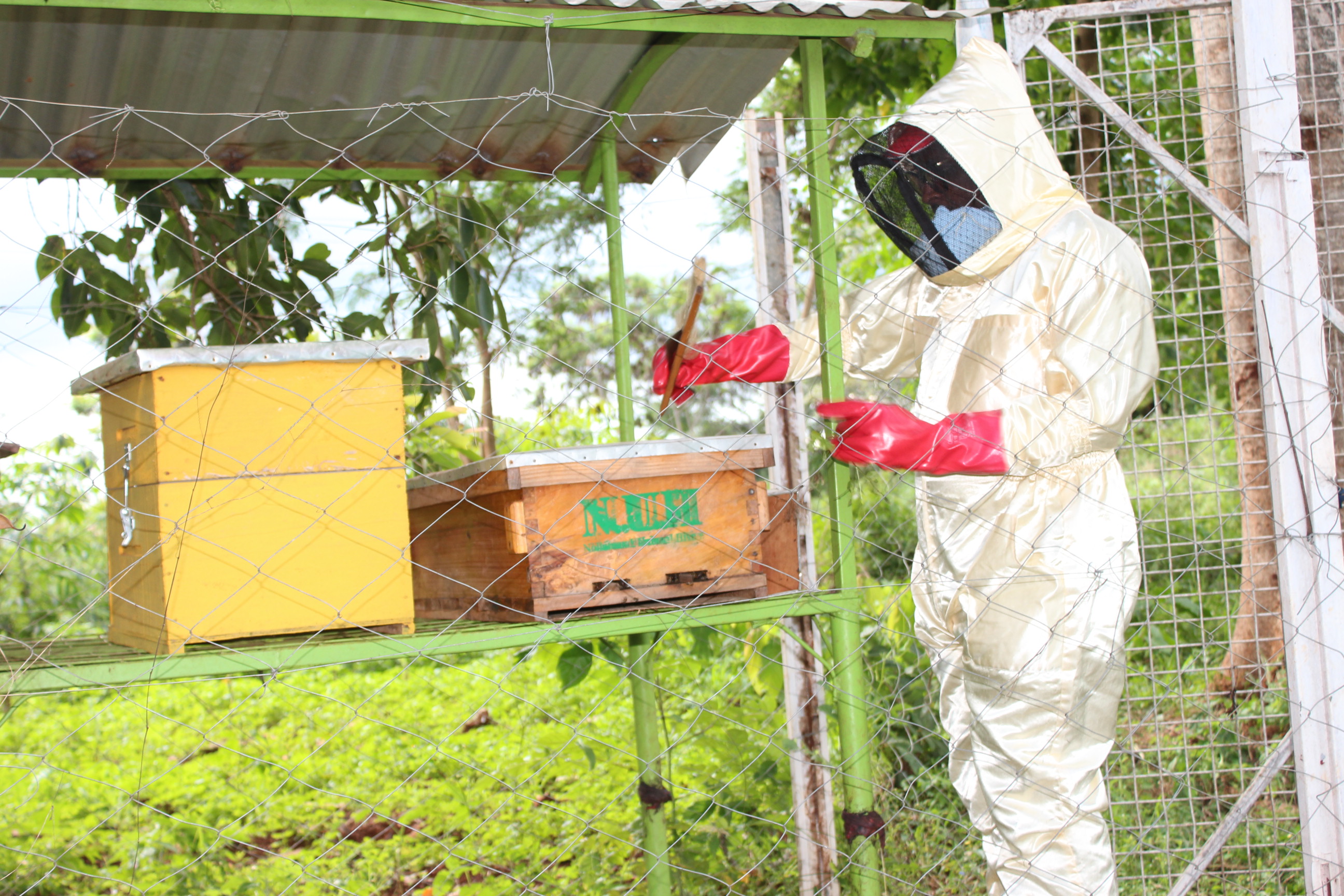
He approached the Kenya Agricultural and Livestock Research Organization (KALRO), whose premises are nearby, which allowed him to set up an apiary in their farm, where he has set up more than 150 bee hives that offer him a consistent supply of honey and other bee products.
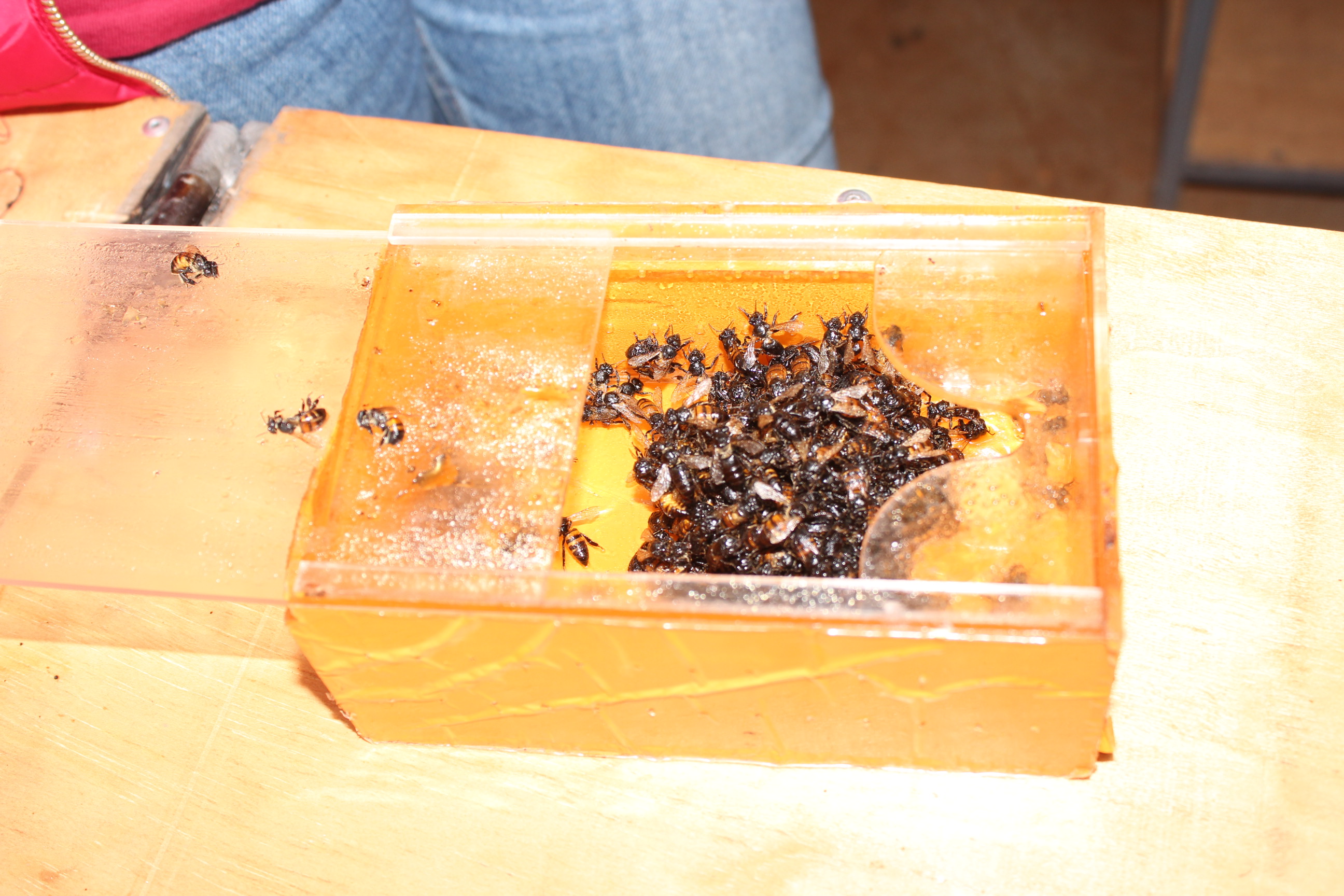
“Other bee products include bee venom, bee wax, propolis, honey, bee pollen, bee bread, royal jelly, bee drone larvae and beehive air,” he says.
Apart from the products, his main area of expertise became apitherapy-a branch of alternative medicine that uses products from bees for healing and wellness.
The apitherapist notes that bee venom has been proven to manage several conditions including relieving pain and inflammation, and boosting immune system, healing wound and relieving skin conditions such as eczema and psoriasis.
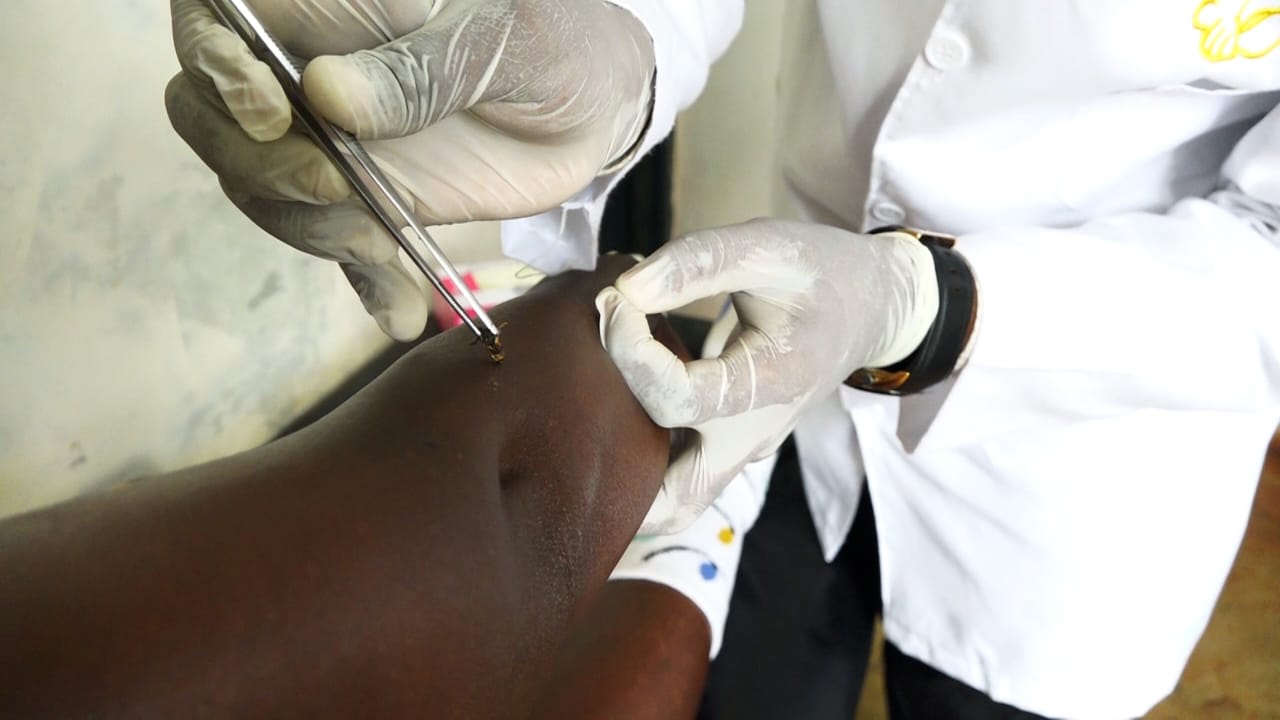
“When a client first gets here, we sting them once on the hand to test whether they are allergic to bee pollen. If they are, we put them on antihistamines and discontinue the treatment” he adds.
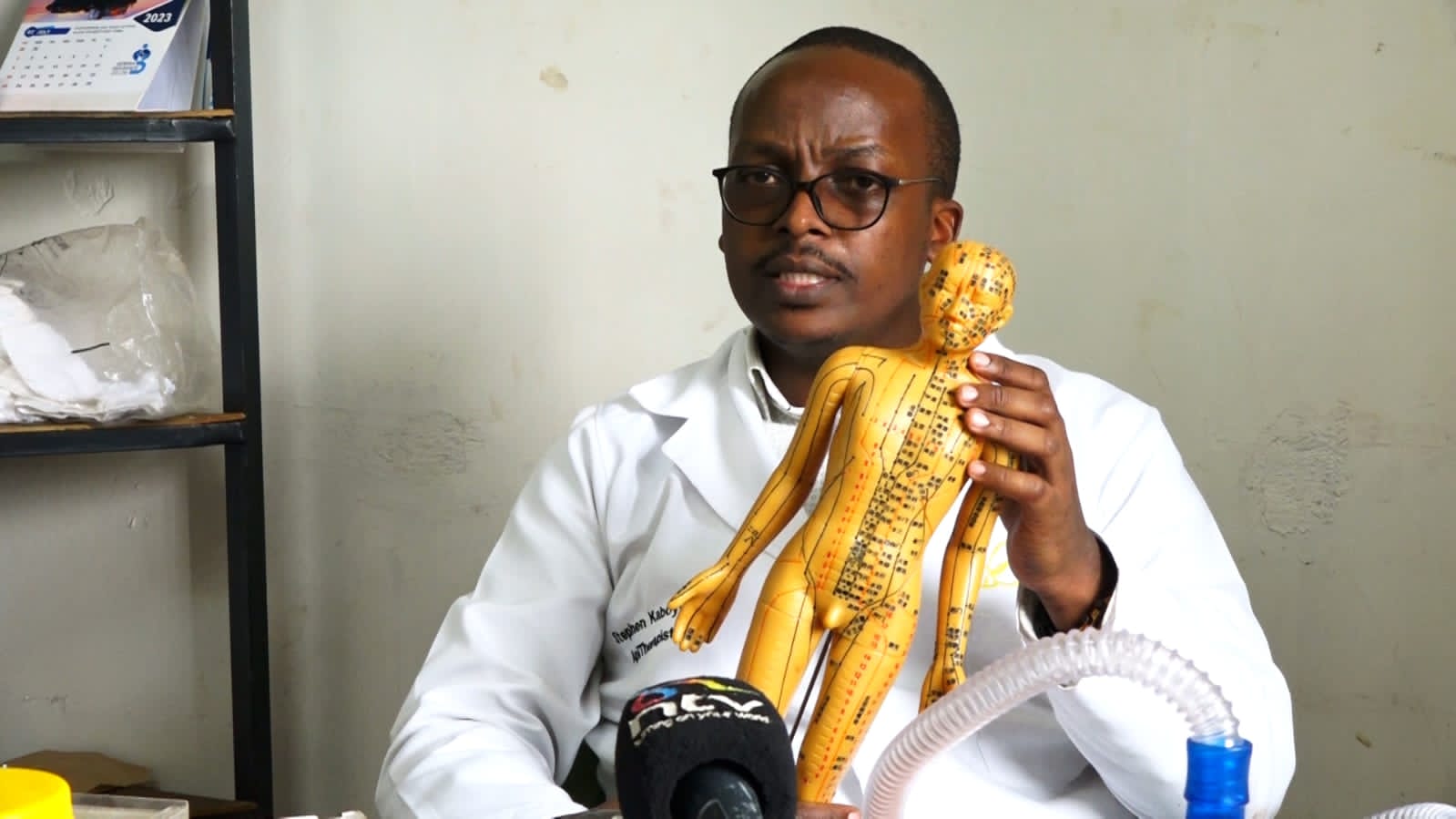
"The body has 13 acupuncture points that when stung with bee venom are able to heal specific body parts or organs," he said.
Bee venom therapy has ancient roots and was used in Egypt in 2000 BC, ancient Greece in 460 BC and in traditional Chinese medicine over 2,000 years ago to stimulate healing for joint pain and inflammation.
In the 19th century, researchers started studying bee venom more formally in Europe and in the 1930s, bee venom injections started gaining popularity.
Today, bee venom is used in complementary medicine for arthritis, chronic pain, autoimmune disorders, skin conditions and neurological diseases.
According to the National Institute of Health, a United States government agency that funds and conducts biomedical research, about 90 per cent of Kenyans have used traditional medicine at some point, with over 70 per cent relying on home-made remedies as their first source of medicine.
One such person is Mercy Wairimu, 48 years old. She arrived at the centre as we got in and waited patiently for her turn, to get the bee sting.
She had travelled from Githurai 45 Estate in Kiambu County to have bee venom therapy at the Bella Apitherapy centre for her arthritic feet condition.
“I started experiencing pain on my back years ago when my daughter, now in high school, was at lower primary level. The pain would come and go, and my life went on normally,” she said.
She explains that she got concerned when the pain started moving downwards to her feet and settled at the back of her knees and became persistent.
“I visited a hospital and after numerous tests, I was diagnosed with arthritis. I was given medicine, but the pain was always there and became worse during cold seasons,” she says.
Her condition was aggravated by her occupation as a market trader. She invested in legwarmers and warm clothes, but the pain persisted, making her dependent on pain killers.
Early this year, her feet started swelling, slowing her down and worsening the pain to the extent that doctors had to extract fluid built up.
Two months ago, as she sat at her stall in pain, other traders noticed her prolonged silence and sought to establish what was bothering her.
“I told them I was in too much pain and that I suffered from arthritis which had made my walk slow. One told me she had earlier suffered from the condition and managed it using bee venom, and referred me to this centre,” says Wairimu, a ray of hope flashing in her eyes.
“This is the fifth dose of the bee stings, three on each knee and the swelling has gone down significantly. I have also not taken pain killers since,” she said, showing off her slightly swollen feet that she had covered in a long skirt.