
How Ira Ambani’s startup reaped big from KIRDI’s business incubation services
CHRIS MAHANDARA-KNA
In early 2021, Ira Ambani visited the Kenya Industrial Research and Development Institute (KIRDI) Western Region Centre in Kisumu with the aim of finding a sustainable solution to manage the substantial fish waste from her Nile perch processing plant on the shores of Lake Turkana.
For years, Ambani faced challenges in disposing of tonnes of waste, including Nile perch skins, generated daily by her plant, hindering her business expansion plans.
After researching KIRDI’s work online, Ira traveled to Kisumu to discuss her challenges with the researchers in hopes of re solving the waste issue.
“I learned about KIRDI online when I was re searching ways to handle the massive Nile perch skin waste at our plant in Turkana. That’s when I discovered they had con ducted extensive work on fish leather,” she said.
Upon her arrival, she was welcomed by a team of experts who had been researching and working on leather at the institution since 2013.
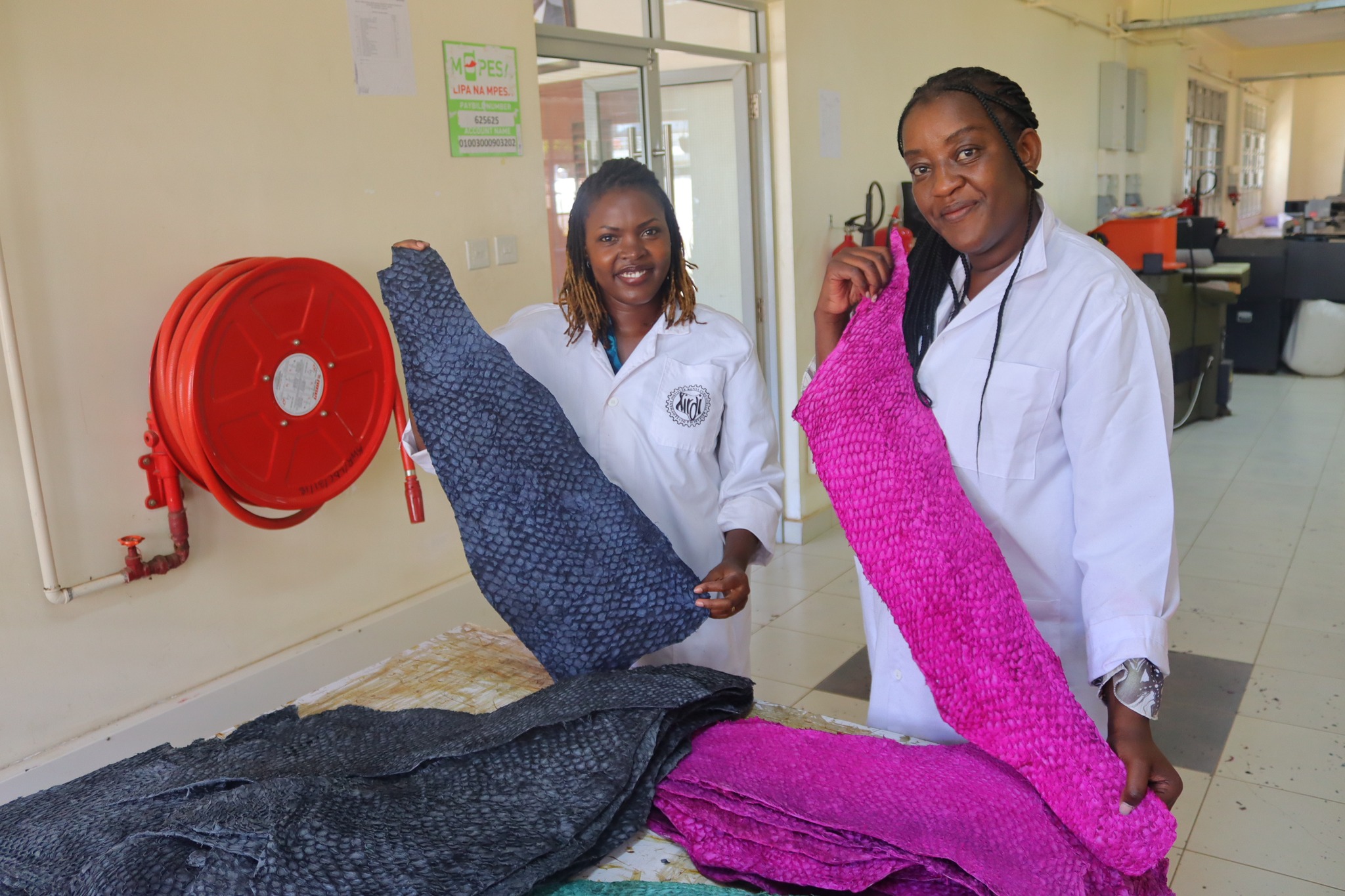
The Sh600 million leather tannery at the centre, which was underutilized at the time, opened her eyes to the world of leather. She realized, based on KIRDI’s research, that the tonnes of Nile perch skin she was burying daily in Turkana were a valuable resource.
“The tour of the leather tannery and the insights I gained from the KIRDI re searchers were eye-opening, and just like that, Ambani Fish Leather was born,” she said.
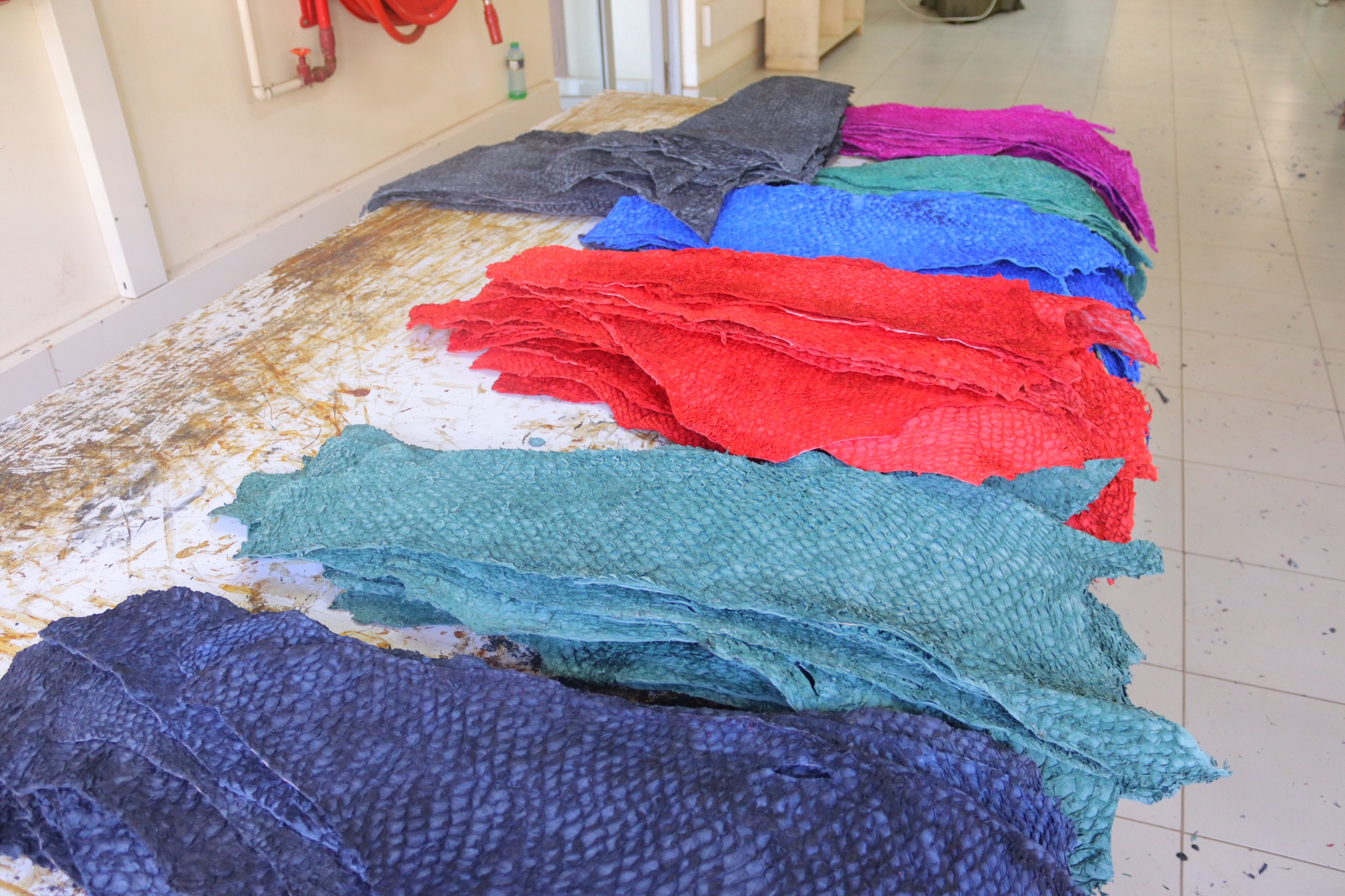
By transforming fish waste into valuable leather products, Ambani not only addressed her waste disposal challenges but also contributed to sustainable practices in the leather industry.
She then embarked on the journey of ferrying the Nile Perch Skin from her fish processing plant in Turkana to KIRDI Kisumu for processing and since then, she has never looked back.
“From every fish we process at the factory about seven per cent is skin which we struggled to bury or sell at a throw away price but coming to KIRDI enabled me to turn this into gold,” she said.
By using the state-of the-art equipment at the facility with guidance from KIRDI leather ex In an interview with KNA at the centre, Ambani said she has managed to secure markets in Morocco, Europe and America where she exports the products.
She said a kilogramme of Nile Perch fish leather goes at Sh1,700 which has enabled her to scale up the production as she eyes more markets in Europe and Asia.
“This is very beautiful leather. Nile Perch Skin produces the second strongest leather in the world. That is why our products continue to generate a lot of interest across the globe,” she said.
Her vision, she said, is to diversify the production to create more products as she eyes production of apparels and leather for the automobile industry.
This, she said, could not have been possible were it not for the support received from KIRDI calling on other budding entrepreneurs to take advantage of the opportunities “This equipment is very expensive. If I was to go alone definitely, I would not have made it.
I want to thank the government and KIRDI for the incubation services and common user manufacturing facilities which have enabled me to take off,” she said.
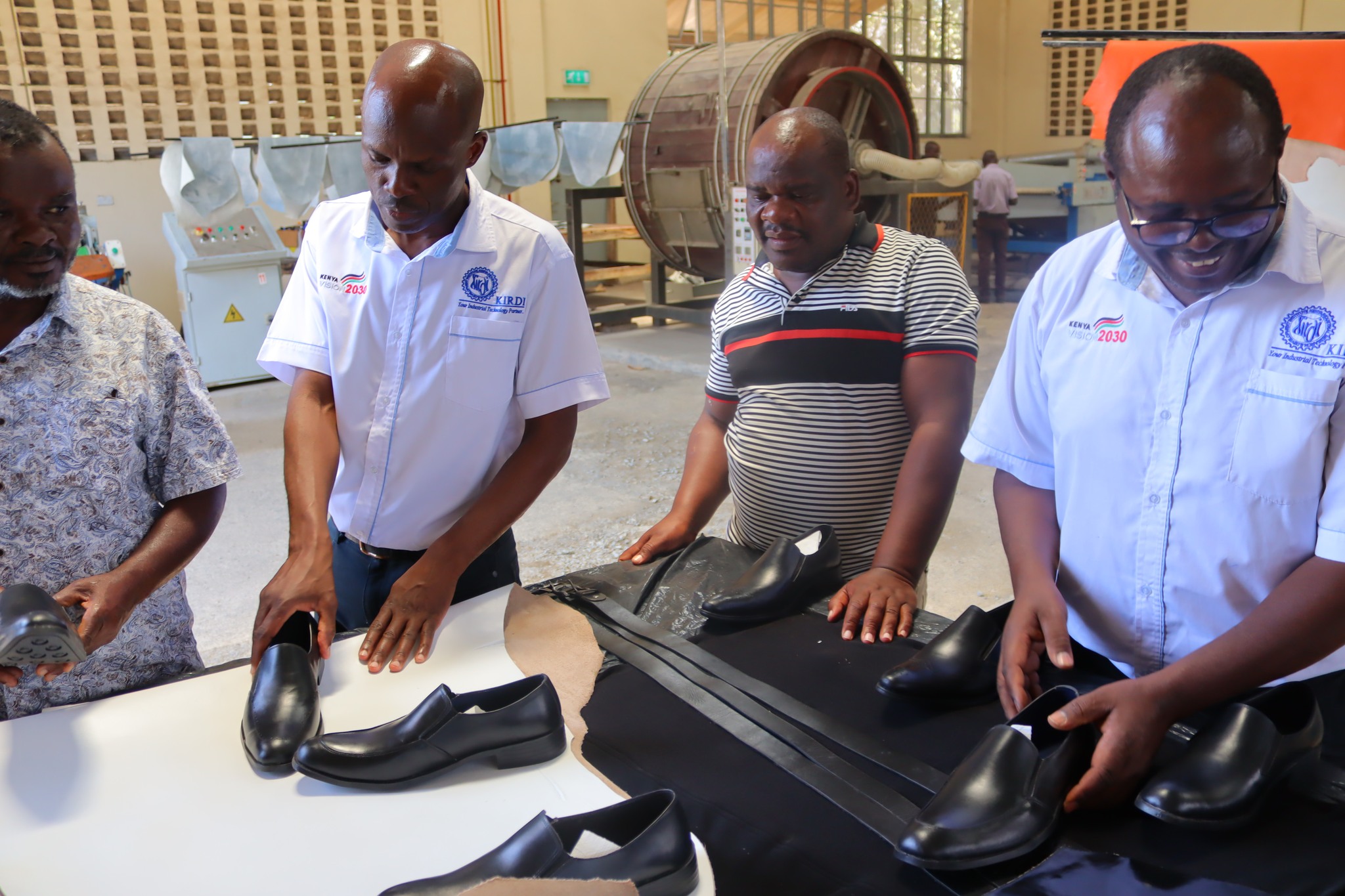
Arafat Abdulkadir, an other beneficiary of the business incubation ser vices at KIRDI Kisumu said the leather tannery has enabled him to fulfill his childhood dream of manufacturing shoes.
“When I arrived here, I was warmly welcomed and given training and space to run my business. Were it not for this facility, I would still be struggling outside there,” he said.
Abdulkadir who runs Kilimanjaro Traders Company, specialises in production of shoes, bags, belts and has also ventured into sports where he produces balls and other accessories.
KIRDI Director General Dr. Calvin Onyango said the institute has invested in state-of-the-art facilities at its centres in Nairobi, Kisumu, Eldoret, Kisii, Migori, Bungoma, Garissa and Malindi where startups and Micro, Small and Medium Enterprises (MSMEs) are trained and incubated for a period of one year.
The institute, he said, has employed research scientists who support budding entrepreneurs at the incubation centres and outside the facilities when they finally set up on their own.
Through the initiative, the MSMEs are trained and nurtured to create prod ucts that have a market reach and can compete ef fectively on a global scale, he added.
Using the Common Manufacturing Facility (CMF) concept, KIRDI provides space, facilities, machines and overheads for MSMEs to process and package their products at a subsidized fee, Dr Onyango said.
The programme, which targets food technology, chemical engineer ing, leather processing technology, engineer ing development, textile technology, ceramics and building materials technology, roots and tubers processing technology and testing technology has opened up doors for many entrepreneurs who would otherwise have not man aged to start on their own.
“Most of the startups collapse due to lack of capital required to pur chase equipment. The equipment is very ex pensive that is why as an institution we have come up with this incubation programme to support the MSMEs,” he said adding that the programme has registered tremen dous success and that the number of locally made products on supermarket shelves has increased ten fold.
“The impact is huge. If you go to the supermar kets today, you will see quite a number of prod ucts manufactured with support of KIRDI,” he said.
He added that the insti tute continues to receive applications from budding entrepreneurs with a total of 1,500 going through the programme every year.
KIRDI Board Chairman Eng. Peter Mositet said the initiative was a long-term solution to the challenges facing MSMEs across the country.
Enhancing access to state-of-the-art machinery to startups was key in unlocking the potential of young entrepreneurs who graduate from local universities with skills but lacked the capacity to venture into manufacturing, he said.