
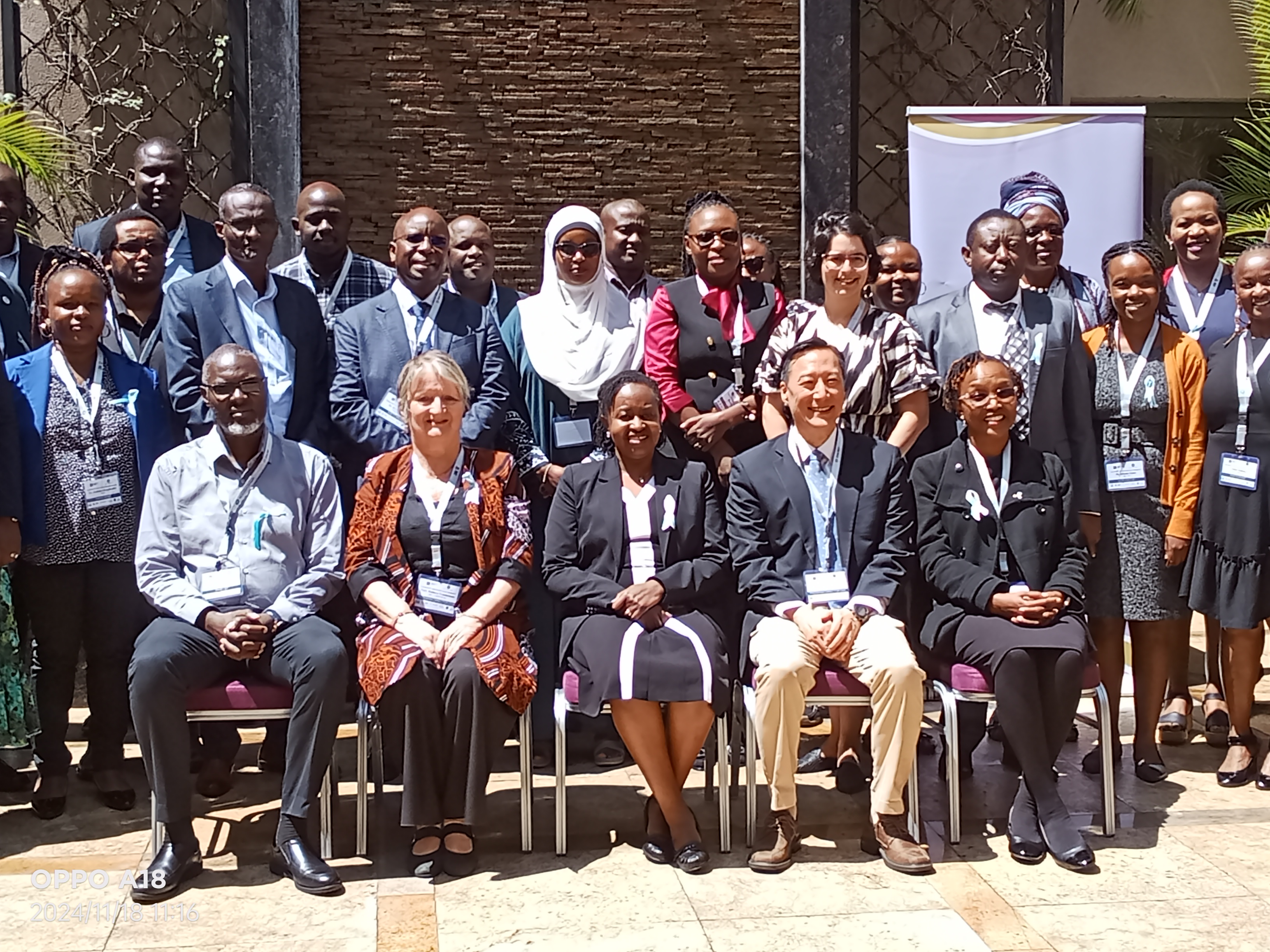
Health experts call for timely treatment, vaccination to control cervical cancer
SHARON ATIENO-KNA
Cervical cancer remains a major health challenge and a leading cause of cancer-related deaths among women in Kenya.
According to the Ministry of Health, it claims the lives of 10 Kenyan women every single day, with over three-quarter cases diagnosed at advanced stages.
But, investing in research ensures that strategies to tackle it are evidence-based and capable of delivering measurable outcomes to combat the disease, said Health Director General (DG) Dr. Patrick Amoth.
In a speech read on his behalf by the Acting Head of the Division of Non-Communicable Diseases at the Ministry of Health Dr. Gladwell Gathecha, Dr. Amoth said the World Health Organization through the 2020 Global Strategy for the Elimination of Cervical Cancer has laid out a plan to address cervical cancer as a public health concern.
“This creates a significant health and socioeconomic burden on families, communities and the nation yet this disease is preventable and treatable through well-established interventions such as HPV vaccination, HPV testing, early screening and timely treatment,” he said.
“The strategy sets a mission target of vaccinating 90 per cent of the girls against HPV by the age of 18, screening 70 per cent of the eligible women and ensuring 90 per cent of those diagnosed with cancer or invasive cancer receive timely treatment by 2030,” he disclosed.
Dr. Amoth mentioned that Kenya is committed to the global mandate through policy frameworks including the National Cancer Policy which runs between 2019 and 2030 and the National Cancer Control Strategy which provides a foundation for addressing cervical cancer.
“Building on this policy, Kenya has achieved key milestones in combating the disease,” he added, highlighting the milestones made including running of the HPV vaccination program, with 75 per cent of the adolescent girls receiving the first dose and 25 per cent receiving the second dose.
He at the same time noted that the country is transitioning to a one dose HPV vaccination regime which is expected to improve coverage and the introduction of HPV testing as a more sensitive and effective screening method that enables early identification of HPV individuals.
“We have also managed to expand screening services to primary health care facilities hence improving access for women across the country and strengthening the referral system that ensures a timely care for those diagnosed with cervical cancer or invasive cancer,” he maintained.
He added that the efforts demonstrate Kenya’s sustained commitment, innovation and collaboration in advancing cancer prevention and treatment.
Further, the DG emphasized research and collaboration as a cornerstone of the stakeholders’ efforts to combat cervical cancer since the National Cancer Control Strategy emphasizes the integration of strategic information, registration and surveillance with robust research initiatives.
“Collaborative studies by institutions such as Cambridge, the Aga Khan University, the University of Nairobi among others have provided important insights into HPV prevalence, vaccine efficacy and the effectiveness of screening programs,” he said, adding that the findings inform policy decisions and guide the design of targeted interventions to address emerging challenges.
Dr. Amoth stressed that county governments are indispensable in the fight against cervical cancer and as custodians of devolved health systems, counties play an important role in integrating cancer prevention, screening and treatment services into local healthcare frameworks.
Additionally, he pointed out that strengthening collaboration between national and county government levels is essential to achieving equitable and sustainable outcomes.
The DG encouraged all stakeholders to promote HPV vaccination which ensures that all eligible girls are vaccinated to save countless lives, enhance screening and early detection, build community awareness, integrate screening services including HPV testing into routine healthcare and expand access to treatment by addressing disparities through increasing the availability of treatment services in underserved regions.
“Stakeholders should prioritize research and knowledge sharing in order to support studies that monitor progress, identify gaps and drive innovative solutions for cervical cancer control,” he urged.