
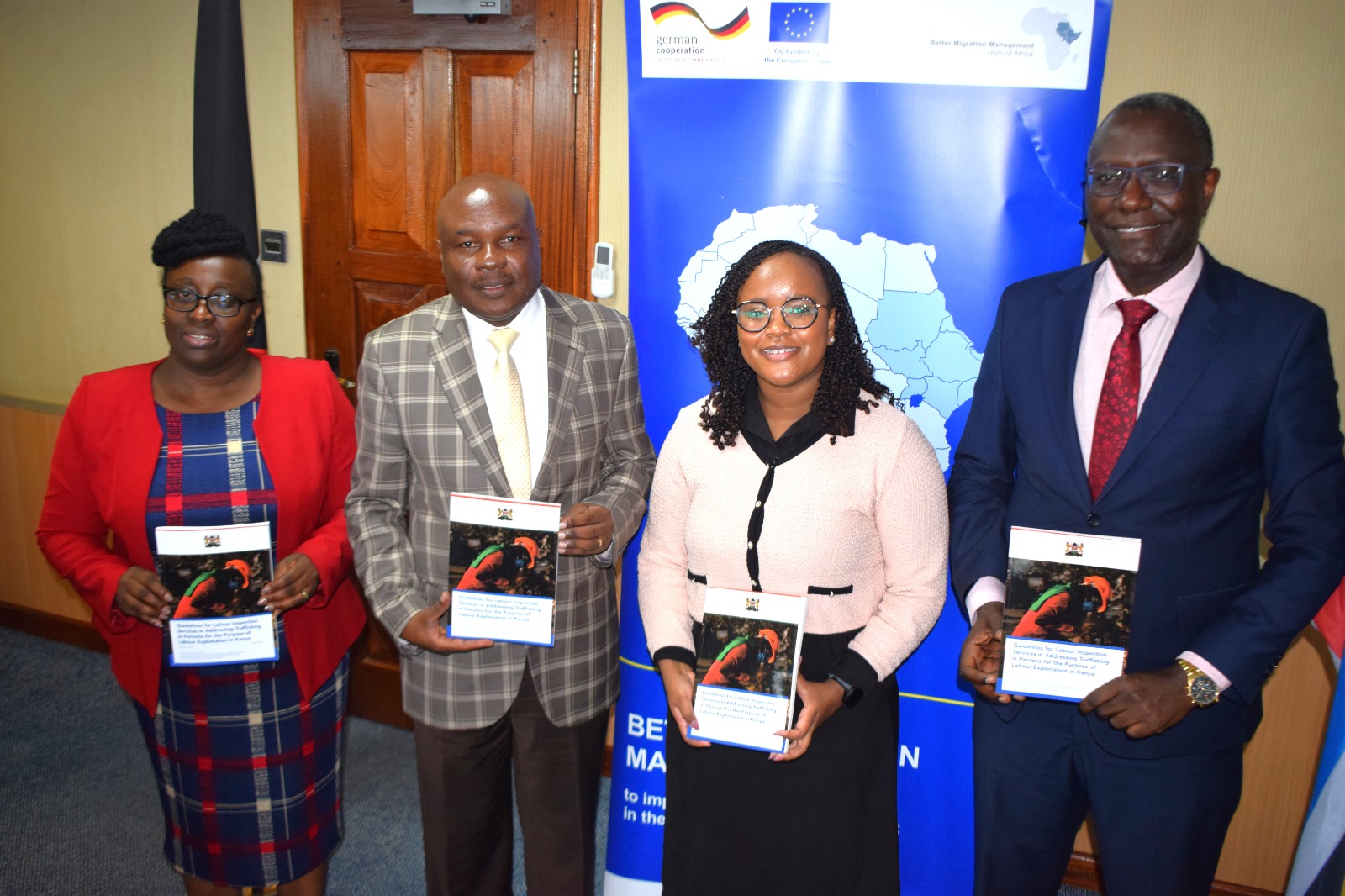
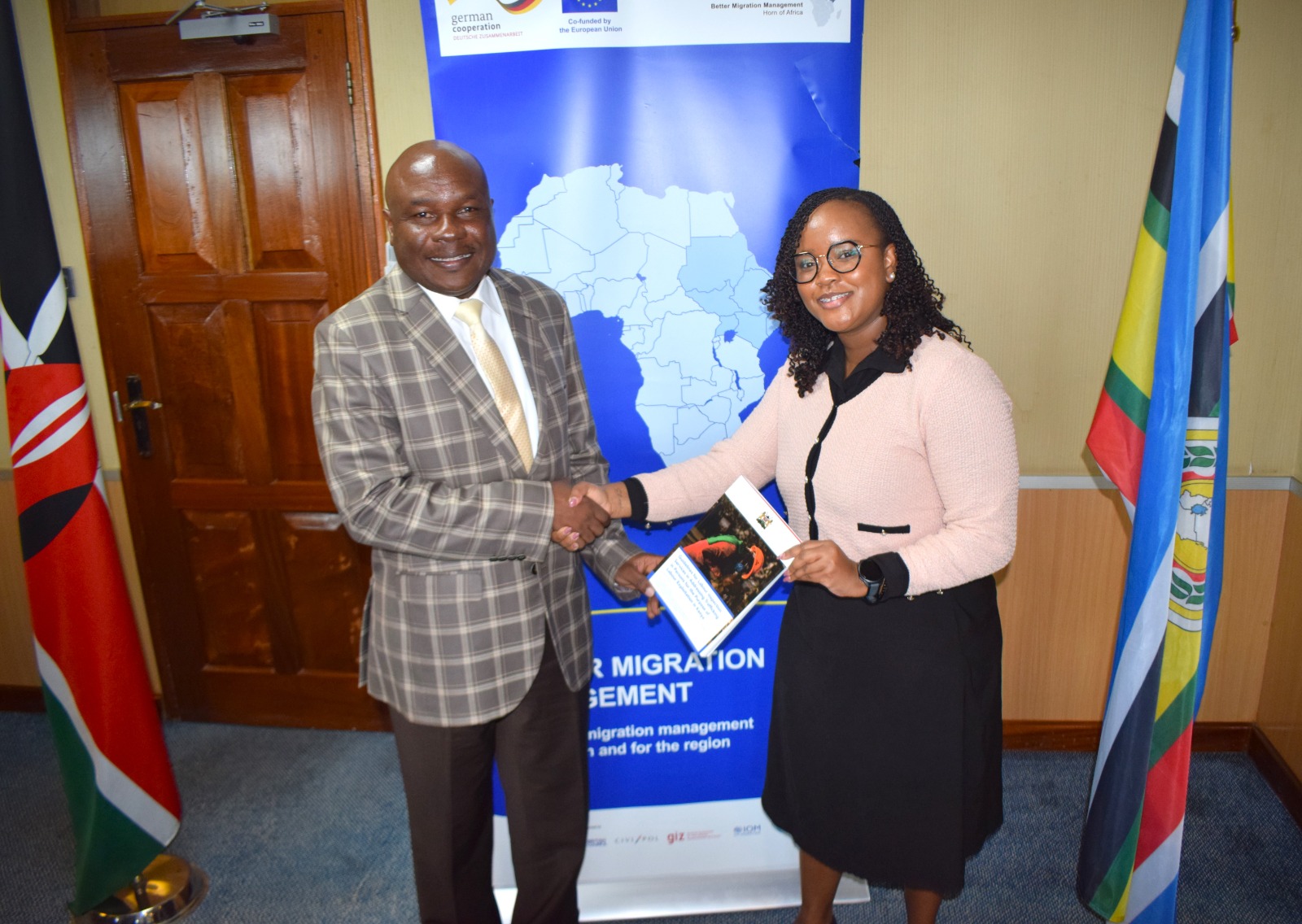
Government unveils guidelines to combat human trafficking
Julius Ndegwa-PCO
The Government has unveiled guidelines to combat labour trafficking in the country.
According to the Principal Secretary, State Department for Labour and Skills Development, Shadrack Mwadime, the move underscores the growing concern of trafficking in persons (TiP) for purposes of labour exploitation as one of the most pervasive forms of human rights violation and serious crimes.
Mwadime said the guidelines will act as tools for Labour Officers and Occupational Safety and Health Officers and assist them to recognize and detect potential labour trafficking situations at the workplace.
Launching the guidelines in his office, the PS noted that labour inspection has largely remained underutilized in the national anti-trafficking response, despite their potential to play a crucial preventive and protective role.
“The complex and evolving patterns of trafficking for labour exploitation have often been insufficiently addressed, particularly through the lens of workplace inspection and enforcement.
“It has therefore become evident that there is a critical need for formal guidance to support labour inspectors in identifying, responding to, and preventing labour trafficking,” the PS observed.
He said the guidelines recognize labour inspection services as crucial allies in combating trafficking in persons.
The PS reaffirmed Kenya’s commitment to eradicating trafficking in persons and safeguarding vulnerable individuals from exploitation, saying labour officers are well placed to help in identifying and addressing labour trafficking.
“When inspecting the application of labour law in workplaces, labour inspectors should act as the eyes and ears for law enforcement and for victims at the places they visit and should provide assistance to presumed victims by cooperating in the investigation process conducted by police and prosecutors,” he said.
The PS regretted that a lot of people from around the world, including Kenya, are being exploited by criminal groups through human trafficking, noting that forced labour is now the leading form of trafficking accounting for 42 per cent of all detected global trafficking cases in 2022, surpassing sexual exploitation.
“In Kenya, Labour trafficking accounted for 96 per cent in 2020 and 98.3 per cent in 2021,” he said.
The guidelines were developed with assistance from CIVIPOL-a technical cooperation operator of the French Ministry of Interior within the framework of the Better Migration Management (BMM) Programme implementing partners and funded by the European Union (EU) and the German Federal Ministry of Economic Cooperation and Development (BMZ).
CIVIPOL National Project Coordinator, Ms. Michelle Koinange, Labour Commissioner Ms. Hellen Apiyo and Secretary, Directorate of Occupational Safety & Health, Dr. Musa Nyandusi attended the launch.
The PS called on all inspectorate teams to ensure effective use and implementation of the guidelines.