
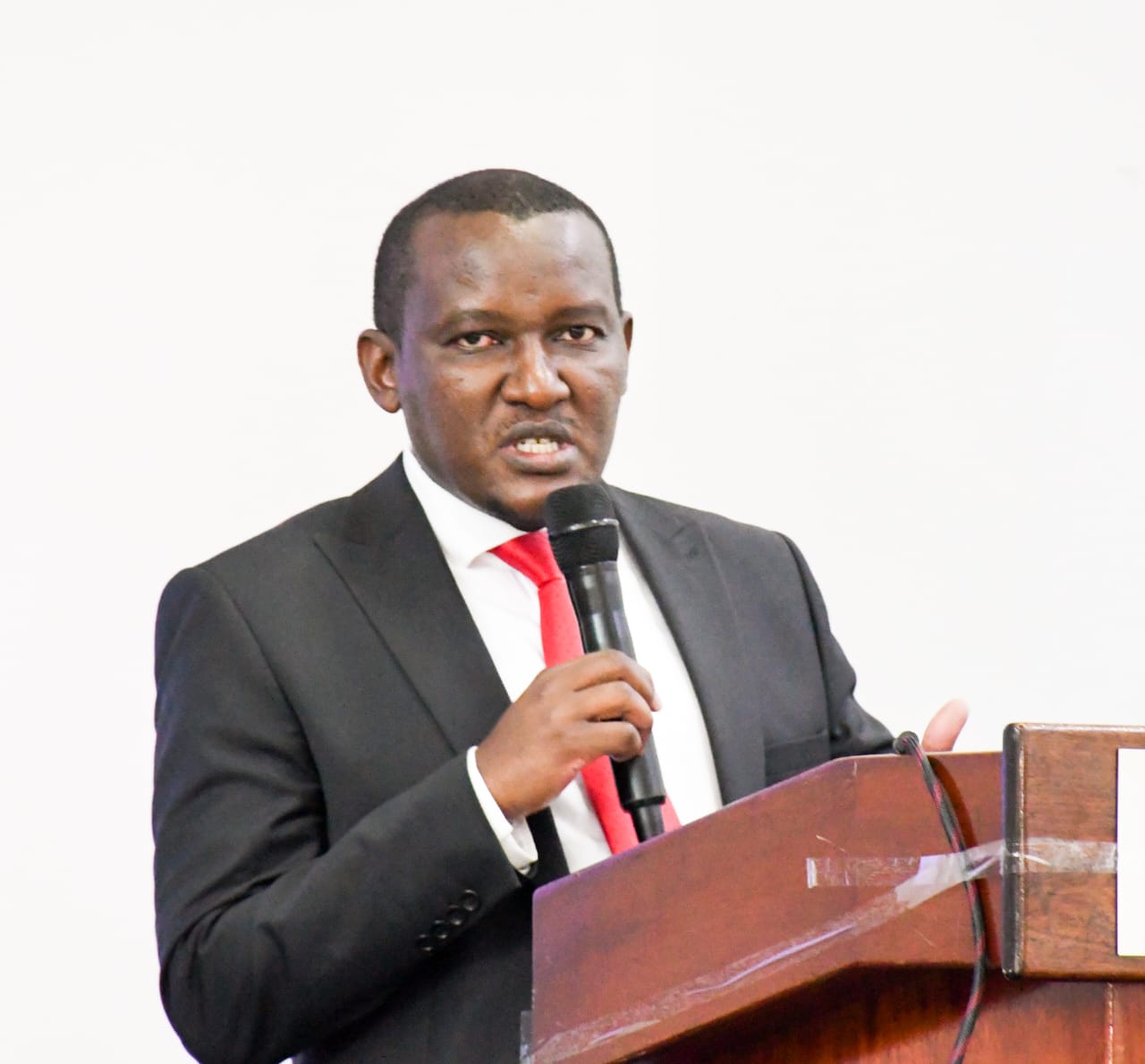
Government unveils five-year plan to revitalize agricultural irrigation, ensure food security
Ian Chepkuto-KNA
The Government is developing a five-year strategic plan to revamp the agricultural irrigation sector and ensure food security in the country.
State Department for Irrigation Principal Secretary (PS) Ephantus Kimotho said the National Irrigation Sector Investment Plan (NISIP) is currently undertaking nationwide public participation, while outlining the roadmap towards the realization of the agricultural potential in the country particularly in ASAL areas.
Addressing a consultative workshop on the National Irrigation Sector Investment Plan (NISIP) in Nairobi, Kimotho announced that the ongoing public participation involving various stakeholders is a roadmap towards the official launch of the strategic master plan scheduled for March 21st this year.
Some of the stakeholders in the process include financial institutions, agri-tech suppliers, farmers, and scholars, among others.
The PS said that the irrigation plan is in line with the government’s development pillar, the Bottom-up Economic Transformation Agenda (BETA), which envisaged transformation in the agricultural sector to address food security and employment creation.
“NISIP seeks to address water challenges we have in the agricultural sector and mitigate the effects of climate change, particularly drought and floods, to ensure continued productivity in ASAL. That is why irrigation, which is a key aspect in supporting BETA, becomes a very important enabler towards ensuring sustainable productivity,” he remarked.
The PS said NISIP intends to increase land use under irrigation to over one million acres by 2030, through investing more in water harvesting, storage reservoirs, and optimized infrastructure to address both immediate needs and long-term sustainability.
Regarding climate resilience, he stated that the plan aims to address both immediate and future needs as it will prepare the nation to prioritise sustainability measures and adopt new agricultural strategies.
Kimotho noted that over 80 per cent of Kenya’s land mass is under ASAL with enormous agricultural potential that, when fully tapped, will address food insecurity and reduce overreliance on imports.
He added, “By reducing food imports, Kenya will create more jobs, increase foreign direct investments, facilitate a low cost of living, and enhance the country’s economy,” he stated.
The PS elaborated that the NISIP Plan has five critical investment roadmaps for enhancing irrigation agriculture.
He said the roadmap includes expanding irrigated land, higher-level engagement with key players in the private sector, non-profit organisations, and development partners to transform the agricultural sector towards the realization of climate-resilient irrigated farming.
Kimotho added that the NICIP Plan will partner with corporate agribusiness and large-scale farmers willing to lease government-owned land for farming, exploring the possibility of further subsidized farm inputs such as standard solar pumps, as well as facilitating farmers to access local and foreign markets.
The PS noted that the main challenge in ASAL region is accessing sustainable sources, adding that investment in water harvesting such as desiltation of water pans and sinking boreholes, will mitigate lack of water and fodder for livestock and domestic use. He noted that insecurity has been attributed to limited access to fodder and water.
He continued, “The biggest challenge in ASAL counties is water. The Plan will address food insecurity through strategies such as building dams, water pans, and reservoirs.”
He added that, in the long run, it aims to resolve conflicts, mitigate climate change, and promote peaceful coexistence, ultimately fostering a strong and resilient economy.
Kimotho noted that in realization of the overall objective of the National Irrigation Sector Investment Plan (NISIP), there is a need for closer collaboration under Public Private Partnership (PPP) arrangements with development partners, irrigation technology manufacturers, and suppliers.
“By implementing 50 per cent of the aspirations outlined in NISIP, we can significantly reduce food imports by 50 per cent. And by implementing it 100 per cent, we reduce imports by nearly zero,” he said.
He added, “Through this, we will be creating more jobs, attracting foreign direct investment, boosting incomes, and increasing government revenue.”
At the same time, the PS said other crucial players need to be incorporated, particularly those in climate-smart farming solutions, agriculture aggregation, off-takers, contract farmers, partners for de-risking private capital investments for irrigation, financial institutions, early warning data, and crisis preparedness systems; water use efficiency; underground water mapping; and natural aquifer recharge, as well as mechanized farming and technology transfer.
National Irrigation Authority, Chief Executive Officer (CEO), Eng. Charles M. Muasya, emphasized the importance of involving all stakeholders in the agricultural sector through public participation during the preparation of the NICIP Strategic Plan, adding that by their involvement in the mooting of the Plan, the implementation stage would not be a problem.