

Government unveils draft petroleum policy to attract investors
ERICK KYALO-KNA
The Government, through the Ministry of Energy and Petroleum, has drafted a policy that among other key issues, aims to attract investors to oil and gas exploration in the country.
The Draft National Petroleum Policy (2024), which is currently at the public participation stage, focuses on the sustainable exploration, exploitation, utilization, and management of petroleum resources and products to contribute to Kenya’s economic development.
Once implemented, the policy will ensure effective management of revenue collected from oil and gas, promote equitable sharing of petroleum benefits, and enhance the use of liquefied petroleum gas (LPG) in the country.
Petroleum resources, including crude oil and natural gas, are found in sedimentary basins. Kenya has four sedimentary basins—Lamu, Anza, Mandera, and Tertiary Rift—which cover approximately 490,000 km².
Due to their vastness, which makes exploration by a single investor challenging, the sedimentary basins are subdivided into petroleum blocks. These blocks are licensed to various investors for exploration, appraisal, development, and production of oil and gas resources.
By June 2024, only nine of the 63 petroleum blocks had been licensed to four investors for petroleum operations, while the rest were still open for investment.
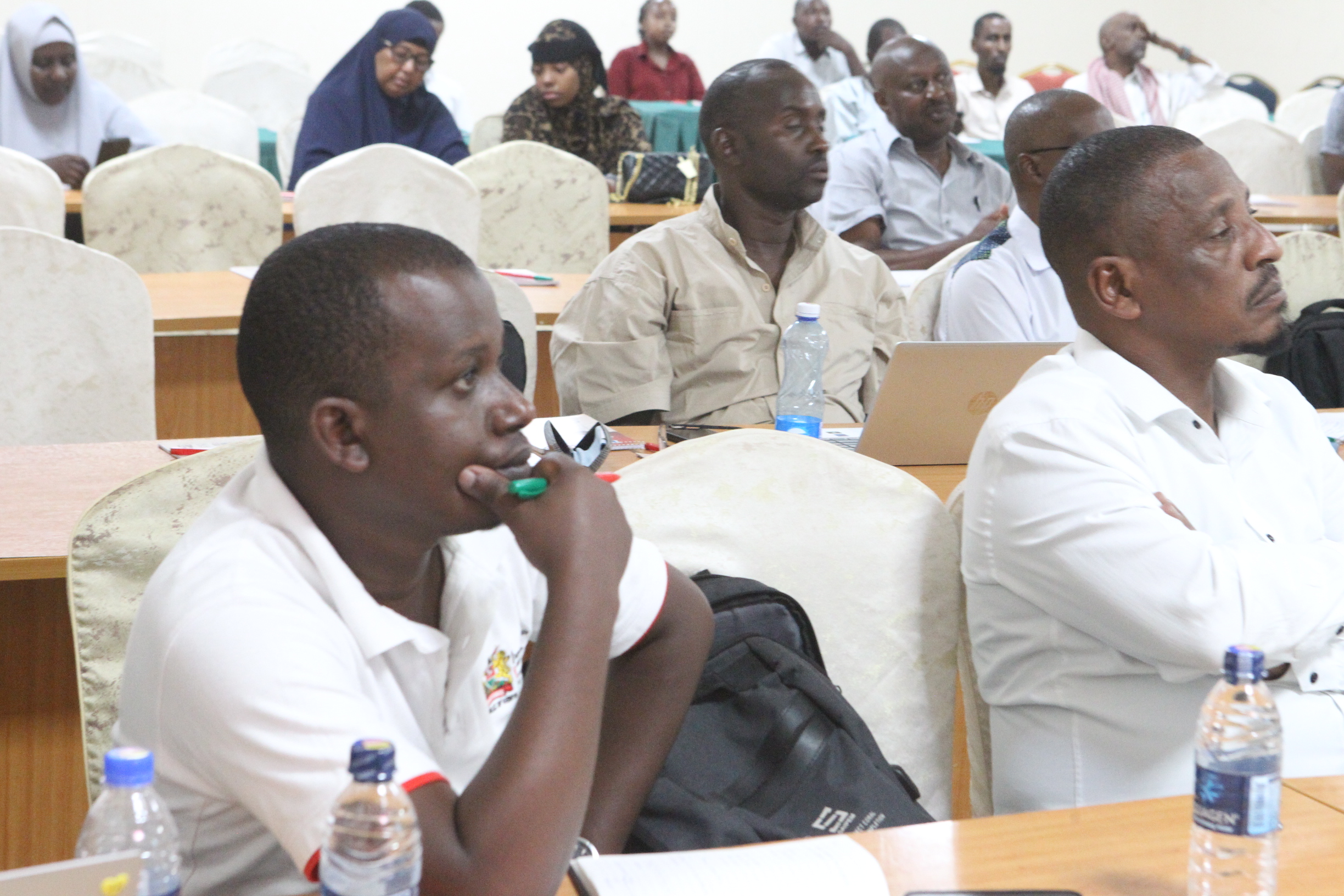
Speaking to KNA after a public participation forum for the policy in Garissa, Petroleum Engineer at the State Department for Petroleum, Vincent Areri, said most investors and international financiers have been shying away from fossil fuel projects, making it hard to procure finance for the exploration of the Kenyan blocks.
“One of the challenges we have is that there is little interest in our blocks so in this policy, we have come up with strategies that will help us promote them so that we attract more investors.
This will be a good thing for us as a country because more money will be coming in with these investments,” Areri said.
Further, Areri revealed that, although there are investors for some oil and gas blocks, it takes time due to the backand-forth negotiations between the government and a potential contractor or an actual contractor to finalize, especially on the concept of the field development plan, thus delaying production.
“The primary objective of the government is to protect its people and its resources, so until it is satisfied that everything has been done, then the project will not continue,” he said.